Palengke vs. Supermarket: Which Is Actually Sulit in the Philippines Right Now? (2026 Price & Inflation Guide)
Sulit verdict: There’s no single winner — but right now, timing actually tips the scale. The palengke usually wins on fresh perishables (fish, meat, vegetables) because stall vendors carry far less overhead than an air-conditioned supermarket aisle, and August 2026’s official inflation data shows vegetable prices are actually falling while rice keeps climbing everywhere. The supermarket wins on packaged and processed goods, where government-set suggested retail prices (SRP), promos, and cold-chain consistency matter more than haggling. Shop both, on purpose, instead of picking one and sticking to it out of habit.
Every Filipino household has an opinion on this, usually inherited from a parent or lola: “mas mura sa palengke” versus “mas sigurado sa supermarket.” Both are true, just for different parts of your basket — and in 2026, with food inflation moving in different directions for different commodities, knowing which half of that advice applies to what you’re actually buying this week is worth more than it used to be.
This guide breaks down why the two channels price things so differently, what the law actually requires of each one, what the latest Philippine Statistics Authority (PSA) numbers say about where the real savings are sitting right now, and a few free government tools that do the price-checking for you.
Why “It Depends” Is the Honest Answer
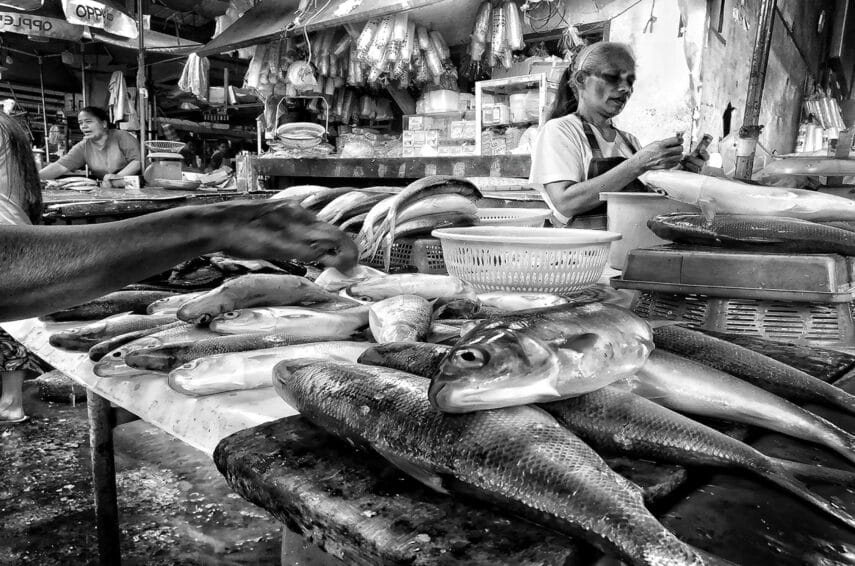
A palengke stall and a supermarket aisle are not the same business model wearing different clothes. A wet market vendor typically rents a stall from the local government unit, buys directly from a supplier or trader (sometimes the same-day catch or harvest), has no refrigerated display case to run, and sets their own price day to day based on what came in that morning. A supermarket carries much higher fixed costs — rent at mall or commercial rates, air conditioning, refrigerated and frozen sections, barcode and inventory systems, security, and corporate overhead — all of which gets priced into the shelf tag, especially on perishables that need a cold chain to stay sellable.
That structural difference is why the two channels tend to specialize without anyone planning it that way: palengke for same-day fresh items, supermarket for anything that needs to sit on a shelf for weeks without spoiling.
What Actually Makes Palengke Stalls Cheaper (and When They’re Not)
Fresh fish, meat, and vegetables are where the palengke’s lower overhead shows up most, since these are exactly the items where a supermarket’s refrigeration and handling costs are highest. Vendors can also adjust prices in real time based on how much stock they need to move before it spoils — a flexibility a supermarket’s centralized pricing system doesn’t have.
Where this flips: imported or specialty produce, anything a supermarket is running as a loss-leader promo, and bulk-pack deals timed to a payday sale. A supermarket that’s discounting chicken to get foot traffic that weekend can easily undercut a palengke vendor who has no such marketing budget to play with.
Where the Supermarket Wins
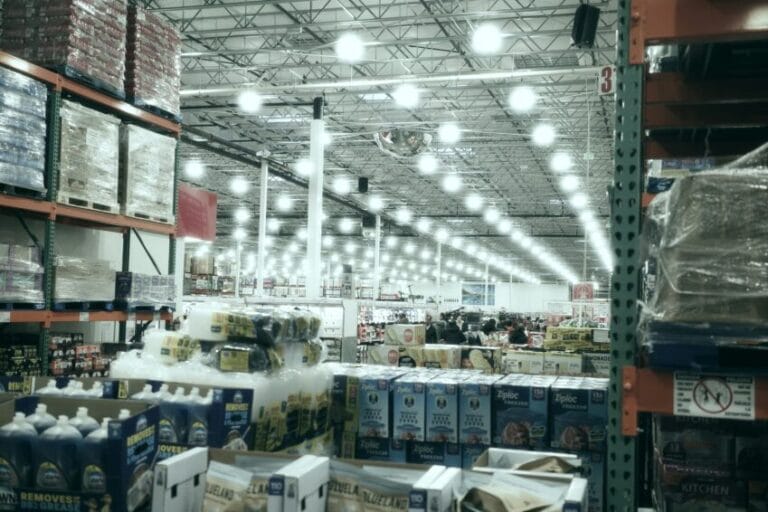
Packaged, processed, and branded goods are supermarket territory, for a few concrete reasons. First, many of these items carry a government-monitored Suggested Retail Price (SRP) that applies everywhere they’re sold, so the price gap with a sari-sari store or palengke dry-goods stall is usually small to begin with. Second, supermarkets run frequent promos, loyalty-card discounts, and bulk packs that a single palengke stall can’t match. Third, you get a receipt, a return policy, and food-safety certification that matters for anything you can’t visually inspect for freshness — canned goods, frozen items, dairy, and anything with an expiration date you’re relying on being accurate.
| Category | Usually Cheaper At | Why |
|---|---|---|
| Fresh fish & seafood | Palengke | Lower overhead, same-day pricing flexibility, no cold-chain markup |
| Fresh meat & poultry | Palengke (usually) | Direct-from-supplier sourcing, vendor sets price day to day |
| Fresh vegetables & fruit | Palengke | No refrigerated display costs; August 2026 PSA data shows vegetable prices falling |
| Rice | Roughly even | Both channels are feeling the same 2026 rice price pressure |
| Canned goods, noodles, condiments | Supermarket | SRP-regulated, frequent promos, bulk packs |
| Dairy, frozen, and anything needing verified cold storage | Supermarket | Certified cold chain, visible expiration dates, easier to dispute if spoiled |
Good to Know: “Usually” is doing real work in that table. A specific vendor relationship (a suki you’ve bought from for years) or a specific store promo can flip any single row. This is a general pattern, not a guarantee for every stall or every branch.
The Law Behind the Price Tag: Why Both Channels Follow the Same Rules on Some Items
The reason a can of sardines or a bag of rice doesn’t swing wildly in price between a palengke dry-goods stall and a supermarket shelf comes down to Republic Act No. 7581, the Price Act, as amended by Republic Act No. 10623. The law splits regulated goods into two tiers — basic necessities (rice, fish, fresh vegetables, cooking oil, sugar, laundry soap, and similar everyday items) and prime commodities (fresh fruit, flour, processed meat, noodles, construction materials, and more) — and assigns oversight of fresh/agricultural items to the Department of Agriculture (DA), while the Department of Trade and Industry (DTI) handles manufactured goods that carry an approved Suggested Retail Price.
In practice, this means a product with a DTI-approved SRP is going to sit within a narrow price band no matter where you buy it, while fresh agricultural items — which fall under DA’s monitoring instead — have more room to vary by vendor, location, and time of day. That’s a feature of the system, not a loophole: fresh goods are harder to standardize a single national price for than a canned good manufactured in one factory.
What August 2026’s Inflation Numbers Mean for Your Grocery Run Right Now
Here’s where timing actually matters. Per the PSA’s official August 2026 inflation report, headline inflation came in at 6.1%, little changed from July, while food inflation eased to 4.6% from 5.2% the month before. The breakdown by commodity is the useful part:
| Commodity Group | August 2026 Move (PSA) | What It Means for You |
|---|---|---|
| Vegetables, tubers, pulses | -3.4% (reversed from +8.4% in July) | Produce actually got cheaper — the palengke’s usual edge on vegetables is wider than normal right now |
| Rice | +19.4% (up from +17.1% in July) | Rice is getting more expensive everywhere, palengke or supermarket — this isn’t a channel you can shop your way around |
| Fish & seafood | +6.6% (slower than +7.8% in July) | Still rising, but decelerating |
| Overall food basket | +4.6% (down from +5.2%) | Food costs easing overall, driven mainly by the vegetable reversal |
National Statistician Claire Dennis Mapa specifically flagged rice as the standout driver of overall inflation given how much weight it carries in the average Filipino household’s basket. The practical takeaway: this month is a genuinely good stretch to lean on the palengke for vegetables, while rice-buying decisions (bulk vs. per-kilo, timing a purchase around a sale) matter more than which channel you buy it from.
Worked Scenario: Splitting a Weekly Grocery Run
Say it’s a typical payday weekend and you’re doing the household’s main grocery run. Instead of picking one destination, split the basket by category: fresh fish, meat, and vegetables go to the palengke, where August’s produce price drop and lower structural overhead both work in your favor. Rice, canned goods, cooking oil, noodles, and anything with a barcode and an SRP sticker go to the supermarket, where you can also catch whatever promo is running that weekend.
We’re intentionally not attaching specific peso totals to this scenario — actual prices vary by city, by vendor, and by the week, and quoting a number we haven’t verified against a real listing right now would do you a disservice, the same discipline we use on every price-sensitive guide on this site. The point of the split isn’t a fixed budget; it’s shopping each category where its underlying cost structure actually favors you.
Sulit Tip: A Free Government Tool That Checks Prices For You
Sulit Tip: The DA runs a free Bantay Presyo price-monitoring system that tracks prevailing retail prices of agri-fishery commodities — meat, poultry, vegetables, and fish — in the National Capital Region. You can register for free text updates, or check weekly price trends and daily monitoring reports directly at da.gov.ph/price-monitoring. It won’t tell you what one specific stall is charging today, but it gives you a real, government-sourced baseline to compare against before you start haggling or assume a price is fair.
Heads Up: Hidden Costs That Eat Into Palengke Savings
Heads Up: The sticker price isn’t the whole cost. Factor in the commute or parking to get to the palengke (versus a supermarket you might already pass on your normal route), the time spent haggling or waiting in line at multiple stalls instead of one checkout, the near-total absence of cashless payment or digital receipts for a return or dispute, and the real risk of spoilage if you buy more than you’ll use before your next trip, since most palengke purchases aren’t designed for long storage. None of that erases the savings on fresh goods — it just means the gap is smaller than the sticker-price difference alone suggests.
Good to Know: If you’re shopping in an area currently under a declared state of calamity, basic necessities are automatically price-frozen under the same Price Act discussed above — our typhoon season price freeze guide covers exactly how that protection works and how to report a seller who ignores it.
Frequently Asked Questions
Is the palengke always cheaper than the supermarket?
No. It’s usually cheaper for fresh fish, meat, and vegetables because of lower vendor overhead, but packaged and processed goods are often about the same price or cheaper at a supermarket once you factor in SRP regulation, promos, and bulk packs.
Why did vegetable prices drop in August 2026?
Per the PSA’s official August 2026 inflation report, the vegetables, tubers, and pulses category reversed to -3.4% after rising 8.4% in July — a swing the national statistician attributed to seasonal supply recovery, without a single-cause explanation given in the official release.
Does the government regulate palengke prices the same way as supermarket prices?
Not identically. Under the Price Act (RA 7581, as amended by RA 10623), fresh agricultural items like vegetables, fish, and meat are monitored by the Department of Agriculture and have more day-to-day price flexibility, while manufactured goods with a DTI-approved Suggested Retail Price are held to a narrower band regardless of where they’re sold.
How can I check if a price I’m being charged is fair?
The DA’s free Bantay Presyo system publishes weekly price trends and daily monitoring reports for agri-fishery commodities in the NCR at da.gov.ph/price-monitoring, and offers a free text-update subscription — a real baseline to compare against before you assume a vendor’s price is reasonable or inflated.
Also Worth Checking
If food-budget timing is on your mind beyond this week’s trip, our typhoon season price freeze guide covers what happens to basic necessity prices once a calamity is declared. If getting groceries delivered instead of shopping in person is more your situation, see our breakdown of whether online grocery delivery is worth it in the Philippines. And if your household is weighing other recurring household costs the same way, our water refilling station vs. bottled water delivery comparison uses the same side-by-side approach. For more of this kind of value-first breakdown, head back to more sulit finds.
Verified Sources Used
The Manila Times: Confirmed the PSA’s official August 2026 headline inflation rate (6.1%), food inflation rate (4.6%), the vegetable price reversal (-3.4%), rice inflation (+19.4%), and National Statistician Claire Dennis Mapa’s comment on rice’s weight in the basket.
SunStar: Corroborated the August 2026 PSA inflation figures, including the food inflation deceleration and the vegetable price contraction as the primary driver.
LawPhil — Republic Act No. 7581 (the Price Act): Confirmed the legal basis for basic necessities and prime commodities classification and price regulation.
LawPhil — Republic Act No. 10623: Confirmed the 2013 amendment refining the Price Act’s commodity definitions and enforcement mechanism.
Philippine Information Agency: Confirmed the DA’s free Bantay Presyo text-blast and price-monitoring system covering meat, poultry, vegetables, and fish in the NCR.