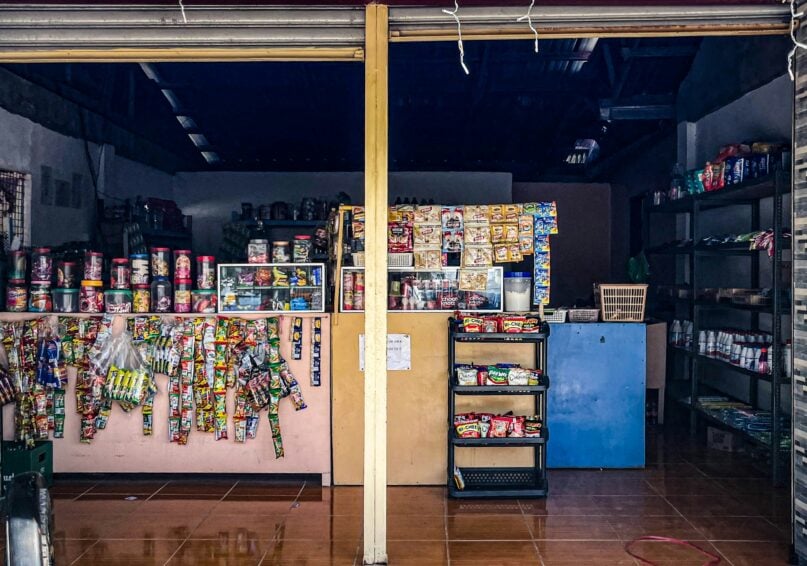
Is DTI’s “No Price Hike” Promise Actually Protecting Your Christmas Budget? (2026 Guide: 190 Basic Goods vs. 7.8% Inflation)
Sulit verdict: Partially — don’t let the headline give you a false sense of security. The DTI has a real commitment from manufacturers to hold the line on 190 packaged basic goods through December 31, 2026, and that part is worth knowing about. But it does nothing for the three things actually driving this year’s price pain: rice, fuel, and transport fares. Budget for those separately.
Yes, but only partly. The Department of Trade and Industry has secured manufacturers’ commitment to hold prices on 190 packaged basic goods — canned fish, milk, coffee, bread, noodles, soap — through December 31, 2026. It does not touch rice, fuel, electricity, or transport fares, the exact categories driving October’s 7.8% inflation spike.
Here’s why that distinction matters right now: the Philippine Statistics Authority’s October 2026 reading put headline inflation at 7.8%, up from 7.2% in September — the highest since February 2023’s 8.6%, and above the 7.7% median economists had expected, per the Manila Times’ November 6, 2026 report. That’s the backdrop against which Trade Secretary Ma. Cristina Roque told reporters on November 5, 2026: “For BNPCs, there’s still no price increase up to December 31, 2026,” as PhilNews reported. If you only read the headline, it sounds like your whole Christmas budget just got protected. It didn’t.
What DTI Actually Promised (and What “BNPC” Means)
BNPC stands for “basic necessities and prime commodities” — a defined legal category under Republic Act 7581, the Price Act, as amended by RA 10623. Basic necessities are goods the law names outright: rice, corn, root crops, bread, fresh and canned fish, fresh meat and eggs, bottled water, milk, fresh vegetables and fruits, locally made instant noodles, coffee, sugar, cooking oil, salt, soap and detergents, firewood, charcoal, household LPG and kerosene, candles, and DOH-classified essential drugs. Prime commodities are a second, broader list — flour, canned meats, non-essential dairy, onions, garlic, vinegar, patis, soy sauce, toilet soap, batteries, school supplies, construction materials, and more.
What’s new this November is that DTI secured manufacturers’ voluntary commitment not to raise prices on 190 specific SKUs from that list — including canned fish, processed milk, coffee, bread, instant noodles, salt, laundry soap, bottled water, candles, luncheon meat, corned beef, vinegar, patis, soy sauce, toilet soap, and batteries — through December 31, 2026, according to both Philstar’s October 23 report and the Palace’s November 3 confirmation. Presidential Communications Office Undersecretary Claire Castro said the official SRP (Suggested Retail Price) bulletin reflecting this “will be displayed in supermarkets and groceries across the country.” Roque said the commitment follows direct meetings with manufacturers, with a separate meeting planned specifically on Noche Buena items like ham and queso de bola.
Sulit Tip: Look for the printed SRP bulletin posted near the entrance or at the service counter of any major supermarket. It’s a government-issued reference sheet, not a sales gimmick, and it’s your fastest way to check whether a price you’re seeing matches what DTI says it should be.
This Is Not the Same “Automatic” Freeze You May Have Heard About
If you’ve read our guide to the typhoon-season price freeze, you already know the Price Act has a separate, stronger mechanism: Section 6’s automatic price control, which kicks in the instant an area is placed under a state of calamity, emergency, martial law, or similar declaration, and lasts up to 60 days without anyone needing to announce it. This November’s “no price hike until December 31” commitment is a different animal. It isn’t triggered by Section 6. It’s DTI exercising its ordinary Section 10(5) authority to “issue suggested reasonable retail prices… for the information and guidance” of sellers and consumers, backed by manufacturers’ own voluntary agreement rather than a declared emergency.
That distinction has a real consequence: this Christmas commitment is a guidance-and-goodwill arrangement, not a legally mandated price ceiling the way a calamity freeze is. None of the news coverage of this announcement points to a DTI administrative order, executive order, or other legal instrument specifically imposing it — it’s described consistently as manufacturers’ commitment that DTI negotiated and is now publicizing.
Heads Up: “No legal instrument” doesn’t mean “no consequences for cheating.” Section 5 of the Price Act makes profiteering and hoarding illegal year-round, calamity or not — more on exactly what that covers below.
What’s Actually Covered vs. What’s Still Climbing
This is the table that matters for your actual Christmas budget. The commitment covers packaged BNPC goods. It does nothing for the categories posting October’s biggest increases.
| Category | Covered by the Dec. 31 Commitment? | October 2026 Inflation (YoY) | Why |
|---|---|---|---|
| Packaged BNPC goods (canned fish, milk, coffee, bread, noodles, soap, batteries) | Yes — part of the 190-SKU list | Food overall: 6.4% (down from 6.8% in September) | Direct manufacturer commitment negotiated by DTI, backed by the official SRP bulletin |
| Rice | No | 20.7% (up from 20.3%) | Rice pricing runs through separate DA-led mechanisms, not this BNPC commitment |
| Transport fares | No | 20.1% (up sharply from 14.6%) | Set by fare boards and fuel costs, outside DTI’s BNPC authority |
| Housing, water, electricity, gas & other fuels | No | 9.3% (up from 8.4%) | Utility and energy pricing is regulated separately (ERC, LGUs, fuel markets) |
| Core inflation (ex. food & energy) | Partially, where core items overlap BNPCs | 5.4% (up from 4.8%) | Reflects broader cost pressure the commitment can’t fully offset |
Those October figures come from the Philippine Statistics Authority as reported by the Manila Times and PhilNews. The January–October 2026 average sits at 5.6%, already above the Bangko Sentral’s 2.0–4.0% target band, and the BSP has said it expects inflation to “remain elevated in the coming months,” with its next rate-setting meeting on December 17, 2026.
Good to Know: Household LPG and kerosene are themselves legally classified as “basic necessities” under RA 10623 — but multiple news reports describe this specific November commitment as excluding “fuel” broadly. If you heat or cook with LPG, don’t assume this particular promise is protecting your tank price; check the posted SRP bulletin for your specific brand and size instead of assuming.
The Law Behind the Number: What Counts as Illegal Profiteering
Here’s the part that actually protects you whether or not DTI secured any Christmas commitment at all. Section 5 of the Price Act defines profiteering as selling a basic necessity or prime commodity “at a price grossly in excess of its true worth,” and it sets a specific, usable trigger: there is prima facie evidence of profiteering whenever a seller raises the price of a covered item by more than 10% compared to the immediately preceding month, without a legitimate cost justification. Hoarding has its own trigger — holding stock at least 50% above your normal inventory level while unreasonably refusing to sell to the public. Both are illegal every single day of the year, Christmas commitment or not, calamity or not.
The penalties are not symbolic. Under Section 15, illegal price manipulation (hoarding, profiteering, or cartel behavior) carries imprisonment of 5 to 15 years plus a fine of ₱5,000 to ₱2,000,000. A government employee who knowingly conceals a violation faces permanent disqualification from public office on top of that.
Worked Scenario: Is That Price Hike Actually Illegal?
Say a 155-gram can of corned beef — one of the 190 listed SKUs — was selling for ₱75 at your usual sari-sari store last month. This week it’s ₱84. Is that profiteering?
Do the math the way the law does it: ₱84 minus ₱75 is a ₱9 increase, divided by the ₱75 base price, which comes out to 12%. That’s over the 10% monthly threshold in Section 5(2), which means there is prima facie evidence of profiteering — unless the seller can point to an actual, documented cost increase (a higher price from their own supplier, for instance). A ₱3 increase on that same ₱75 can (4%) would sit comfortably under the threshold and wouldn’t trigger the presumption at all. The law isn’t asking you to prove intent — it’s asking you to do one division problem and compare it to 10%.
What to Do Next
Four steps, in order, if you think you’ve spotted a violation — or just want to shop smarter this season:
First, look for the posted SRP bulletin at the store (supermarkets are required to display it). Second, keep a receipt or a dated photo from your last grocery run on the same items, so you have an actual “preceding month” price to compare against, not a guess. Third, do the percentage math above before assuming the worst — a small, explainable increase isn’t a violation. Fourth, if the math clears 10% with no stated reason, report it: call DTI’s Consumer Care Hotline at 1-DTI (1-384), email consumercare@dti.gov.ph, or visit a regional DTI office, with the store name, product, price, date, and your photo or receipt ready.
Sulit Tip: Since rice, fuel, and transport aren’t covered by this commitment and are rising the fastest (20.7%, roughly 20%, and 9.3% respectively for their categories), that’s where your actual December budget stretch is going to come from — not from the canned goods aisle. Plan your Noche Buena and travel-home budget around that reality, not around the headline.
Frequently Asked Questions
Is this the same thing as a calamity price freeze?
No. A calamity price freeze is automatic and legally mandated under Section 6 of the Price Act the moment a state of calamity or emergency is declared. This November’s “no price hike until December 31” commitment is DTI-brokered manufacturer guidance under its ordinary Section 10(5) authority, not a declared emergency measure.
What exactly is on DTI’s list of 190 basic goods?
News coverage describes it as 190 SKUs drawn from the legal BNPC list, including items like canned fish, processed milk, coffee, bread, instant noodles, salt, laundry soap, bottled water, candles, luncheon meat, corned beef, vinegar, patis, soy sauce, toilet soap, and batteries.
Does the price freeze cover rice, LPG, or electricity?
Reporting on this specific commitment says it does not cover rice, fuel, transport fares, or electricity — the categories with October 2026’s steepest increases (20.7%, roughly 20%, and 9.3% respectively).
Is the commitment legally binding, or can a store just ignore it?
It’s described in news coverage as a voluntary commitment DTI secured from manufacturers, not a cited legal order. What is always legally binding, regardless of this commitment, is the Price Act’s ban on profiteering (over 10% in one month, unjustified) and hoarding — those carry real criminal penalties.
How do I report a store for overpricing?
Call DTI’s Consumer Care Hotline at 1-DTI (1-384), email consumercare@dti.gov.ph, or visit a DTI regional office. Bring the store name, the product, the price, the date, and a receipt or photo if you have one.
What’s the penalty if a seller is found guilty of profiteering?
Under Section 15 of the Price Act, illegal price manipulation (profiteering, hoarding, or cartel behavior) is punishable by 5 to 15 years of imprisonment plus a fine of ₱5,000 to ₱2,000,000.
Also Worth Checking
If you want the fuller picture on the mechanism that actually does carry legal force, our typhoon season price freeze guide covers the automatic 60-day calamity freeze this commitment is often confused with. If you’re trying to decide where to actually do your grocery run this quarter, our palengke vs. supermarket guide breaks down where prices are holding up better right now. If your bigger worry is a bad online order rather than a bad in-store price, our Internet Transactions Act guide covers your legal remedies there. And if you’re already planning the Noche Buena spread this freeze is partly meant to protect, our Noche Buena ham and lechon guide has the budget breakdown. For more of this kind of value-first breakdown, head back to more sulit finds.
Verified Sources Used
The Manila Times (Nov. 6, 2026): Confirmed October 2026 headline inflation at 7.8%, up from 7.2% in September, the highest since February 2023, plus the core, transport, housing/utilities, and rice sub-indices and the BSP’s policy context.
PhilNews (Nov. 6, 2026): Confirmed Trade Secretary Roque’s November 5 statement on the 190-SKU BNPC commitment through December 31, 2026, and the categories the commitment does not cover.
The Manila Times (Nov. 3, 2026): Confirmed the Palace’s statement via PCO Usec. Claire Castro on the 190-product DTI commitment and the SRP bulletin to be posted in stores nationwide.
Philstar (Oct. 23, 2026): Confirmed the specific list of BNPC item categories involved and that the commitment followed DTI’s direct meetings with manufacturers.
LawPhil — Republic Act No. 7581 (the Price Act): Confirmed the legal definitions of basic necessities and prime commodities, the automatic price-control triggers under Section 6, the profiteering and hoarding thresholds under Section 5, and the penalties under Section 15.
LawPhil — Republic Act No. 10623: Confirmed the amended, current definitions of basic necessities and prime commodities, including household LPG and kerosene’s classification as a basic necessity.
DTI Philippines (official statement): Confirmed the Consumer Care Hotline (1-DTI / 1-384) and consumercare@dti.gov.ph as DTI’s official overpricing-complaint channels.