Is Switching to Private-Label Groceries Worth It in the Philippines? (2026 Wage-Hike Price Guide)
Sulit verdict: Yes, for pantry basics — canned goods, instant noodles, rice, cleaning and paper products — where private-label lines from SM Bonus, Selection by Landers, Puregold, Robinsons, and S&R are priced up to 30% below name brands, per a 2025 USDA market study. Skip it for skincare, infant formula, and medicine, where brand trust matters more than price.
Here’s why this is worth sorting out right now instead of just defaulting to whatever’s in your usual cart: supermarket operators have started quietly raising prices on groceries that aren’t covered by the government’s price freeze, and they’re saying so out loud. The Philippine Amalgamated Supermarkets Association (PASA) has pointed to September’s ₱60 minimum wage hike in Metro Manila, a weaker peso, and higher borrowing costs as the reasons behind the adjustments, per Daily Tribune’s November 11, 2026 report. That’s exactly the gap private-label groceries are built to fill — and exactly why it’s worth knowing which ones are real, which store sells what, and where the savings actually show up.
As of November 24, 2026, here’s how to tell a genuine money-saver from a shelf filler.
Why Your Grocery Bill Is Climbing Right Now
PASA executive director Steven Cua didn’t mince words about it: We have no choice but to adjust prices because of the 9.5 percent increase in wages, and another round next year. We have to adjust our margins also,
he told Daily Tribune. The wage hike he’s referring to is Wage Order No. NCR-28, which raised the Metro Manila minimum wage by ₱60 — from ₱695 to ₱755 — effective September 26, 2026, a roughly 9.5% jump confirmed across multiple outlets covering the Department of Labor and Employment’s announcement. Layer in a peso that weakened past ₱63 to the dollar and a Bangko Sentral ng Pilipinas policy rate that moved to 5.50%, and you’ve got the three ingredients PASA cites for sharper markups on uncovered items, per Daily Tribune’s November 3, 2026 report.
Heads Up: Cua was specific that this doesn’t apply across the board: Not all brands are being monitored by the DTI. The DTI order is not a sweeping statement.
That distinction — covered versus uncovered — is the whole ballgame for where switching to a house brand actually helps.
What’s Actually Frozen vs. What Isn’t
The Department of Trade and Industry has held prices steady on roughly 190 to over 200 basic necessities and prime commodities through December 31, 2026 — a list that includes canned goods, bread, milk, instant noodles, bottled water, detergent and laundry soap, batteries, and candles, according to Palace Press Officer Claire Castro’s statements reported by Daily Tribune and corroborated by context.ph’s October 23, 2026 coverage. DTI Secretary Maria Cristina Aldeguer-Roque also ruled out manufacturers quietly shrinking pack sizes to dodge the freeze: There will be no such practice. The product quantities will remain the same,
she told GMA Super Radyo DZBB, per GMA News’ November 4, 2026 report.
That freeze is doing real work on the exact items it covers. It’s everything outside that list — specialty items, brand-name snacks, premium versions of frozen-category goods, and anything a particular manufacturer decided not to hold the line on — where retailers say they need to adjust, and where a private-label swap can offset the increase instead of just absorbing it.
Meet the Private-Label Players in Philippine Supermarkets
Private label isn’t a fringe experiment here — a 2025 market brief from the USDA’s Foreign Agricultural Service projected Philippine private-label food and beverage sales to hit $896 million in 2025, about 7% of total grocery F&B sales, with SM Markets, Puregold, and Robinsons Retail together holding roughly half the overall grocery market. Here’s who’s actually selling what:
| Retailer | Private-Label Line(s) | What It Covers | Good to Know |
|---|---|---|---|
| SM Markets / Savemore | SM Bonus | Pantry staples, snacks, household items (around 300 SKUs) | SM’s largest house-brand program; sold inside regular SM stores |
| Puregold | In-house budget program | Groceries, household essentials | Puregold also separately owns the discount chain Budgetlane |
| Robinsons Retail | SureBuy, Healthy You; No Brand (licensed) | Household essentials; Korean snacks and home goods via No Brand | No Brand runs in its own dedicated stores, not on Robinsons Supermarket shelves |
| Landers Superstore | Founders; Selection by Landers (since 2025) | Pantry staples and home must-haves | Membership-warehouse pricing on top of the house-brand discount |
| S&R Membership Shopping | Member’s Value, Fresh Pick | Bulk pantry items, fresh goods | Also a membership warehouse model, like Landers |
On pricing, the same USDA brief cites industry estimates that essentials-tier private-label items typically run up to 30% below their name-brand equivalents, while premium private-label lines (closer in quality positioning to a name brand) typically run up to 20% lower. Those are interview-based industry figures from January 2025, not a guarantee on any specific item today — treat them as a ceiling to expect, not a number to bank on for every SKU.
Who This Is For
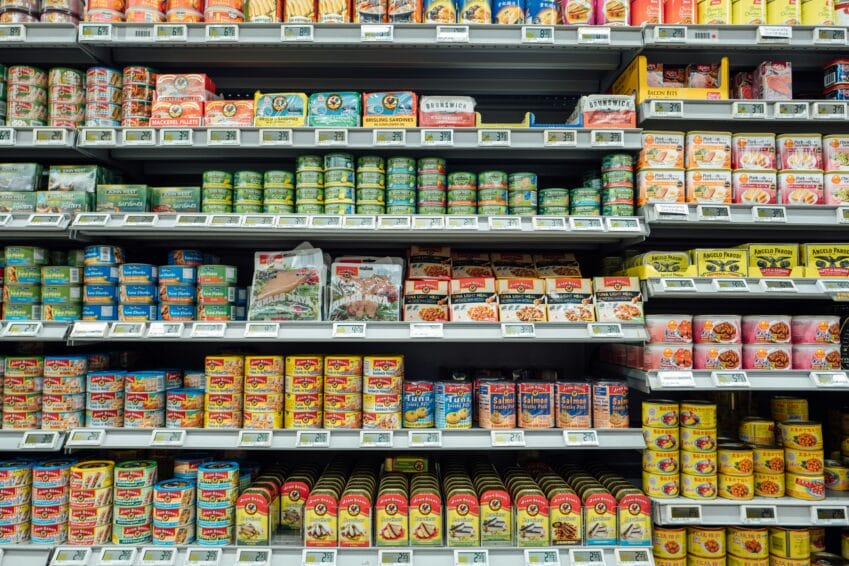
This is for you if your receipt is dominated by repeat-purchase staples — canned tuna, instant noodles, dishwashing liquid, toilet paper, rice — and you’ve never actually compared the store’s own version against the brand you grew up with. It’s also for anyone who felt their grocery bill creep up over the past couple of months and assumed there was nothing to do about it. There is: you just have to know which shelf to look at.
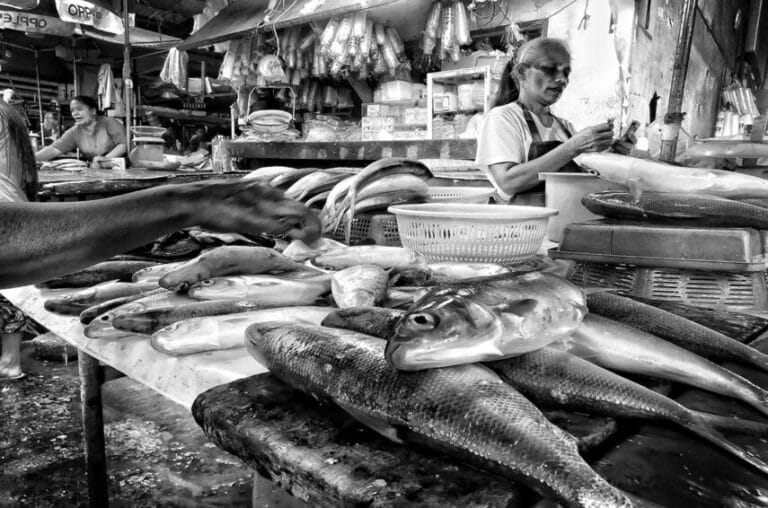
It’s less useful if your cart is already mostly produce, meat, and fresh goods bought at a palengke rather than a supermarket — private label is a packaged-goods game, not a fresh-market one.
Where Switching Pays Off — and Where It Doesn’t
Sulit Tip: Treat the swap category by category, not as an all-or-nothing household decision. Canned goods, condiments, paper products, basic cleaning supplies, and pantry staples like rice and sugar are the lowest-risk places to start — they’re commodity items where formulation barely varies between brands, and a bad batch just means you don’t buy it again.
Where it’s worth being more careful: skincare, cosmetics, infant formula, and over-the-counter medicine. These are categories where the active ingredient, formulation consistency, or how your specific skin or baby reacts matters more than a 20–30% discount, and where switching blind to save money can cost more if it goes wrong. The savings math simply works differently when the downside isn’t “this soup tastes different” but “this didn’t agree with my kid.”
Worked Scenario: What Switching Could Actually Save You
Say your household spends roughly ₱6,000 a month on the kind of packaged pantry items that qualify as easy, low-risk swaps — canned goods, noodles, condiments, paper goods, and cleaning supplies. (That figure is just an illustration to walk through the math; your own receipt is the only real source for your number.) If you moved half of that, say ₱3,000 worth, over to essentials-tier private-label versions priced up to 30% lower, you’d be looking at roughly ₱900 shaved off that portion of your monthly bill — without touching a single item in the categories where you’d rather stick with a brand you trust.
Good to Know: That ₱900 is a ceiling based on the USDA brief’s “up to 30%” figure, not a floor. Some items will save you less, some items you try might not be worth the swap in taste or quality at all — the only way to know is to test one or two items per shopping trip instead of switching your whole basket at once.
How to Shop Private Label Without Getting Burned
Republic Act No. 7394, the Consumer Act of the Philippines, requires product labels to disclose the name and address of the manufacturer, packer, or distributor. Flip the private-label pack over before you decide it’s a mystery product — that fine print often reveals it was contract-manufactured by a name-brand company you already trust, which is common practice in this market and not something retailers hide, just something most shoppers never check.
Buy one or two items per trip instead of overhauling your whole basket — that way a product that doesn’t work out costs you one item’s price, not your whole month’s grocery budget. And keep an eye on your own receipts rather than assuming the USDA’s industry-wide percentages apply exactly to your store and your items; the only comparison that matters is the one between the specific products sitting next to each other on your specific store’s shelf.
What to Do Next
Start with your last grocery receipt: circle anything in canned goods, instant noodles, rice, paper products, or basic cleaning supplies — these are your safest test categories. On your next trip to SM, Landers, S&R, Puregold, or a Robinsons store, pick up the private-label version of just one or two of those items instead of your usual brand. Flip the pack over and check the manufacturer disclosure required by law before you decide how you feel about it. Keep the receipt and compare the actual peso difference yourself — don’t assume a report’s percentage applies to your specific basket. And hold off on switching anything in skincare, medicine, or infant formula until you’ve looked into that specific product’s manufacturer on its own.
Frequently Asked Questions
What is a private-label or “house brand” grocery product?
It’s a product made for and sold exclusively by a specific retailer under that retailer’s own name instead of a national manufacturer’s brand — SM Bonus or Selection by Landers, for example. The retailer typically contracts a manufacturer, sometimes the very same factory that makes the name-brand version, to produce it to the retailer’s own specifications.
Which Philippine supermarkets actually have their own brand groceries?
SM Markets and Savemore carry SM Bonus; Landers Superstore carries Founders and the newer Selection by Landers line launched in 2025; Robinsons Retail stores carry SureBuy and Healthy You, plus the licensed Korean brand No Brand in its own dedicated stores; S&R Membership Shopping carries Member’s Value and Fresh Pick; and Puregold runs its own house-brand program alongside the separate discount chain, Budgetlane, that it owns.
How much cheaper is private label than name-brand groceries in the Philippines?
A 2025 market brief from the USDA’s Foreign Agricultural Service found that essentials-tier private labels are typically priced up to 30% below name brands, and premium private-label lines up to 20% below their branded equivalents. Those figures come from industry interviews, not a fixed rule applied to every SKU, so treat them as a ceiling rather than a guarantee.
Why are Philippine grocery prices going up in late 2026?
Supermarket trade group PASA points to September 2026’s ₱60 NCR minimum wage hike (to ₱755, about a 9.5% increase), a weaker peso, and higher interest rates as reasons retailers are adjusting prices — but only on products outside the DTI’s list of roughly 190-plus basic necessities and prime commodities that the government has held steady through December 31, 2026.
Is the quality of private-label groceries worse than name brands?
Not necessarily — many are made in the same factories as branded competitors, under contract. But quality and exact formulation can vary by product and category, so it’s worth testing a new private-label item in categories where switching back is easy (canned goods, paper products) before trusting it in categories where a bad batch is harder to undo (medicine, infant formula, skincare).
How can I check who actually makes a private-label product?
Republic Act No. 7394 (the Consumer Act of the Philippines) requires labels to disclose the name and address of the manufacturer, packer, or distributor. Check the fine print on the back of the pack — it’s often the fastest way to see whether a private-label item is quietly made by a brand you already know and trust.
Also Worth Checking
If grocery costs are the budget line you’re trying to trim this season, our palengke vs. supermarket comparison covers the other side of the grocery bill — fresh goods instead of packaged ones. If you’re trying to figure out where your 13th month pay should go this year given the same wage-and-price squeeze, that guide walks through the debt-versus-savings-versus-splurge math. For another everyday packaged-goods swap, see our water refilling station vs. bottled water guide. And if the budget-brand-versus-name-brand question comes up again when you’re shopping for appliances instead of groceries, our budget appliance brands guide runs the same logic on a bigger-ticket category. For more of this kind of value-first breakdown, head back to more sulit finds.
Verified Sources Used
Daily Tribune (November 11, 2026): Confirmed PASA’s reasons for supermarket price adjustments, the DTI’s frozen basic-goods list through December 31, 2026, and Palace Press Officer Claire Castro’s statement on which products are and aren’t covered.
Daily Tribune (November 3, 2026): Confirmed the weak peso and higher interest rate context cited by PASA alongside the wage hike.
GMA News (November 4, 2026): Confirmed DTI Secretary Maria Cristina Aldeguer-Roque’s statement ruling out shrinkflation on the monitored basics list.
context.ph (October 23, 2026): Corroborated the scope and year-end timeline of the DTI’s basic-goods price freeze.
USDA Foreign Agricultural Service, GAIN Report RP2025-0002 (January 15, 2025): Source for Philippine private-label market size, retailer market share, named private-label brands per retailer, and the industry-estimated pricing gap versus name brands.
Republic Act No. 7394, the Consumer Act of the Philippines (via LawPhil): Source for the legal manufacturer-disclosure labeling requirement.