
Are Budget Appliance Brands Worth It in the Philippines? Hanabishi, Fujidenzo & TCL vs. Samsung and LG (2026 Guide)
Sulit verdict: Yes, for most households — but not for every appliance. Hanabishi, Fujidenzo, and similar budget Philippine brands are a genuinely sulit choice for appliances you replace often or run lightly (fans, rice cookers, air fryers, small freezers). For appliances that run nonstop for a decade — your refrigerator and your aircon — the math shifts, because a premium brand’s better energy efficiency and wider service network can quietly outearn the lower sticker price. Check the PS or ICC safety mark either way; that part isn’t optional.
Search “service center” on Sulit.ph and a pattern shows up fast: people are constantly looking up where to get a Hanabishi unit fixed, a Fujidenzo repaired, a TCL aircon serviced. That tells you something the retailers won’t: a lot of Filipino households already own these brands, and a lot of them are hitting the point where something needs attention. (If that’s you right now with a TCL unit specifically, our TCL service center and warranty claim guide walks through exactly how to reach support and what the law guarantees you.) The harder question — the one nobody answers before you buy — is whether you should have bought the budget brand in the first place, and whether you should buy one again next time.
As of August 29, 2026, here’s what actually separates budget Philippine appliance brands from the premium names, what you give up and gain at each price point, and how to decide per appliance instead of guessing for your whole household at once.
What Counts as “Budget” vs. “Premium” in Philippine Appliances
Budget brands here generally means Philippine-market names like Hanabishi and Fujidenzo, plus value-tier entries from bigger names like TCL — brands built specifically around accessible pricing for Filipino households, according to appliance retailer Ansons’ 2026 brand guide. Premium here means the Japanese and Korean names most Filipinos already recognize — Samsung, LG, Panasonic, Sharp — which lean on brand-name inverter technology, broader nationwide service networks, and (usually) longer component lifespans.
That’s not a knock on the budget names. Appliance retailer EMCOR’s own reliability roundup actually lists Fujidenzo and TCL alongside Panasonic, Samsung, and LG as brands worth considering for Filipino households, specifically praising Fujidenzo’s “commercial-grade” build for small businesses and tropical-climate durability, and TCL’s “growing reliability reputation” in affordable smart TVs and aircons, per EMCOR’s brand comparison. The real split isn’t “good brand vs. bad brand” — it’s price tier vs. price tier, each with a different set of trade-offs.
What You Actually Pay: A Real Price Comparison
These are live retail prices spot-checked at one major Metro Manila appliance retailer, Western Appliances, in August 2026 — not manufacturer list prices, and not a promo that expires next week. Treat them as a realistic sense of the gap between tiers, since exact prices shift by size, model year, and retailer.
| Appliance | Budget tier (Hanabishi / Fujidenzo) | Premium tier (Samsung / LG) |
|---|---|---|
| Small–mid refrigerator | ₱9,800 (2.8 cu.ft. inverter, Hanabishi) – ₱22,400 (9.0 cu.ft. inverter, Fujidenzo) | Comparable Samsung/LG inverter units typically list noticeably higher for the same capacity class, per manufacturer and retailer pricing |
| Top-load washing machine | ₱8,700 – ₱18,300 (Hanabishi, 4.5kg–9.5kg inverter) | LG front-load models in a similar capacity range ran ₱37,195 – ₱49,700 at the same retailer |
| Window-type aircon | Fujidenzo 2.5HP listed at ₱36,900 | Samsung 1.0HP–1.5HP inverter window units ran ₱23,800 – ₱27,000 (smaller HP, so not a like-for-like size match) |
| Chest freezer | ₱12,500 – ₱35,900 (Fujidenzo, 4.8–22.0 cu.ft.) | Premium brands rarely compete hard in this category — it’s a budget-brand stronghold |
Sulit Tip: Don’t compare sticker prices across brands without matching capacity, HP rating, and inverter vs. non-inverter tech first — a 1.0HP Samsung and a 2.5HP Fujidenzo aren’t the same purchase decision even if they’re both “an aircon.” Match specs, then compare pesos.
The Trade-Off Nobody Puts on the Price Tag
The sticker price is the easy part. Three things don’t show up on it, and they’re exactly what separates a genuinely sulit budget buy from a false economy:
Service network reach. LG is specifically called out for its “wide service network in PH” in EMCOR’s brand comparison — meaning if your unit breaks in a smaller city or province, you’re more likely to find an authorized tech quickly. Budget brands are catching up, but coverage still tends to concentrate around Metro Manila and major cities.
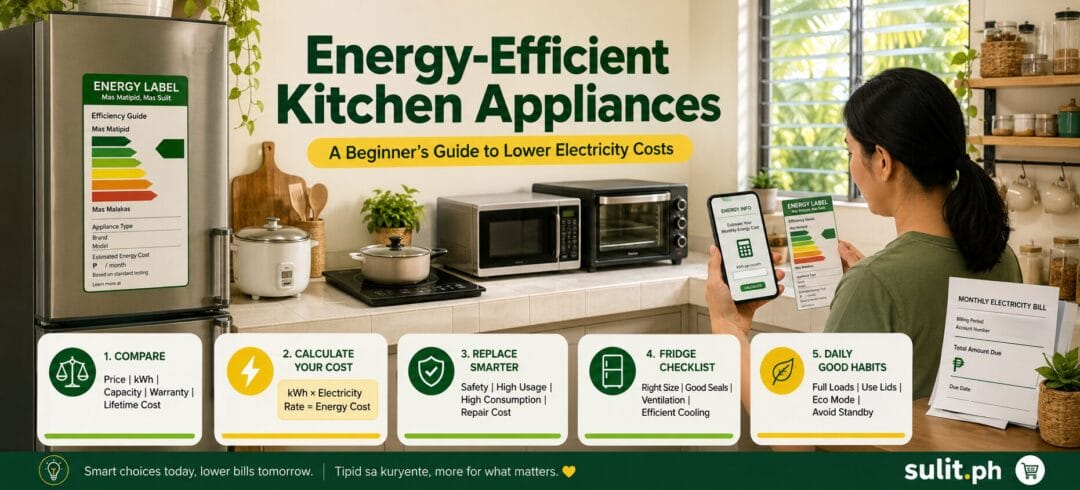
Long-run energy cost. Inverter technology cuts running costs on appliances that operate for hours a day — refrigerators and aircons especially. Premium brands have generally had inverter tech longer and refined it further, though budget brands now ship inverter models too (Hanabishi’s 9.5kg washer and Fujidenzo’s fridges above are both inverter units). The efficiency gap has narrowed; it hasn’t closed. If you want to see what that efficiency difference actually costs you monthly, our energy-efficient kitchen appliances guide breaks down what to check on the label.
Expected component lifespan. This is the hardest one to verify brand-by-brand, since no independent Philippine lab publishes brand-vs-brand failure rates. What’s verifiable is the general appliance lifespan pattern: refrigerators typically run 10–18 years and washing machines 8–16 years regardless of brand tier, per appliance service network Mr. Appliance’s lifespan data (cited in our own repair-or-replace guide). A budget unit that fails at year 6 instead of year 12 has effectively cost you a second purchase — that’s the real risk you’re pricing in, not just the sticker.
Heads Up: Neither Sulit.ph nor any retailer can promise you a specific lifespan for a specific unit — appliance failure depends heavily on usage, voltage stability in your area, and maintenance. Treat brand tier as one input into your decision, not a guarantee.
Safety First: Check the PS or ICC Mark Before Price
Before comparing peso amounts at all, confirm the unit is legally allowed to be sold in the Philippines in the first place. Every electrical appliance sold here — refrigerators, aircon units, TVs, microwaves — falls under the Bureau of Philippine Standards’ mandatory certification scheme: locally made units need the PS (Philippine Standard) mark, imported units need the ICC (Import Commodity Clearance) sticker, per BPS’s own certification page. This applies equally to budget and premium brands — a real Fujidenzo or a real Samsung both need it; a fake or gray-market unit of either brand often won’t have it, or will have a forged one.
This isn’t a hypothetical concern. DTI Secretary Ma. Cristina Roque publicly urged buyers to check safety marks specifically because uncertified appliances “can cause fires and other problems,” and the agency issued violation notices to 238 companies between 2024 and mid-2026 for failing to meet mandatory product standards or lacking proper certification, per GMA News’ coverage of the DTI advisory.
Good to Know: You can verify an ICC sticker through DTI-BPS’s ICC Verification mobile app, or call the BPS Standards Conformity Division directly at (+632) 7791-3130/3131/3329/3330 if a PS mark looks questionable. This takes two minutes and applies whether you’re buying in a mall, an appliance center, or a Shopee/Lazada storefront.
Your Legal Warranty Rights Apply to Every Brand, Budget or Not
Whichever tier you buy into, Philippine law backs you up the same way. Under the Consumer Act (Republic Act No. 7394), Article 68, every new appliance carries an implied warranty of merchantability — a legal guarantee it works as intended — that runs at least 60 days and up to one year from the date of sale if the seller didn’t provide a separate written warranty, or matches the seller’s own written warranty period if they did, per LabanPH’s consumer rights explainer. That protection exists “even without a warranty card” — a missing card is not grounds for a store to deny you a repair, replacement, or refund on a genuine manufacturing defect.
Sellers are also required to disclose warranty terms clearly in writing under DTI Department Administrative Order No. 02, Series of 1993, per legal resource BatasNatin’s Consumer Act summary. A blanket “No Return, No Exchange” policy carries no legal weight against a defective product claim either — DTI itself has called the practice a “deceptive sales act” prohibited under the Consumer Act, and states plainly that consumers “are entitled to the repair, replacement and refund of products with defects,” per DTI’s own consumer advisory. If a store won’t honor a legitimate claim, DTI offers free consumer mediation.
Practically, this means the warranty gap between a budget and premium brand is often smaller than people assume — the legal floor is the same either way. What differs is how far past that floor each brand’s own express warranty goes, and how easy the brand makes it to actually use that warranty (service center count, turnaround time, parts availability). Check the written warranty terms on the specific model, not just the brand’s general reputation.
Who Should Buy Budget, and Who Should Pay More
Rather than picking one brand tier for your entire household, it helps to decide per appliance:
Lean budget (Hanabishi, Fujidenzo, TCL) for: electric fans, rice cookers, air fryers, blenders, small chest freezers, and secondary or backup units — anything you use lightly, replace on a shorter cycle anyway, or wouldn’t be devastated to lose for a few days while it’s serviced.
Consider paying more for: your primary refrigerator and your primary aircon unit — appliances that run continuously for years, where inverter efficiency and service network breadth compound over time, and where a multi-day repair wait is genuinely disruptive to a household.
Either tier works for: washing machines and TVs, where the gap in real-world performance between a well-reviewed budget model and an entry-level premium model has narrowed enough that household budget and specific features (capacity, smart TV functions) should drive the call more than brand tier alone.
Worked Scenario: Furnishing a New Apartment on a Budget
Say you’re setting up a new one-bedroom apartment and need a refrigerator, a washing machine, and a window aircon, with roughly ₱70,000 total to spend across all three.
Going all-budget (Fujidenzo fridge at roughly ₱19,300, Hanabishi washer at roughly ₱9,700, Fujidenzo aircon at roughly ₱36,900) lands you at about ₱65,900 — under budget, with roughly ₱4,000 left over, and you walk away with all three appliances in hand. Going all-premium for the same three categories would likely blow past ₱70,000 on the aircon and washer alone, based on the LG and Samsung price points above, forcing you to either drop a category or extend your budget.
The smarter middle path: spend the premium money where it compounds — the aircon, since it’ll likely run for hours daily in a small unit — and go budget on the washer, which sees lighter, more occasional use. That reallocation gets you a better long-run efficiency pick on the appliance that matters most for your electric bill, without blowing the whole budget or sacrificing every premium feature.
Sulit Tip: If you’re timing this purchase around a sale event rather than buying immediately, our Shopee, Lazada & TikTok Shop sale calendar shows which months tend to run appliance-focused promos, so you can stretch that ₱70,000 further without changing your brand mix at all.
If you’re also weighing recurring household costs beyond appliances, our guide to water refilling stations vs. bottled water delivery covers the same “cheaper option, but verify it first” trade-off for drinking water.
Also Worth Checking
If an appliance you already own is on its way out rather than you shopping fresh, our repair-or-replace decision guide walks through the 50% rule for deciding whether a fix is worth it regardless of brand. If you’re weighing paying extra for a service plan on top of any of these units, our extended warranty guide covers when that add-on actually pays for itself. And once you’ve picked a unit, our energy-efficient kitchen appliances guide covers what to check on the energy label before you finalize the purchase. If you’re weighing a robot vacuum against these same appliance categories, our robot vacuum buying guide covers real Philippine pricing tiers and warranty rights for that purchase too. For more of this kind of value-first breakdown, head back to more sulit finds.
Verified Sources Used
Ansons Philippines: Confirmed Fujidenzo’s market positioning as a budget-tier Philippine appliance brand and its core product lines.
EMCOR: Confirmed brand reliability positioning across budget and premium tiers, including LG’s service network reach and Fujidenzo/TCL’s standing among recommended brands.
Western Appliances (Hanabishi listings): Confirmed live August 2026 retail prices for Hanabishi refrigerators and washing machines.
Western Appliances (Fujidenzo listings): Confirmed live August 2026 retail prices for Fujidenzo refrigerators, freezers, and aircon units.
DTI Bureau of Philippine Standards: Confirmed the PS mark and ICC sticker mandatory certification requirements for electrical appliances sold in the Philippines.
GMA News Online: Confirmed DTI’s 2026 consumer safety advisory and the 238 companies issued violation notices for non-compliant products.
LabanPH: Confirmed the implied warranty period (60 days to 1 year) under Republic Act 7394, Article 68, applying regardless of brand or warranty card status.
DTI, via ASEAN Consumer: Confirmed DTI’s own position that “No Return, No Exchange” is a prohibited deceptive sales act and does not override statutory warranty rights under the Consumer Act.