Are “Overrun” Branded Clothes Worth It in the Philippines? Real Factory Surplus vs. Fake Tags (2026 Guide)
Sulit verdict: Mostly not worth the risk if you’re paying for a specific global brand name — most “overrun” racks selling Nike, Adidas, or Uniqlo-logo items are legally indistinguishable from counterfeits under Philippine law, with no warranty and no verified authenticity. Unbranded or local-label surplus can be genuinely sulit; branded “overrun” is a gamble dressed up as a bargain.
“Overrun” is one of the most-used words in Philippine tiangge shopping, and one of the least checked. Sellers in Taytay, Greenhills, Divisoria, and on Shopee or Facebook use it to mean “genuine factory excess, not fake” — stock that supposedly fell off the same production line as the real branded item, just without the brand’s blessing to sell it. The problem: the Philippines has no legal definition of “overrun,” so the label is marketing, not a guarantee. Whether an item is actually excess production, genuinely used (ukay-ukay), or a straightforward counterfeit depends entirely on what’s in your hands — not on what the tag or the seller calls it.
As of November 20, 2026, here’s what the law actually says about unauthorized branded goods, how counterfeit enforcement in the Philippines has scaled up, and how to tell a defensible buy from a legal and money risk before you hand over cash.
What “Overrun” Actually Means — and What It Doesn’t
In the Philippine garment trade, “overrun” is contractor-factory slang for units produced beyond a brand’s ordered quantity, or rejects that didn’t pass quality control — stock a local contract manufacturer technically has on hand after fulfilling an export order for a global brand. That part can be real: the Philippines has a long history of garment subcontracting for export.
What usually isn’t real, or at least isn’t legal, is the brand’s permission to sell that excess stock under its own trademark. Most manufacturing agreements bar the contractor from selling leftover branded units at all — they’re supposed to be destroyed or stripped of branding. A shirt with a Nike swoosh or a Uniqlo tag sold without Nike’s or Uniqlo’s authorization is, from a strict legal standpoint, using that trademark without consent — whatever the fabric’s actual origin. The Intellectual Property Code of the Philippines doesn’t carve out an “overrun” exception.
The Legal Reality: What RA 8293 Actually Says
Republic Act No. 8293, the Intellectual Property Code of the Philippines, is the controlling law here, and it’s narrower than most sellers imply. Section 155 (lawphil.net) defines trademark infringement as using “any reproduction, counterfeit, copy, or colorable imitation of a registered mark” in commerce — selling, offering for sale, or advertising — in a way likely to cause confusion or deceive. Section 168 separately covers unfair competition: passing off goods as those of another manufacturer through deception. Both sections point to the same penalty under Section 170: imprisonment of two to five years and a fine of ₱50,000 to ₱200,000.
Heads Up: That penalty is aimed at the act of using the mark in commerce — manufacturing, selling, distributing, or advertising infringing goods — not at the private act of buying something for your own closet. We’re not lawyers and this isn’t legal advice, but the exposure under RA 8293 lands much harder on the stall owner or online seller than on the person handing over cash for a shirt. That doesn’t make the item authentic or warranty-backed; it just means the criminal risk and the “is this actually real” risk are two separate questions.
A related but different law, Republic Act No. 4653 (1966), bans the commercial importation of used clothing and rags into the Philippines — the law that technically makes imported ukay-ukay stock illegal to bring in, even though it’s sold openly at retail. That law targets secondhand goods specifically. A true overrun is new and unused, so RA 4653 doesn’t apply to it — but that just means overrun buyers trade one legal question (import of used goods) for another (trademark rights on new goods carrying someone else’s logo).
Overrun vs. Ukay-Ukay vs. Replica vs. Retail
| Market Label | What It Actually Is | Legal Status in the Philippines | Price vs. Brand Retail | Authenticity Risk |
|---|---|---|---|---|
| “Overrun” with a visible brand logo | Claimed factory excess or rejects from a contract manufacturer | Same exposure as a counterfeit if the brand didn’t authorize the sale — RA 8293 Secs. 155 & 168 | Well below retail (e.g., a fraction of the ₱390 Uniqlo pays for its own crew-neck tee) | High — no way to confirm without the brand itself |
| “Overrun” with no brand logo | Genuine factory excess sold as an unbranded, no-name item | Legal — no one’s trademark is being used | Below branded equivalents | Low — you’re buying exactly what’s in front of you |
| Ukay-ukay (secondhand/thrift) | Used, imported secondhand clothing | Commercial importation restricted under RA 4653; retail sale is widely tolerated | Lowest of the four | Low on “is it genuine” — it’s genuinely used; condition and hygiene vary instead |
| “Class A” replica | Deliberate counterfeit, marketed openly as a premium copy | Same infringement exposure as unauthorized overrun — RA 8293 Secs. 155 & 168 | A fraction of retail | Certain — sold explicitly as a copy, no ambiguity |
| Authorized retail or distributor | New stock the brand itself sold | Fully legal, warranty-backed | Full price (₱390–₱990 at Uniqlo PH, Nov. 20, 2026) | None |
Our guide to “Class A” replica bags and sneakers goes deeper on that row specifically — the legal and resale math there applies almost word-for-word to a branded “overrun” once you strip away the euphemism.
Where Overruns Are Actually Sold
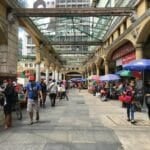
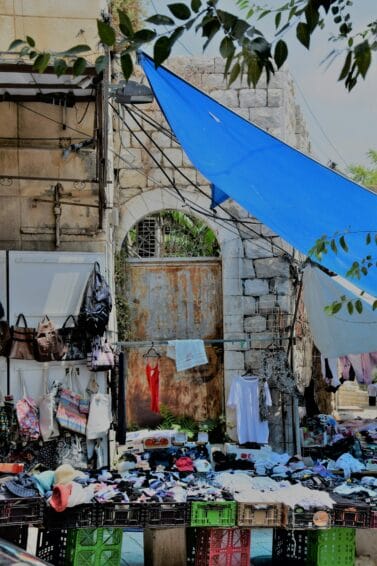
Taytay, Rizal is the best-known hub — the local government itself promotes garment trading as a core part of the municipality’s economy, per Taytay’s own LGU economy page, and its tiangge rows of folded, bagged clothing are a well-established weekend shopping circuit for resellers and bargain hunters alike. Similar racks turn up at Greenhills Tiangge, Baclaran, Divisoria, and Cartimar — the same cluster the European Union’s intellectual-property observatory named as counterfeit-selling hotspots in a 2023 report, as covered by Manila Bulletin — and increasingly on Shopee, Lazada, and Facebook under listings labeled “OG overrun” or “factory overrun.”
Sulit Tip: A seller insisting their stock is “straight from the factory, hindi tumbok” is making a claim you can’t verify from a photo. Treat that line the same way IPOPHL’s own consumer guidance treats it: as marketing, not proof.
Worked Scenario: Checking a “Nike Overrun” Hoodie Before You Buy
You’re at a tiangge stall and a hoodie with a visible Nike swoosh is priced far below what Nike’s own stores charge. Here’s the inspection IPOPHL’s own public guidance — its long-running “5 Ps” framework for spotting fakes — points you toward, applied step by step:
1. Packaging and tagging. Check the care label and size tag for spelling errors, inconsistent fonts, or a missing/blurry registration seal — common tells IPOPHL flags across product categories.
2. Price. Compare it against the brand’s own current price for a comparable item (a quick phone check against the brand’s official site or an authorized mall store works). A price that’s a small fraction of retail is the single biggest red flag IPOPHL itself names.
3. Product quality. For apparel specifically, IPOPHL’s guidance calls out stitching, fabric weight, and overall craftsmanship — logos and even hang-tags are easy to imitate, but even stitching is harder to fake convincingly.
4. The promotional pitch. “Factory direct,” “limited overrun batch,” or a countdown timer pushing you to decide fast are sales tactics, not authenticity proof.
5. The place of sale. An authorized Nike store, Nike’s own online shop, or a listing the brand itself cites as official carries far less ambiguity than an anonymous stall or unverified online seller.
If two or more of these flags fire at once — bargain price, no verifiable origin, a seller who gets vague when asked where the stock actually came from — treat the item as a counterfeit for decision-making purposes, even if it’s labeled “overrun,” because legally and practically, that’s what it is until proven otherwise.
What to Do Next
Three steps, in order, before you buy anything labeled “overrun”: First, decide whether the brand name itself matters to you — if you just want a decent plain shirt at a low price, an unbranded surplus item sidesteps the entire legal question and is the most defensibly “sulit” option on this list. Second, if you do want a specific logo, price-check it against that brand’s own current listing (official site or authorized store) before you decide the tiangge price is a deal — a markdown of 90% or more from retail is the clearest signal IPOPHL itself warns about. Third, if authenticity genuinely matters for that purchase — a gift, resale, or a piece you want backed by a warranty — buy from an authorized retailer or the brand’s own store instead of gambling on a tiangge rack or an unverified online listing.
Frequently Asked Questions
What does “overrun” actually mean when a seller uses it?
It’s meant to signal factory excess or rejected units from a contract manufacturer that made goods for a global brand — stock that exists but wasn’t authorized for sale under that brand’s name. There’s no legal definition of the term in the Philippines, so sellers apply it loosely, including to items that are really just counterfeits.
Is it illegal to buy “overrun” branded clothes in the Philippines?
The penalty provisions of the Intellectual Property Code (RA 8293, Section 170) target using a counterfeit mark in commerce — manufacturing, selling, distributing, or advertising — not the private act of buying something for personal use. This isn’t legal advice, but the direct legal exposure falls mainly on sellers, not casual buyers.
Is it illegal to sell “overrun” items with a brand’s logo on them?
If the brand didn’t authorize the sale, yes — Sections 155 and 168 of RA 8293 cover exactly this: using a registered mark, or passing goods off as a brand’s own, without consent. The penalty under Section 170 is imprisonment of two to five years and a fine of ₱50,000 to ₱200,000.
How can I tell if an “overrun” item is genuine or fake?
There’s no foolproof way from a photo. IPOPHL’s own public guidance for spotting counterfeits — covering packaging quality, price versus the brand’s official price, product craftsmanship, promotional claims, and the place of sale — is the closest thing to a standard checklist, and it’s built for exactly this situation.
Is ukay-ukay the same thing as an overrun?
No. Ukay-ukay is secondhand, previously worn clothing, usually imported — its commercial importation is restricted under Republic Act No. 4653. An overrun is supposed to be new, unused factory stock. They’re sold in similar tiangge settings but are legally and physically different categories of goods.
Where are “overrun” clothes commonly sold in the Philippines?
Taytay, Rizal is the most established hub, alongside Greenhills Tiangge, Baclaran, Divisoria, and Cartimar in Metro Manila, plus a growing volume of listings on Shopee, Lazada, and Facebook Marketplace labeled “overrun” or “factory surplus.”
Also Worth Checking
If replicas rather than claimed surplus are more your question, our guide to “Class A” replica bags and sneakers covers the legal and resale risk in more detail. For the secondhand side of budget fashion, our ukay-ukay guide to thrifting in Metro Manila breaks down where to dig for real finds. And before you trust any online “overrun” or surplus listing specifically, our guide to checking FDA, PS/ICC, and DTI registration and our guide to verifying a seller with Carousell’s DTI Trustmark both cover practical seller-verification steps that apply here too. For more of this kind of value-first breakdown, head back to more sulit finds.
Verified Sources Used
LawPhil — Republic Act No. 8293 (Intellectual Property Code of the Philippines): Confirmed the exact text of Section 155 (trademark infringement), Section 168 (unfair competition), and Section 170 (penalties: 2–5 years imprisonment, ₱50,000–₱200,000 fine).
IPOPHL / NCIPR (published Feb. 6, 2025): Confirmed counterfeit goods seized nationwide reached ₱40.99 billion in 2024, 52% higher than ₱26.99 billion in 2023.
IPOPHL / NCIPR (published Nov. 28, 2025): Confirmed ₱18.64 billion in counterfeit goods seized January–September 2025, including Bureau of Customs seizures of “bags, clothes and accessories” bearing unauthorized global-brand trademarks.
IPOPHL — “The 5Ps You Should Scrutinize to Avoid Buying Fakes”: Confirmed IPOPHL’s own consumer framework (Packaging, Price, Product, Promotional message, Place) for spotting counterfeit goods, including apparel-specific stitching and craftsmanship checks.
Taytay, Rizal — official LGU economy page: Confirmed garment trading and tiangge retail as a recognized part of the municipality’s local economy.
Manila Bulletin (Jan. 16, 2023): Confirmed the EU Intellectual Property Office’s 2023 report naming Greenhills, Baclaran, Divisoria, and Cartimar as counterfeit-selling locations.
Uniqlo Philippines — official online store: Confirmed current retail prices (₱390–₱990 for basic crew-neck and polo styles) as listed on Nov. 20, 2026, used here as a retail price reference point.