
Is a Home Water Purifier Worth It in the Philippines? (2026 Guide)
Sulit verdict: For most Metro Manila and urban households, a home water purifier is worth it only if you’re a heavy water drinker who’s tired of hauling gallons, or you live somewhere with genuinely bad-tasting or discolored tap water — and even then, a simple countertop or faucet-mount filter beats an expensive alkaline “ionizer” almost every time. Skip the ₱100,000+ alkaline machines sold through home demos entirely; the Philippine FDA has been warning about their health claims since 2014, and the science hasn’t changed.
If you’ve ever had a “water guy” ring your doorbell offering a free demo, or scrolled past a Facebook ad promising an ionizer will change your blood pH, you’ve met the sales machine behind this category. Meanwhile, most of us already have a system that mostly works: refill stations, bottled delivery, or straight from the tap. So where does buying your own purifier actually fit in — and when is it just an expensive way to filter water you could’ve filtered for a tenth of the price?
As of September 2026, here’s how the real options stack up, what the government actually says about tap water and alkaline claims, and how to tell a legitimate purifier from an overpriced pitch.
Is Philippine Tap Water Actually Safe to Begin With?
This is the question a purifier is supposed to answer, so it’s worth checking first. The Philippines has an official drinking water standard — the Philippine National Standards for Drinking Water of 2017 (DOH Administrative Order No. 2017-0010), administered through the Department of Health and the FDA’s water-quality oversight. Utilities are required to test against it.
Maynilad, for one, has previously reported sampling water at over 800 points across its network and said treated water leaving its plants is safe to drink, while flagging the real caveat: contamination risk lives mostly in the distribution network — old pipes, damaged lines, and illegal connections — not the treatment plant itself. That caveat isn’t theoretical. Metro Manila saw multiple pipe-related service interruptions and turbidity advisories through 2026, including a temporary “don’t drink from the tap” notice in parts of Las Piñas, Muntinlupa, Parañaque, Bacoor, and Imus after a rainy-season spike in raw water salinity.
Good to Know: This is exactly why a lot of households don’t fully trust straight tap water even when it tests clean at the source — it’s not paranoia, it’s a reasonable response to a distribution network that occasionally breaks. A purifier or filter is one way to buy yourself a margin of safety on the last few meters between the pipe and your glass, on top of whatever your water district already treats.
Your Real Options, and What They Actually Cost
“Water purifier” covers a wide range of products with very different price points and very different jobs. Based on currently listed Philippine reseller pricing as of September 2026, here’s roughly where each type lands:
| Type | What It Does | Typical Price Range (PHP) | Ongoing Cost |
|---|---|---|---|
| Countertop gravity-fed filter pot | Basic sediment/chlorine/taste filtering | ~₱1,150 – ₱2,500 | Replacement cartridge every few months |
| Faucet-mounted filter | Inline filtering at the tap, no plumbing changes | ~₱1,000 – ₱7,000 | Filter cartridge swaps |
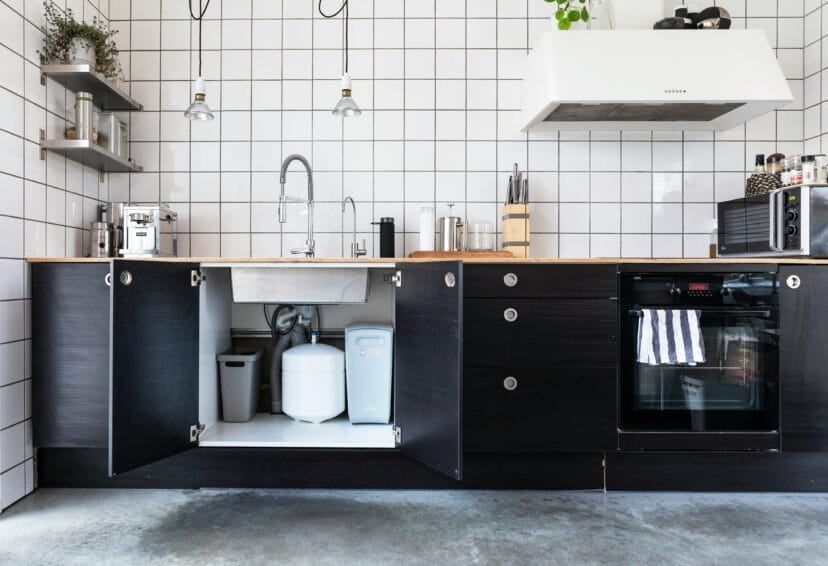
| Under-sink multi-stage filter | Higher-capacity filtering, hidden install | ~₱2,500 – ₱7,000 | Occasional filter replacement, may need a plumber to install |
| Countertop RO dispenser / mineral pot | Reverse osmosis or mineral/alkaline “enhancement,” hot-cold dispensing | ~₱20,000 – ₱35,000+ | Filter/membrane replacement, higher electricity use if it heats/chills |
| Rent-a-purifier subscription plans | Filtration unit + maintenance bundled into a recurring fee | No upfront cost; recurring monthly fee instead | Locked into a multi-year contract in most markets that offer this model |
Sulit Tip: Don’t confuse “alkaline” with “better filtered.” The mineral/alkaline claim is a separate marketing layer bolted onto a filtration base — you can get equivalent or better actual filtration from a plain countertop or under-sink unit at a fraction of the price of an alkaline-branded one.
The Math: Purifier vs. Refill Station vs. Bottled Delivery
We’ve already broken down refill stations versus bottled delivery in a separate head-to-head guide — that comparison is really about ongoing cost per gallon. Buying your own purifier changes the shape of the decision entirely: instead of paying per refill forever, you pay once (or monthly, if you rent) and then mostly just replace filters.
The break-even point depends entirely on how much water your household actually drinks and how far your nearest reliable refill station is. A single person who barely drinks two gallons a week has very little to gain from a ₱20,000 countertop RO unit. A family of five doing daily refills, or a household near a refill station with inconsistent water quality, has a much faster path to breaking even — but “faster” still usually means months, not days, so this isn’t an impulse buy.
Heads Up: Before you do the math on any specific unit, get the real filter-replacement cost and interval from the seller in writing — some units look cheap upfront but need pricier proprietary cartridges every 1-2 months, which can quietly cost more per year than what you were paying a refill station.
The Alkaline Ionizer Problem: What the FDA Actually Says
This is the part of the category worth being genuinely careful about. Alkaline and “oxygenated” water ionizers are often sold through home demonstrations or multi-level marketing networks, with health claims ranging from better hydration to disease prevention. The Philippine FDA has an active public health warning on exactly this: FDA Advisory No. 2014-010-A states plainly that drinking alkaline, oxygenated, or ionized water does not change your blood pH, that any therapeutic claims must be backed by valid clinical trials, and that products making such claims need a proper Certificate of Product Registration and License to Operate under RA 9711 (the FDA Act of 2009). The advisory’s core message to consumers: don’t fall for unscrupulous vendors and peddlers.
None of this means every alkaline-branded pot is a scam — many are, functionally, just filter pitchers with a marketing label. But it does mean you should never pay a premium for a health claim the government itself says isn’t backed by evidence. Local reporting has documented cases of alkaline ionizers being sold here through MLM-style channels at prices reaching six figures in pesos, a pattern echoed internationally with similar devices.
Worked Scenario: Should You Buy One, or Just Keep Refilling?
Say you’re a household of four in a condo, currently spending on twice-weekly refill station trips, and a “water guy” just left a flyer for a ₱24,000 countertop alkaline dispenser with 12-month installment terms.
Here’s how to think it through: first, ignore the alkaline claim entirely and price the unit purely as a filtration appliance — would you pay that much for a plain RO dispenser with no health marketing? If the honest answer is no, that premium is exactly what you’re being asked to pay for a claim the FDA says isn’t substantiated. Second, check your actual refill frequency and cost over a full year, not a good month — then compare that annual number against the unit’s price plus a realistic filter-replacement schedule (ask for this in writing before you buy anything). If the purifier doesn’t clearly win on that math within a reasonable window, and especially if the pitch leans hard on health benefits rather than filtration specs, it’s fair to walk away and keep refilling.
Also Worth Checking
If you’re weighing this against what you’re already spending on water, our water refilling station vs. bottled water delivery breakdown covers the ongoing-cost side of the equation. If a purifier eventually breaks down, our repair or replace appliance guide walks through when it’s worth fixing versus buying new. And before you sign any installment or subscription contract for one of these units, our extended warranty guide covers what’s actually worth paying for versus what you already get for free under Philippine consumer law.
Frequently Asked Questions
Do I need a purifier if my area already has good tap water?
Not necessarily. If your water utility reports consistent compliance and you haven’t had discoloration, odor, or advisory issues, a basic filter is more about taste and peace of mind than a safety requirement.
Is alkaline water actually healthier than regular filtered water?
The Philippine FDA’s own advisory says therapeutic claims for alkaline and ionized water lack the clinical backing to be marketed that way, and that the water doesn’t change your blood pH. Treat “alkaline” as a marketing label, not a health upgrade.
How often do purifier filters need replacing?
It varies by unit and usage, from every couple of months for basic cartridges to longer intervals for higher-capacity systems — always get this interval and its cost in writing from the seller before buying.
Is it worth renting a purifier instead of buying one outright?
Rental plans remove the upfront cost and usually bundle maintenance, but they typically lock you into a multi-year contract — worth it mainly if you’d rather spread the cost and don’t want to deal with filter changes yourself, less so if you’re likely to move or switch providers soon.
Verified Sources Used
Philippine FDA: Confirmed FDA Advisory No. 2014-010-A’s warning against unsubstantiated alkaline/oxygenated water health claims and its citation of RA 9711 registration requirements.
Philippine FDA: Confirmed the existence and title of DOH Administrative Order No. 2017-0010, the Philippine National Standards for Drinking Water of 2017.
Maynilad Water Services: Confirmed Maynilad’s reported sampling network (800+ points) and its own statement that treated water leaving its plants is safe to drink, plus its caveat on distribution-network contamination risk.
Manila Bulletin: Confirmed ongoing 2026 Metro Manila water service interruptions tied to pipeline issues.
Inquirer Business: Confirmed reporting on alkaline water ionizers sold in the Philippines through MLM-style channels at high prices, and cited the FDA’s related advisory.
mybest.com Philippines: Source for currently-listed Philippine reseller prices across water purifier types (countertop, faucet-mount, alkaline mineral pot), observed September 2026 — confirm current pricing before buying, as reseller prices change frequently.