Which of the 12 Lucky Round Fruits for Media Noche Are Actually Sulit This New Year? (Philippines Price Guide)
Sulit verdict: Skip imported apples, grapes, and persimmons, which vendors expect to climb further through December 31 — fill most of your 12 round fruits instead with cheap, naturally round Philippine ones like calamansi, chico, santol, lanzones, and atis. Last New Year’s season, imported fruit prices rose roughly ₱10 to ₱20 per kilo as demand peaked in late December.
Every Filipino household has some version of the same table on December 31: a dozen round fruits, arranged for luck, next to the pancit and the lechon. It’s one of the most widely followed New Year’s Eve customs in the country, and it’s also one that quietly costs more than it needs to if you buy the same five “showpiece” fruits everyone else is grabbing in the last 48 hours before Media Noche.
This guide breaks down which round fruits actually spike in price before New Year, which ones barely move, and how to put together a full set of 12 without overpaying for fruit that’s only on the table for symbolism, not for eating.
As of late November 2026, New Year’s Eve is still more than a month away, which is exactly the window where you have the most control over this. Once the week of December 29-31 hits, the fruits that do spike won’t come back down — so the fixes below are mostly about timing and substitution, not haggling.
Which Round Fruits Actually Cost More (and Which Don’t)
Philippine news outlets tracked vendor prices in Metro Manila markets ahead of the last two New Year’s Eve seasons, and the pattern is consistent: imported fruits cost more to begin with and are the ones vendors singled out as rising further right before December 31. Locally grown round fruits — the ones your lola’s generation always filled the table with — are cheaper and move far less.
| Fruit | Local or Imported | Last Season’s Price (Verified) | Why the Price Moves |
|---|---|---|---|
| Watermelon (pakwan) | Local | ₱250 per piece (Dec. 2025) | Sold whole near NYE; demand surges in the final days |
| Grapes | Imported | ₱200–₱400/kg (Dec. 2024); ₱300/kg (Dec. 2025) | Imported, so price tracks supply and shipping on top of NYE demand |
| Apple | Imported | ₱100 per 3 pcs, ~₱33/pc (Dec. 2024) | Imported; sold per piece or small bundle instead of per kilo close to NYE |
| Persimmon | Imported | ₱100 per 3 pcs (Dec. 2025) | Seasonal import; price firms up as stock thins by Dec. 31 |
| Longan | Imported | ₱250/kg (Dec. 2025) | Imported, limited local supply around this time of year |
| Ponkan / mandarin | Mixed (local and imported) | ₱10–₱35/pc (Dec. 2024) | Wide range by size and origin — the cheapest widely sold “round” fruit |
| Kiat-kiat (calamondin) | Local | ₱100–₱130/kg or small bundle (Dec. 2024–2025) | Philippine-grown; the smallest year-to-year price swings of the group |
Sulit Tip: You don’t need all seven of these. A table built mostly from ponkan, kiat-kiat, and one or two local staples like chico, santol, atis, or lanzones — all naturally round and typically the cheapest items at any palengke fruit stall — gets you most of the way to 12 before you spend a peso on anything imported. Save the apple, grapes, or persimmon for the one or two “special” fruits you actually want to display or eat.
Where the Tradition Comes From, and Why 12
The custom isn’t tied to one specific church or government holiday rule — it’s a folk practice, most often traced to Chinese-Filipino influence, built around a simple piece of shape symbolism: round fruits resemble coins, so a table full of them is meant to represent money and abundance carrying into the new year. The number 12 is commonly explained as standing in for the 12 months of the year ahead, with each fruit representing a month of good fortune.
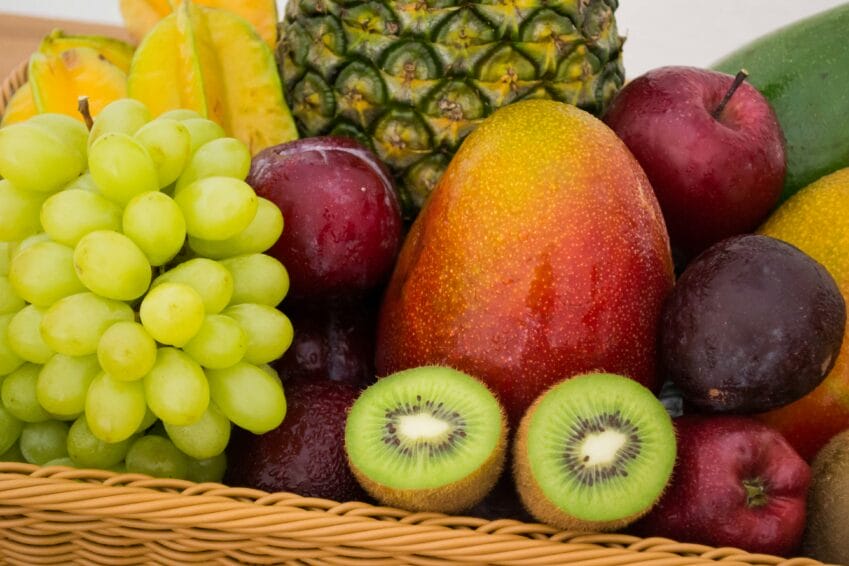
In practice, the “12” isn’t an exact requirement. Philippine lifestyle coverage of the tradition lists dozens of fruits that qualify as long as they’re round, semi-round, or even just roundish — apple, orange, watermelon, melon, mango, papaya, pear, calamansi, lemon, grapes, banana, persimmon, kiwi, pineapple, cherries, longans, peaches, pomelo, guava, santol, lanzones, dragonfruit, and chico all show up on published lists. Some households round up to 13 instead. The point is variety and abundance, not a strict checklist — which is exactly what makes it easy to substitute cheaper local fruit for pricier imported ones without breaking the tradition.
Heads Up: Vendors reported prices still climbing on imported fruit as December 31 approached in both of the last two seasons, with increases concentrated in the final days rather than spread evenly through December. If you’re buying grapes, apples, or persimmons specifically for the table, buying them on December 28 or 29 rather than December 31 won’t save you money — prices rise into the deadline, not away from it — but it does protect you from the thinnest, most picked-over stock on the last day.
How to Buy Your 12 Without Overpaying
Good to Know: Timing matters differently depending on how perishable the fruit is. Hardy, longer-shelf-life round fruits (ponkan, kiat-kiat, calamansi, chico, santol) can be bought several days early without spoiling. Soft or delicate ones (grapes, persimmon, lanzones) are best bought one to two days before December 31 so they’re still fresh for the table.
- Build your base from local round fruits first. Ponkan, kiat-kiat, chico, santol, atis, lanzones, and calamansi are Philippine-grown, consistently cheaper, and move very little in price even during peak demand.
- Pick one or two imported “centerpiece” fruits, not five. Apples, grapes, and persimmons look good on the table, but you only need a small amount of each to count toward your 12 — a handful, not a kilo.
- Buy perishables last. Save grapes, persimmons, and other soft fruit for your final grocery run, one to two days before Media Noche.
- Shop the palengke over the supermarket for loose fruit. As our own palengke vs. supermarket breakdown covers, fresh produce is usually cheaper at a wet market stall thanks to lower vendor overhead — and most stalls will happily sell small, mixed quantities instead of a full kilo.
- Check a live price source before buying in bulk. The Department of Agriculture’s free Bantay Presyo price-monitoring system tracks retail prices of agri-fishery commodities in Metro Manila and is worth a quick check at da.gov.ph/price-monitoring before you commit to a big purchase in the final week.
Worked Scenario: Building a 12-Fruit Table for Under ₱500
Here’s one way to hit 12 round fruits without spending much on the imported ones. Using last season’s verified low-to-typical prices: 6 pieces of ponkan at the low end of ₱10 each (₱60), one small bundle of kiat-kiat (₱100), 3 pieces of apple (₱100), a quarter kilo of grapes at ₱300/kg (₱75), and 3 pieces of persimmon (₱100) adds up to ₱435 — and that’s already five distinct fruit types, several of them bought in small handfuls rather than full kilos.
That leaves room in both budget and fruit count: a handful of chico, santol, atis, lanzones, or a banana or two from the same palengke trip — all naturally round, Philippine-grown staples that are typically the least expensive items at any fruit stall, though exact prices vary by vendor and are worth a quick check on the day — rounds out the remaining fruit types for well under the ₱65 left in this budget, landing the full 12-fruit table comfortably under ₱500.
Sulit Tip: Mixing a few imported “display” fruits with mostly local ones isn’t cutting corners on the tradition — shape and quantity are what the custom calls for, not origin or price. The DA’s Bantay Presyo tool above can tell you whether this week’s prices in your area are running higher or lower than the figures used in this example.
What to Do Next
Before December 31: write out your list of 12 round fruits now, splitting it between hardy local fruits and one or two imported ones you actually want on the table. Buy the hardy, local round fruits (ponkan, kiat-kiat, calamansi, chico, santol) a few days ahead since they keep well and barely move in price. Hold off on soft or imported fruit (grapes, persimmon, lanzones) until one or two days before Media Noche so it’s still fresh, and check the DA’s Bantay Presyo page or simply ask your usual palengke vendor what that day’s price is before buying more than a handful. Bring small bills and coins — most of this shopping happens in small, walk-up quantities, not full-kilo purchases.
Also Worth Checking
If you’re planning the rest of your New Year’s Eve table at the same time, see whether going no-brand on ham and queso de bola is worth it this season, and check what DTI’s price freeze on basic goods actually covers before you assume every grocery item is protected from a price hike. If firecrackers are also part of your household’s countdown plans, our guide on which fireworks are actually legal this New Year covers the safety and legal side. And for the rest of your grocery run, our palengke vs. supermarket guide breaks down where each category of food is genuinely cheaper right now. For more of this kind of value-first breakdown, head back to more sulit finds.
Frequently Asked Questions
Do you really need exactly 12 round fruits for Media Noche?
No. Philippine lifestyle coverage of the tradition describes 12 as a common guideline tied to the 12 months of the year, but it isn’t an enforced rule — some households use 13 instead, and “round” is interpreted loosely enough to include semi-round and oblong fruits like bananas.
Why are round fruits considered lucky for Filipino New Year?
The shape is the key symbol: round fruits are said to resemble coins, representing money and abundance carrying into the new year, with the number of fruits tied to the months ahead.
Which round fruits are the cheapest in the Philippines?
Locally grown round fruits — ponkan at the low end of its price range, kiat-kiat (calamondin), chico, santol, atis, and lanzones — are consistently cheaper than imported options like apples, grapes, persimmons, and longans, based on vendor prices reported over the last two New Year’s seasons.
When do round fruit prices rise the most before New Year?
Vendors reported the sharpest demand and price increases in the final days of December, right up to December 31, rather than earlier in the month — so buying early doesn’t help with price, only with avoiding picked-over stock on the last day.
Is it cheaper to buy round fruits at the palengke or the supermarket?
The palengke is generally cheaper for loose, fresh fruit because vendors carry lower overhead than a supermarket and will sell small mixed quantities, which matters for a tradition where you only need a handful of each fruit rather than a full kilo.
Can I use fake or plastic fruits instead of real ones?
There’s no official rule against it, but the tradition as commonly practiced and described in Philippine lifestyle coverage centers on real fruit as food and offering, not decoration — whether to substitute is a personal or family choice rather than one with a right answer.
Verified Sources Used
ABS-CBN News: Confirmed vendor-reported prices for apples, ponkan, kiat-kiat, and grapes ahead of the 2024-2025 New Year, and that prices were expected to rise further into December 31.
GMA News: Confirmed vendor-reported prices for watermelon, longan, grapes, kiat-kiat, and persimmon ahead of the 2025-2026 New Year, and the demand-driven reason vendors gave for rising prices.
Philstar.com: Confirmed the round-fruit tradition’s symbolism (coins, abundance, the 12 months) and the long, flexible list of fruits that qualify as “round” for the table.
Department of Agriculture — Price Monitoring (Bantay Presyo): Official government resource for checking current retail prices of agri-fishery commodities in Metro Manila before buying in bulk.