Are Cheap Christmas Lights Worth the Risk in the Philippines? How to Check the PS/ICC Mark Before You Buy (2026 DTI Guide)
Sulit verdict: Cheap Christmas lights aren’t automatically dangerous, but skipping the Philippine Standard (PS) mark or Import Commodity Clearance (ICC) sticker check is the one shortcut not worth taking. If a seller can’t show either, assume the set skipped the one safety test that matters, and pay the extra ₱30–₱150 for a marked set instead.
Those two marks are the Philippines’ only proof that a specific set of lights was actually tested against the Philippine National Standard for wiring, insulation, and voltage — not a formality, but the difference between a strand that runs safely for six Christmases and one that overheats behind dry décor. DTI’s own enforcement teams keep finding sets without them — and, increasingly, sets with fake versions of them — every single holiday season.
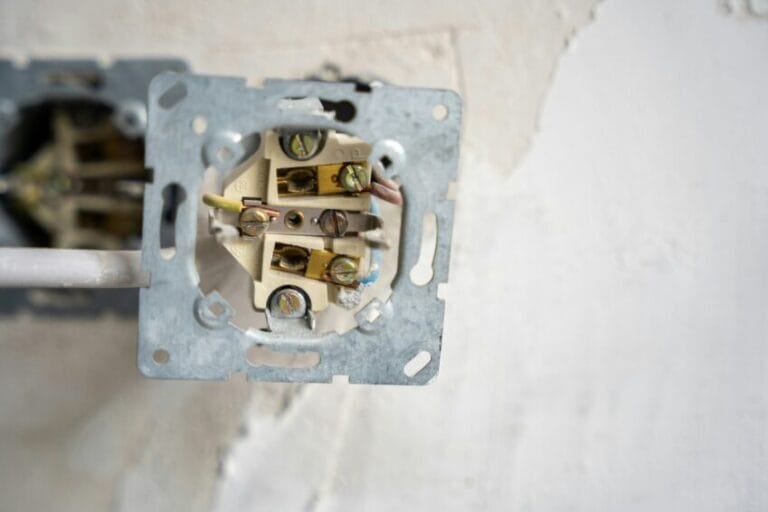
Every December, Filipino shoppers face the same tiangge-table decision: the unbranded 10-meter string going for ₱120 at a Divisoria stall, or the ₱350 version at Ace Hardware or SM with a sticker you’ve never actually looked at closely. Most people assume the sticker is decorative. It isn’t. It’s the Department of Trade and Industry’s (DTI) way of telling you that a specific set of lights was tested for the thing that actually burns houses down: cheap internal wiring that overheats, melts, and sparks inside your ceiling trimmings while you’re asleep.
As of November 2026, here’s what DTI’s own enforcement record shows, how to actually check the mark in under a minute, and when the cheap set is genuinely fine to buy anyway.
Certified vs. Uncertified: What You’re Actually Trading Off
| What You’re Buying | Typical Price (10m LED strand) | PS/ICC Status | If It Causes a Fire or Fails | How to Verify Before You Pay |
|---|---|---|---|---|
| Branded retail set (Ace Hardware, SM, Lazada-listed brand stores) | ₱300–₱450, per Lazada Philippines’ own buying guide (accessed November 2026) | Mark present and checkable on-sticker and via DTI’s app | Retailer has a paper trail; return/refund rights under the Consumer Act apply | Look for printed PS/ICC number, scan with the ICC Sticker Verification App |
| Tiangge/bazaar generic set (Divisoria, weekend bazaars) | ₱100–₱180 for a comparable length | Often missing entirely; DTI has seized these specific sets by the hundreds | No traceable seller, no manufacturer label, no recourse | Ask to see the sticker directly; walk away if the seller can’t show one |
| Online marketplace listing (Shopee, Lazada non-Mall, TikTok Shop) | ₱90–₱250, wide variance | Mixed — DTI’s E-Kalasag Project has flagged hundreds of online listings for takedown | Depends on the platform’s own buyer protection, not the lights themselves | Check listing photos for a visible PS/ICC sticker before ordering; photograph on arrival |
| Reused set from last year | ₱0 (already owned) | Mark may have existed originally but doesn’t protect against wear | Brittle PVC insulation and loose sockets are the actual risk, mark or not | Inspect cords and sockets by hand; discard anything cracked, dented, or stiff |
Sulit Tip: The price gap between a certified and uncertified set is almost never the ₱100+ it feels like at the stall. Lazada’s own buyer’s guide prices legitimate LED sets at ₱150 to ₱450 depending on length, and plenty of certified sets sit at the low end of that range. You’re often paying ₱30 to ₱80 more for the mark, not double the price.
What DTI’s Own Enforcement Record Actually Shows
This isn’t a hypothetical risk DTI warns about once and forgets. The Fair Trade Enforcement Bureau (FTEB) runs an annual holiday sweep, and its own numbers are public. On November 5, 2025, FTEB inspectors confiscated more than ₱200,000 worth of Christmas lights from five of 35 inspected Divisoria establishments, after finding the sets “without the mandatory Philippine Standard (PS) and Import Commodity Clearance (ICC) markings, as well as proper labelling,” per DTI’s own Fair Trade press release. The same release noted that DTI’s E-Kalasag Project had been checking physical stores and online platforms since early October, clearing 72 establishments as compliant and recommending 218 online listings for takedown.
A month later, on December 4, 2025, DTI widened the net: a separate Fair Trade sweep in Bulacan and Meycauayan City removed roughly ₱53 million in unsafe appliances and ceramic wares — about ₱20 million in appliances and ₱33.3 million in ceramic sanitary wares. The detail that matters for anyone shopping this year: inspectors found “fake or misleading Philippine Standard (PS) marks and Import Commodity Clearance (ICC) stickers,” with some QR codes failing verification outright. DTI cited Department Administrative Order (DAO) No. 02, Series of 2007, which requires Christmas lights and other regulated electrical products to carry a valid PS or ICC certification before they can legally be sold.
Heads Up: The bigger shift in DTI’s own findings isn’t missing stickers — it’s counterfeit ones. A seller who slaps a fake PS sticker on an uncertified set is betting you won’t check closely. That’s exactly why the verification app (below) matters more than eyeballing the sticker.
How to Actually Check the Mark Before You Pay
DTI’s Bureau of Philippine Standards has said the first thing to look for is the certification mark itself — proof the set “underwent the BPS certification process.” In practice, that’s a quick checklist you can run through at the stall or before you click “buy”:
Good to Know: For ICC stickers specifically, DTI points consumers to its ICC Sticker Verification App, available on Google Play and the Apple App Store, which scans or looks up the sticker’s code against DTI’s own database. There’s no equivalent public lookup for a PS license number by itself, so for PS-marked sets, the mark’s presence plus a legitimate-looking manufacturer label is what you’re checking.
- Look for the physical mark. A genuine PS mark or ICC sticker sits on the packaging or on a tag attached to the plug, never hand-written or printed on a plain sticker with no serial number.
- Scan it. If it’s an ICC sticker, run it through the ICC Sticker Verification App before you pay, not after you get home.
- Check the manufacturer label. DTI’s enforcement teams specifically flag sets missing the manufacturer’s name and address — a legitimate set has both printed somewhere on the packaging.
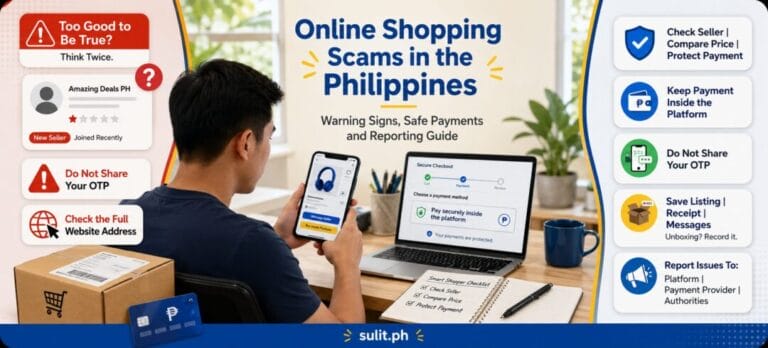
- For online listings, zoom in on the product photos. If a listing’s own photos don’t show a visible mark anywhere, treat that as a missing mark, not an oversight — our guide to verifying FDA, PS/ICC, and DTI registration on any online listing walks through the same check for other product categories.
- Keep the receipt. If the set turns out to be defective or mismarked, your proof of purchase is what makes a DTI complaint or online refund claim possible at all.
Worked Scenario: Decorating Your Whole Facade on a ₱2,000 Budget
Say you’re lighting up your gate and a small tree with four 10-meter strands. At the tiangge, unbranded sets run roughly ₱120 to ₱150 each — four strands for about ₱480 to ₱600. At Lazada or a hardware store, certified LED sets in the same length run ₱150 to ₱450 depending on brightness and brand — four strands for roughly ₱600 to ₱1,800, with plenty of legitimate options clustering near the low end of that range.
Run the math and the realistic gap for a basic four-strand setup is often just ₱150 to ₱300 total — not the “half the price” it feels like standing at the stall. Against that, you’re trading away your one practical way to confirm the wiring won’t overheat behind dry Christmas décor for days or weeks at a stretch. For a small, closely-watched display, that might be a gamble you’re willing to take. For anything left running unattended overnight, or anywhere near flammable décor (paper lanterns, cotton “snow,” dried leaves), the marked set is the one actually worth the extra few hundred pesos.
Sulit Tip: If budget is the real constraint, buy fewer certified strands rather than more uncertified ones. A single verified 10-meter LED set does more for your facade, and your peace of mind, than two unmarked sets at the same total price.
What to Do Next
Before you buy: bring up the ICC Sticker Verification App on your phone, ask the seller to show the PS mark or ICC sticker directly (don’t rely on packaging alone), and check for a printed manufacturer name and address. If you’re ordering online, zoom into listing photos for the mark before adding to cart, and screenshot the listing in case you need to file a complaint later. After you buy: keep the receipt, inspect the full length of cord for stiff or cracked insulation before you plug it in, and never leave any string of lights — certified or not — running unattended overnight or plugged into an overloaded outlet.
Also Worth Checking
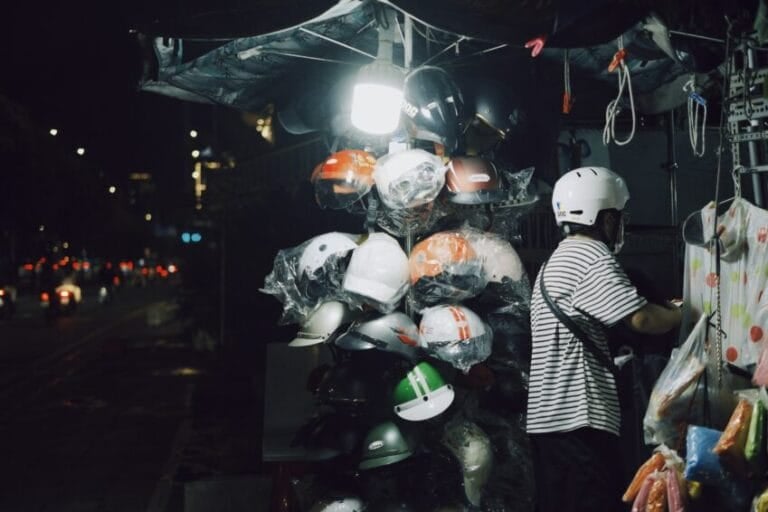
If you’re shopping Divisoria or a weekend bazaar for more than just lights, our tiangge shopping guide covers the fake-goods-vs-real-savings trade-off more broadly. Decorating with an artificial tree this year? Our artificial Christmas tree guide breaks down LED light costs and price tiers specifically for trees. The PS/ICC mark isn’t unique to Christmas lights, either — the exact same check applies to motorcycle helmets, per our guide to spotting fake ICC and PS stickers, and to pretty much anything else you buy online, covered in our FDA/PS/ICC online listing verification guide. For more of this kind of value-first breakdown, head back to more sulit finds.
Frequently Asked Questions
Is it illegal to sell Christmas lights without a PS mark or ICC sticker in the Philippines?
Yes. Department Administrative Order (DAO) No. 02, Series of 2007 requires Christmas lights and similar regulated electrical products to carry a valid Philippine Standard (PS) mark or Import Commodity Clearance (ICC) sticker before they can legally be sold. DTI’s Fair Trade Enforcement Bureau actively seizes stock that lacks either.
How do I check if Christmas lights have a real PS mark or ICC sticker?
For an ICC sticker, scan or look it up using DTI’s ICC Sticker Verification App (Google Play or the Apple App Store). For a PS mark, check that it’s printed (not hand-applied) alongside a legitimate manufacturer name and address — DTI’s enforcement sweeps specifically flag sets missing that label information.
Are tiangge or Divisoria Christmas lights automatically unsafe?
Not automatically, but DTI has repeatedly found uncertified sets specifically in Divisoria stalls, most recently seizing over ₱200,000 worth there in a single November 2025 sweep. Treat any tiangge stall selling lights with no visible mark as higher-risk, not as a guaranteed problem.
What should I do if I already bought uncertified Christmas lights?
Inspect the full cord for cracked or stiff insulation before plugging it in, never leave it running unattended or overnight, and avoid overloading the outlet it’s plugged into. If you bought it online and it’s visibly defective, check what our Internet Transactions Act guide says you’re entitled to from the seller.
Does the PS/ICC mark matter for lights I already own from past years?
Less than you’d think. A mark only certifies a set when it was new; it says nothing about wear. Reused sets fail from brittle PVC insulation and loose sockets regardless of whether they were originally certified, so inspect by hand every year rather than relying on an old sticker.
What’s the realistic price difference between certified and uncertified Christmas lights?
Usually ₱30 to ₱150 per 10-meter strand, not double the price. Lazada’s own pricing guide puts legitimate LED sets at ₱150 to ₱450, while unmarked tiangge sets typically run ₱100 to ₱180 — a narrower gap than most shoppers assume.
Verified Sources Used
DTI Fair Trade Enforcement Bureau: Confirmed the November 5, 2025 Divisoria seizure of over ₱200,000 in uncertified Christmas lights and the E-Kalasag Project’s online listing takedown numbers.
DTI Fair Trade Enforcement Bureau: Confirmed the December 4, 2025 Bulacan sweep finding fake PS marks and ICC stickers, and the DAO No. 02, Series of 2007 legal basis.
DTI-Bureau of Philippine Standards: Confirmed the ICC Sticker Verification App and general Christmas-lights safety reminders (overloaded outlets, insulation wear).
Lazada Philippines: Confirmed the current retail price range (₱150–₱450) and typical specs for legitimate LED Christmas light sets, as listed November 2026.