Is an Artificial Christmas Tree Worth It in the Philippines? LED Lights, Electricity Cost & Price Tiers (2026 Guide)
Sulit verdict: Yes, for most households — but only if you buy once and keep the same tree for several Decembers. The math only works against you if you grab the cheapest ₱150–₱300 pencil tree every single year, or if you string it with incandescent lights instead of LED. Spend a little more upfront on a tree built to survive five Decembers, switch your lights to LED, and the “sulit” math is clearly in your favor — we ran the actual numbers below using Meralco’s own October 2026 rate.
Every October, Filipino timelines start filling up with “pasko na!” tree-unboxing videos — the Ber-months habit of decorating as early as September 1 is practically a national identity. But nobody seems to price out what that tree actually costs you over time, or how much of your December electric bill is just… lights. We priced real listings from Lazada this week, pulled Meralco’s newly announced October 2026 rate, and ran both numbers against real Christmas-lights wattage data to see where an artificial tree setup is genuinely sulit, and where it quietly drains your budget.
Real vs. Artificial: Why This Isn’t Really a Debate in the Philippines
In countries with actual pine forests, “real vs. fake tree” is a genuine annual argument. In the Philippines, it mostly isn’t — fresh fir and pine trees aren’t grown commercially here, so a real tree has to be imported, kept refrigerated, and sold as a short-lived luxury item (mall atriums and hotel lobbies do this; the odd retailer has flown in trees from as far as Sweden for the novelty). For a home purchase, artificial is the default, not a compromise. The real decision Filipino households are actually making is which tier of artificial tree to buy, and how to light it — and that’s where the real money gets spent or saved.
What You Actually Get at Each Price Tier
We checked real artificial Christmas tree listings on Lazada this week to see what ringgit — pardon, peso — actually buys you. Here’s the spread:
| Tier | Price range | What you’re getting | Realistic lifespan |
|---|---|---|---|
| Budget / “pampaskohan lang” | ₱150 – ₱650 | Slim “pencil” trees, 4–8 ft, thin wire branches, sparse tips, basic plastic stand | 1 season if handled carefully; branches and shedding are the common failure point |
| Mid-range | ₱1,500 – ₱2,200 | Fuller or taller pencil trees (up to 7.5 ft), sturdier hinge joints, metal stand | Around 5 years with normal handling and storage |
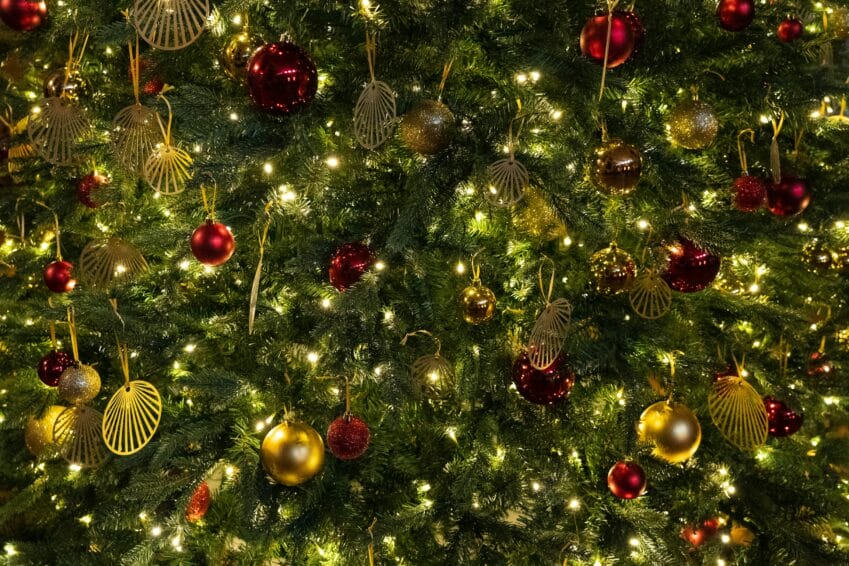
| Premium / flocked | ₱3,500 – ₱7,000+ | Dense tip count, flocked (“snowy”) finish or pre-lit wiring, reinforced metal stand | 5+ years; built to survive repeated assembly without bent branches |
Prices as listed on Lazada Philippines, checked October 15, 2026; marketplace prices change without notice and vary by seller. The ₱1,500 and ₱3,500 lifespan benchmarks are per Lamudi’s Philippine holiday decor price guide, which specifically warns that a tree bought purely on lowest price tends to develop “broken branches or extreme shedding” and gets thrown out after one season — turning a ₱300 tree into a recurring ₱300-a-year expense rather than a one-time buy.
Sulit Tip: Run the same per-year math you’d use on an appliance. A ₱2,000 mid-tier tree that survives 5 Decembers costs you ₱400/year. A ₱400 budget tree you replace annually costs the same ₱400/year — except you’re storing broken plastic in a bodega box every January and starting the hunt over every October. If the price-per-year is roughly equal, durability wins.
The Hidden Cost Nobody Budgets For: Your Lights, Not Your Tree
Here’s the part that actually moves your electric bill: the tree itself draws zero electricity. The lights wrapped around it are where the real cost lives, and this is also where Meralco’s rate just moved against you. Meralco’s overall residential rate rose to ₱15.0615 per kWh this October 2026, up from ₱14.7424 in September — an increase of ₱0.3191 per kWh, driven mainly by higher generation costs from LNG-fired plants and the Wholesale Electricity Spot Market, per Meralco’s own October rate advisory. That’s the rate we’re using below, so this isn’t a rough estimate — it’s your actual current cost.
The bigger lever, though, is LED vs. incandescent. A standard 300-bulb incandescent light string draws about 72 watts; the LED equivalent draws about 15 watts for the same bulb count and brightness — roughly a fifth of the power, per lighting-efficiency data from NY Engineers. That gap compounds fast once you’re running multiple strings every night for weeks.
Worked Scenario: Lighting Up a Typical Filipino Home Through the Season
Say you’re running 3 strings of 300 lights — enough for a 6–7 ft tree plus a bit of window or doorway trim — for 6 hours a night (6 PM to midnight), from October 15 through Three Kings’ Day on January 6. That’s 84 nights. Here’s what that actually costs at Meralco’s current ₱15.0615/kWh rate:
- LED setup: 3 strings × 15W = 45W → 0.27 kWh/night → 22.68 kWh over 84 nights → ≈ ₱341 for the whole season.
- Incandescent setup: 3 strings × 72W = 216W → 1.296 kWh/night → 108.86 kWh over 84 nights → ≈ ₱1,640 for the whole season.
That’s roughly ₱1,300 saved for the season just by choosing LED — more than the price of a mid-tier artificial tree, from a decision that costs nothing extra at checkout (LED string lights are routinely priced the same as or cheaper than incandescent ones on Shopee and Lazada). Adjust the math for your own setup: at the October 2026 rate, one 300-bulb LED string costs about ₱0.23/hour to run, and one incandescent string costs about ₱1.08/hour — multiply by your actual string count and nightly hours to get your own number.
Good to Know: This calculation uses Meralco’s Metro Manila franchise-area rate. If you’re on a cooperative (like a provincial electric co-op) or a different Meralco rate class, your per-kWh rate will differ — the wattage gap between LED and incandescent stays the same, but swap in your own distributor’s rate to get your exact peso figure.
Heads Up: The Safety Check That Matters More Than the Price Tag
Before you buy any string of lights — LED or incandescent — the Department of Trade and Industry (DTI) requires two specific marks: the PS (Philippine Standard) Quality and/or Safety Mark, confirming the manufacturer passed factory audits and product testing, and the ICC (Import Commodity Clearance) sticker, confirming an imported shipment was inspected and certified before sale. DTI’s regional offices specifically flag Christmas lights for this reminder every year, alongside general electrical hazards worth checking regardless of brand: brittle or dented plugs and cords (PVC insulation degrades over time), overloaded outlets with too many plugs running at once, nails, thumbtacks, or staples puncturing the wiring when you hang them, and leaving lights running unattended overnight.
A string with no PS mark or ICC sticker isn’t automatically dangerous, but it also hasn’t been checked by anyone — and a ₱50 savings on an uncertified string is a bad trade against an actual fire risk. DTI maintains a list of certified Christmas lights through the Bureau of Philippine Standards if you want to check a specific product before buying.
So, Is It Worth It?
Putting it together: the artificial tree itself is worth buying once at the mid-range tier (₱1,500–₱2,200) rather than re-buying a budget tree every year — the annualized cost comes out roughly the same either way, but you skip the yearly hunt and the sparse-branch look. The premium/flocked tier is worth it only if the denser look or pre-lit convenience matters to you personally; it doesn’t win on pure cost-per-year math against the mid-tier. And the single highest-leverage decision in this whole purchase isn’t the tree at all — it’s paying the same or less for LED lights instead of incandescent, which alone can save you more than the tree cost in one season, at no extra cost and with a lower fire-safety risk from heat buildup.
Quick Questions
Is an artificial Christmas tree actually cheaper than a real one in the Philippines?
There’s barely a market for fresh trees to compare against — real fir and pine aren’t grown commercially in the Philippines, so a fresh tree is a rare, imported, refrigerated novelty item rather than a mainstream option. For nearly every household, the real comparison is between artificial tree price tiers, not real vs. fake.
Do LED Christmas lights really save that much on electricity?
Yes. A standard 300-bulb LED string draws roughly a fifth of the wattage of the incandescent equivalent. Run over a full Ber-months season, that difference can add up to more than what a mid-tier artificial tree costs, at Meralco’s current October 2026 rate.
What should I check before buying Christmas lights so they’re not a fire hazard?
Look for the PS (Philippine Standard) Quality and/or Safety Mark and, for imported sets, the ICC sticker — both are DTI requirements. Beyond that, inspect cords and plugs for cracks before each use, avoid overloading a single outlet, don’t puncture the wiring with nails or staples, and don’t leave lights on unattended overnight.
Is a pre-lit artificial tree worth paying more for?
Mainly for convenience — you skip wrapping lights yourself every year. It doesn’t change the core electricity math; a pre-lit tree with incandescent bulbs still costs more to run than a separately wired LED set, so check what bulb type is actually pre-installed before assuming “pre-lit” means “efficient.”
Also Worth Checking
If you’re timing this purchase around a sale date rather than paying full price, our Shopee, Lazada & TikTok Shop sale calendar maps out which 2026 dates are historically strongest for home and holiday items. Planning your tree purchase against the rest of your holiday budget? Our 13th month pay guide covers sequencing holiday spending against savings and debt, and our Noche Buena shopping guide runs the same no-brand-vs-premium math on your holiday table. And if a tree arrives broken or missing branches, our guide on whether “no return, no exchange” is even legal here covers your actual consumer rights before you accept a defective unit. For more of this kind of value-first breakdown, head back to more sulit finds.
Verified Sources Used
Meralco’s official October 2026 rate advisory: Confirmed the overall residential rate of ₱15.0615/kWh for October 2026, up ₱0.3191/kWh from September’s ₱14.7424/kWh, and the generation-cost drivers behind the increase.
DTI Region 11, via dti.gov.ph: Confirmed the PS Quality/Safety Mark and ICC sticker requirements for Christmas lights sold in the Philippines, and the general electrical hazards DTI flags for holiday lighting.
Lazada Philippines: Source for current artificial Christmas tree listings and prices across budget, mid-range, and premium tiers, checked October 15, 2026.
Lamudi Philippines’ holiday decor price guide: Source for the ₱1,500-vs-₱3,500 tree durability benchmark and the warning on budget trees failing after one season.
NY Engineers: Source for the wattage comparison between standard 300-bulb incandescent (≈72W) and LED (≈15W) light strings used in the electricity-cost calculation.