Instant Shower Heater vs. Branded Water Heater in the Philippines: Which Is Actually Worth It? (2026 Safety & Cost Guide)
Sulit verdict: Spend the extra few hundred pesos on a known brand with an actual local warranty, and get an electrician to check your bathroom’s wiring before you install anything — don’t just plug it in. A shower heater is one of the few common home appliances that isn’t on the Department of Trade and Industry’s (DTI) mandatory safety-certification list, so the “look for the PS or ICC sticker” trick that protects you when buying a fridge or an aircon doesn’t apply here. The real safety check for this one is the outlet, not the sticker.
Open Shopee or Lazada and search “shower heater” and you’ll see the same thing everyone else sees: instant electric units from brands you’ve never heard of — OOKAS, CBLUE, MEITESI, DQQI — going for as little as ₱838, often during a flash sale. For a lot of Filipino households, this is how a water heater gets bought: on impulse, during a “budol” moment, because the old one died and you need hot water tonight. Almost nobody checks what’s actually backing that purchase before clicking “buy now.”
Why the “Check for the PS/ICC Sticker” Trick Doesn’t Work Here
In April 2026, DTI’s Bureau of Philippine Standards (DTI-BPS) publicly urged consumers to check appliances for a Philippine Standard (PS) mark or Import Commodity Clearance (ICC) sticker before buying, warning that electrical issues are a leading cause of house fires. The PS mark goes to local manufacturers that pass a factory audit and product testing; the ICC sticker goes to importers, per shipment, after their goods are inspected. As of that release, DTI-BPS reported 1,698 manufacturers holding active PS licenses and said it regulates 113 products under mandatory Philippine National Standards, including 25 household appliance categories and 25 lighting and wiring device categories.
Here’s the catch: go through the actual administrative orders that built that list — DTI Department Administrative Order (DAO) No. 02-2004 and the expansions under DAO 18-03 (2018) and DAO 22-01 (2022) — and water heaters, instant or storage, don’t appear by name. The household appliances that are covered include electric fans, flat irons, blenders, microwave ovens, refrigerators, rice cookers, toasters, washing machines, inverter air conditioners, electric kettles, and pressure cookers, among others. A water heater sits right next to all of them in your bathroom or kitchen, but it isn’t required to carry the same government-checked safety sticker.
Good to Know: We’ve covered a similar certification gap before on motorcycle helmets, where fake ICC and PS stickers get slapped on substandard products to fool buyers who know to look for the mark. Water heaters have the opposite problem: there’s no mandatory mark to fake in the first place, so “it has a sticker” or “it doesn’t have a sticker” tells you nothing either way about this specific category.
Instant Shower Heater vs. Branded Unit: Real Philippine Prices
We checked actual listings instead of guessing. Here’s what the market looks like as of October 2026:
| Type | Example brands | Price range (as listed) | Wattage | What you’re really paying for |
|---|---|---|---|---|
| No-name instant shower heater | OOKAS, CBLUE, MEITESI, DQQI, DEG, HAILANG (Lazada PH marketplace listings, Oct. 2026) | ₱838 – ₱1,950 | 3,500W – 7,500W | Lowest upfront cost; warranty exists only through the marketplace’s own return window; no stated third-party safety testing |
| Known-brand instant heater | Panasonic (Lazada PH listing, Oct. 2026) | ≈ ₱3,150 | Not publicly listed | A local distributor and an actual service network behind the warranty |
| Branded point-of-use/storage unit | Stiebel Eltron single-point and multi-point units (khmtools.com.ph listing, Oct. 2026) | ₱6,800 – ₱14,000 | Not publicly listed | German-engineered build, local after-sales support, priced on the assumption a professional installs it |
Sulit Tip: Wattage isn’t just a speed spec — it’s a current-draw spec. A 6,500W to 7,500W instant unit pulls a lot more instantaneous current than a 15-watt flat iron. Before you worry about which brand looks nicer, worry about whether the outlet it’s going into, and the breaker behind it, is actually rated to carry that load continuously. An old two-pin bathroom outlet from a house built decades ago is a bigger risk than any brand-name gap.
The Real Electricity Cost Math
Meralco’s officially published residential rate for the September 2026 billing cycle was ₱14.7424 per kWh, down slightly from ₱14.7833 in August. Rates move monthly with generation charges, so check your own latest bill or Meralco’s site for the current cycle — but this gives you a real number to work from instead of a guess.
Here’s the worked version, with the assumptions spelled out so you can swap in your own numbers: say you shower for 10 minutes and the heating element is drawing close to its rated wattage for roughly half that time (it doesn’t run flat-out the entire shower once the water’s warm). A 3,500W unit under that assumption uses about 0.29 kWh per shower, or roughly ₱4.30 at the September 2026 rate. A 6,500W unit under the same assumption uses about 0.54 kWh, or roughly ₱8.00 per shower. Run that daily for a month and you’re looking at around ₱129 versus ₱240 — a real but fairly small gap next to the ₱800 to ₱13,000 spread in the unit’s purchase price itself. The electricity bill is not where this decision gets made; the upfront price and the safety math are.
The Fire-Safety Reality Behind the “Budol” Price
This part isn’t scare tactics — it’s the same data DTI-BPS cited when it told consumers to start checking stickers. The Bureau of Fire Protection (BFP) recorded over 7,000 fire incidents in 2025 caused by electrical issues, the leading cause of fires nationwide that year. Nationally, electrical fires stayed the top cause into Q1 2026 too, with 1,281 recorded cases (down from 1,503 in the same period of 2025) — though in Metro Manila specifically, open flame edged ahead of electrical fires as the top cause in early 2026, 241 cases to 219.
None of this says “your shower heater will burn your house down.” It says electrical issues — old wiring, overloaded circuits, appliances pulling more current than a circuit was built for — are consistently the single biggest category of home fire causes the BFP tracks. A high-wattage instant shower heater is, by design, one of the most electrically demanding single appliances in an average Filipino bathroom, which is usually also the room with the oldest, most neglected wiring in the house.
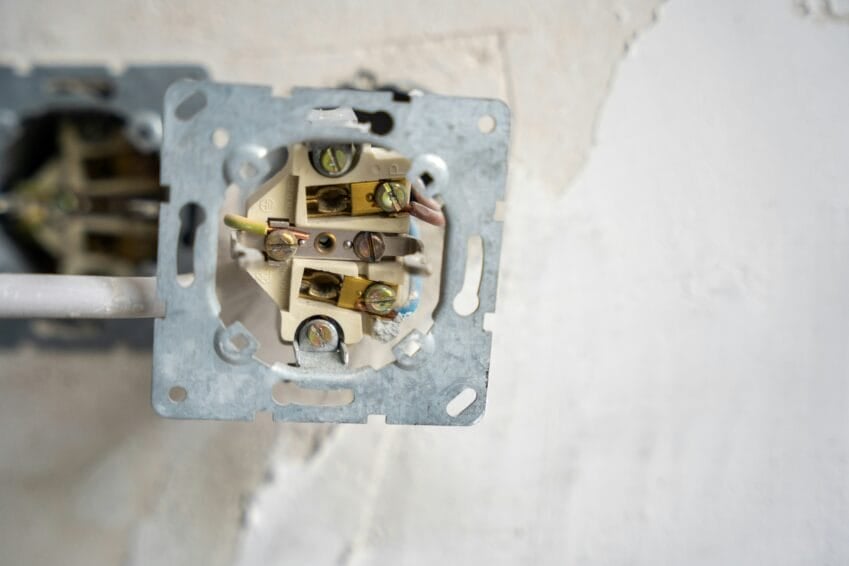
Heads Up: If you’re installing a new instant heater, this is worth paying a licensed electrician for, even if the unit itself was cheap: confirm the circuit is grounded, ideally on its own breaker, and that the outlet is rated for the heater’s full wattage. That visit costs far less than the unit itself, and it’s the actual safety check this product category is missing on the regulatory side.
So, Which One Is Actually Worth It?
If you’re renting short-term, or this is a bedspacer setup you won’t be in for years, the cheap instant unit is a reasonable buy — but only from a seller with real reviews and an active return window, and only after an electrician has confirmed the outlet can handle it. The savings on the unit itself are real, and a short tenancy limits how long you’re exposed to any quality issue.
If you own the place, or you’re setting up somewhere you’ll live for years, the branded unit’s premium is worth paying specifically because there’s no government mark to fall back on if a no-name unit fails early. You’re buying the manufacturer’s own quality control and a local service center instead, since DTI-BPS isn’t independently checking that for you the way it does for your refrigerator or your aircon.
Worked Scenario: Furnishing a Rented Studio vs. Your Own Condo
Say you’re moving into a rented studio for a one-year lease. A ₱900 instant heater from a Lazada seller with thousands of reviews, installed on an outlet your landlord’s electrician already checked, is a defensible buy — you’re not staying long enough for slow quality decline to become your problem, and the upfront cost is low. Now say you just closed on a condo unit you plan to live in for the next decade. The same ₱900 unit is a worse bet here: you’re the one who’ll deal with a failed heating element in year three, a corroded element in year five, or a warranty claim nobody at a marketplace seller will honor. The ₱3,150 Panasonic unit, or a Stiebel Eltron installed by a professional, turns into the better “sulit” buy once you run the math over years instead of months — the premium is small compared to what a repeat replacement, or a bigger electrical problem, would actually cost you.
Also Worth Checking
If you’re shopping for other appliances alongside this one, our extended warranty guide walks through when paying extra for coverage on top of your legal warranty rights actually makes sense. If budget appliance brands are more your range for this purchase, our budget appliance brands breakdown covers where brands like Hanabishi and Fujidenzo hold up against Samsung and LG. And if this isn’t the first time you’ve wondered whether a safety sticker on something you bought online is even real, our guide to spotting fake ICC and PS stickers covers the certification side in more detail. For more of this kind of value-first breakdown, head back to more sulit finds.
Verified Sources Used
DTI-BPS statement, republished via ASEAN Consumer (April 2026): Confirmed the PS mark/ICC sticker system, the 1,698 active PS licenses, the 113 regulated products across 25 household appliance and 25 lighting/wiring categories, and the BFP figure of 7,000+ electrical-cause fires in 2025.
DTI official archive — DAO 18-03 product list: Confirmed the specific household appliances added to mandatory PS/ICC certification (spin extractors, washing machines, electric ovens, inverter air conditioners, and others) — water heaters are not among them.
DTI DAO No. 02-2004 (hosted via WTO import licensing database): Confirmed the original household appliance categories under mandatory certification, none of which name water heaters.
Daily Tribune, citing BFP data (April 2026): Confirmed Q1 2026 nationwide and NCR fire-cause counts, including the 1,281 nationwide electrical fire cases and the NCR shift to open flame as the top cause.
Meralco official rate press release (September 2026): Confirmed the ₱14.7424 per kWh residential rate used in the electricity cost comparison.
Lazada Philippines marketplace listings (retrieved October 2026): Confirmed current prices for no-name instant shower heaters and a Panasonic unit.
khmtools.com.ph product listings (retrieved October 2026): Confirmed current prices for Stiebel Eltron branded water heater units.