Is Tiangge (Christmas Bazaar) Shopping Worth It in the Philippines? Fake Goods vs. Real Savings (2026 Guide)
Sulit verdict: Yes, but only for the right aisle. A tiangge genuinely beats the mall on parol and tree decor, wrapping supplies, native pasalubong, and clothing or accessories where brand authenticity doesn’t matter to you — the same instinct that makes ukay-ukay worth a Saturday. It stops being sulit the second you’re buying anything with a safety-certification requirement (Christmas lights, electronics, toys with small parts) or anything “branded” from a stall that can’t back it up with a receipt. DTI confiscated more than ₱200,000 worth of uncertified Christmas lights from Divisoria stalls in a single November 2025 sweep, and Greenhills — the country’s best-known tiangge-style mall — is still named in the US government’s 2025 list of markets linked to counterfeit goods. Shop the right category, skip the wrong one, and a tiangge run beats the mall on price with none of the downside.
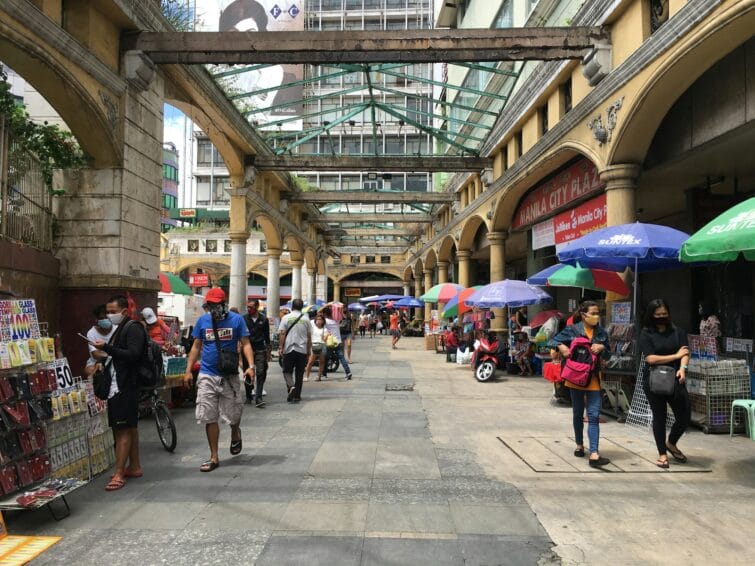
“Tiangge” technically just means a bazaar or flea market, but in the Philippines it’s grown into something bigger every Ber months: pop-up stalls in parking lots and barangay courts, plus semi-permanent indoor markets like Greenhills, Divisoria’s 168 and 999 malls, Baclaran, and Quiapo that run the same vendor-stall model year-round and go into overdrive from November through December. The question Filipino shoppers actually ask every Christmas season isn’t “is tiangge cheaper” — it almost always is, on paper — it’s whether that discount is worth the tradeoffs that come with buying from an informal stall instead of a registered store.
What Counts as a Tiangge in the Philippines
A tiangge is any cluster of small, usually independent vendor stalls selling at negotiable, cash-first prices — the opposite of a department store’s fixed price tag and official receipt. In practice, that covers a wide range: Greenhills Shopping Center in San Juan (pearls, jewelry, bags, electronics, and a reputation DTI and IP enforcers have been actively trying to clean up), the Divisoria cluster around 168 Mall, 999 Mall, and Tutuban (wholesale textiles, Christmas decor, toys, and lights), Baclaran (clothing, bags, shoes), Quiapo (religious items, herbal remedies, novelty goods), and the seasonal pop-up bazaars that show up in mall parking lots, subdivisions, and barangay covered courts specifically for the Christmas run. Some of these pop-ups double as craft fairs for small local makers, which is where tiangge shopping is at its strongest.
Where a Tiangge Actually Wins
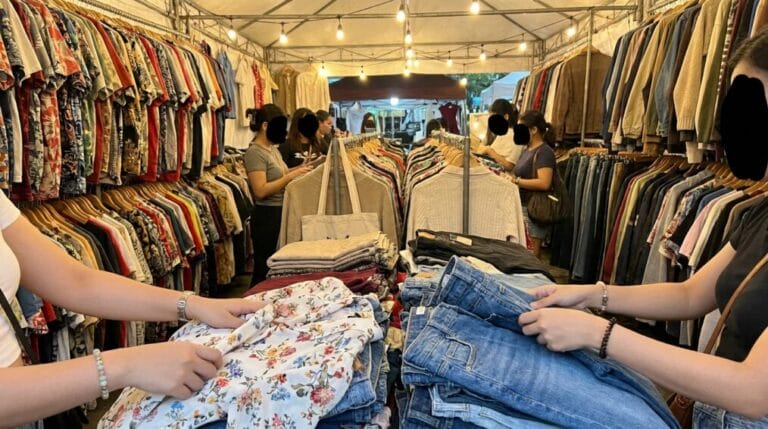
Local crafts and decor are the clearest win. Parol, handwoven ornaments, and other native Christmas pieces aren’t subject to any safety-certification requirement the way lights or appliances are, and buying direct from the maker is part of the point — you’re not losing anything by skipping the mall markup here. Wrapping paper, ribbons, gift bags, and other wrapping-supply commodities work the same way: no counterfeit risk, no certification gap, and haggling genuinely moves the price. Native pasalubong and local delicacies are another strong category — see our pasalubong centers guide for where these overlap with tiangge-style shopping. And clothing or accessories where brand authenticity isn’t the point — exactly the territory our ukay-ukay guide covers — are genuinely sulit at a tiangge stall, Christmas season or not.
Where a Tiangge Loses: The Two Real Risks
The first risk is uncertified electronics, and Christmas lights are the textbook example. On November 5, 2025, DTI’s Fair Trade Enforcement Bureau inspected 35 establishments in Divisoria and confiscated items from 5 of them — more than ₱200,000 worth of Christmas lights that were missing the mandatory Philippine Standard (PS) and Import Commodity Clearance (ICC) markings, according to DTI’s Fair Trade Enforcement Bureau. Those marks aren’t bureaucratic box-checking — they’re the government’s way of confirming a set of lights won’t become a fire or electrocution hazard once it’s plugged in and left running on your tree for six weeks straight. DTI’s own advice after the sweep: “let’s remain vigilant and ensure we do not compromise the safety of our homes and families.”
The second risk is counterfeit branded goods, and here Greenhills is the Philippines’ most-cited case study. The USTR’s 2025 Review of Notorious Markets for Counterfeiting and Piracy — the US government’s annual list of markets globally associated with fake and pirated goods — kept Greenhills Shopping Center on it again, describing it as a large Manila mall with many stalls selling counterfeit goods, despite GSC management’s three-strikes rule leading to “almost 300 vendor stalls removed over the past year for selling counterfeit goods,” per the USTR report itself. The Philippine government’s own IP office has confirmed the cleanup is real but incomplete: IPOPHL reports a National Committee on Intellectual Property Rights (NCIPR) help desk was planned for Greenhills by end-2025, alongside PNP and NBI raids at GSC, 168 Mall, and 999 Mall, against a backdrop of ₱40.98 billion worth of counterfeit and pirated goods seized nationwide in 2024 — a record high, up 63% from the year before. If you’re buying a “branded” bag, watch, or pair of sneakers at any tiangge stall, the realistic assumption is that it’s a replica unless you have real reason to think otherwise; our guide to “Class A” replicas covers the actual legal and money risk if you buy knowing that, versus getting fooled into paying branded prices for a fake.
A third, smaller risk is just the lack of a paper trail. Mall and department-store purchases come with a price tag and a receipt as a matter of law and practice; a tiangge stall usually hands you neither. That matters the moment something breaks or doesn’t match what you were shown — see our guide to “No Return, No Exchange” signs for what Philippine consumer law actually guarantees you, and how much harder that guarantee is to enforce without a receipt in hand.
Tiangge vs. Mall vs. Online: Side by Side
| What You’re Checking | Tiangge Stall | Mall / Department Store | Shopee, Lazada, TikTok Shop |
|---|---|---|---|
| Price tag required by law | Rarely enforced in practice | Yes, standard retail practice | Listed price shown at checkout |
| Receipt on every purchase | Often skipped, especially cash sales | Standard | Digital order record by default |
| Realistic return/exchange | Very limited; informal vendor, no policy | Governed by RA 7394 and store policy | Platform-level buyer protection; see our Internet Transactions Act guide |
| PS/ICC certification likely checked | Not guaranteed — this is exactly what DTI sweeps are targeting | Required of the retailer to stock | Varies by seller; platforms report rising takedown rates for flagged listings |
| Counterfeit branded goods risk | High at markets still flagged for it (e.g., Greenhills) | Low for mall-anchor stores; higher at tenant stalls | Present but actively policed — Shopee and Lazada reported takedown rates above 85% in IPOPHL’s 2025 review |
| Best categories | Decor, parol, wrapping supplies, pasalubong, non-branded clothing | Electronics, appliances, anything needing a warranty | Price comparison, voucher stacking around sale dates |
Worked Scenario: Buying Christmas Lights This Ber Months
Say you’re restringing your tree and need one more set of lights. At a tiangge stall in Divisoria, an unbranded set might be a little cheaper and the vendor will probably let you haggle. At a hardware chain or department store, the set costs a bit more but carries the PS and ICC marks, a price tag, and a receipt you can use if it stops working in week two.
Run the actual DTI numbers from the November 2025 sweep: out of 35 Divisoria establishments inspected, 5 were selling lights that didn’t meet the certification standard — roughly one in seven. That’s not a worst-case scare number; it’s what government inspectors found checking real stalls in a real market. The entire point of PS and ICC marking is fire and electrical safety on a product you’re going to leave plugged in, unattended, for weeks. Heads Up: this is the one Christmas-shopping category where the few pesos saved at a tiangge genuinely isn’t worth the risk — buy your lights certified, even if everything else on your list comes from the bazaar.
Sulit Tip: Checking a PS or ICC mark takes ten seconds — look for the printed sticker or embossed mark on the plug or packaging before you pay, not after you get home. No mark, no sale, no matter how good the price looks.
Good to Know: Bargaining is the norm at a tiangge stall and genuinely moves the price, which isn’t true at a mall counter or on a fixed online listing. Most stalls are cash-only and can’t always break a large bill, so bring small denominations — not a scam, just how the stalls operate day to day.
How to Shop a Tiangge Safely
Treat certification and authenticity as the two things you check before money changes hands, not after. For anything electrical — Christmas lights, extension cords, cheap gadgets — look for the PS or ICC mark on the item itself, not just the box, since DTI’s own enforcement sweeps keep finding mismatched or missing marks on exactly this kind of product. For anything presented as a known brand — a bag, a watch, sneakers — assume it’s a replica unless the price and the seller’s own claims make sense together; a “branded” item at a steep discount from an unregistered stall is the single biggest tell. Ask for whatever paper trail the vendor is willing to give, even an informal handwritten receipt with the date and amount, since that’s the only leverage you’ll have if something goes wrong. And if a specific market or mall has a known reputation — Greenhills’ ongoing counterfeit cleanup being the clearest example — that reputation is worth knowing before you shop there, not after you’ve already paid.
Frequently Asked Questions
Is shopping at a tiangge legal in the Philippines? Yes — informal vendor stalls themselves are legal, and haggling at one isn’t a consumer-protection issue. What’s illegal is what some vendors sell: counterfeit branded goods fall under the Intellectual Property Code (RA 8293), and electrical items without the required Philippine Standard or Import Commodity Clearance marks violate DTI’s product-safety rules, which is exactly what the November 2025 Divisoria sweep enforced.
What do the PS and ICC marks on Christmas lights actually mean? The Philippine Standard (PS) mark and Import Commodity Clearance (ICC) sticker are DTI Bureau of Philippine Standards certifications confirming a product — electrical items especially — meets Philippine safety standards. Their absence is what DTI’s Fair Trade Enforcement Bureau checks for in every pre-Christmas inspection sweep.
Is Greenhills still flagged for counterfeit goods? Yes. The USTR’s 2025 Review of Notorious Markets for Counterfeiting and Piracy kept Greenhills Shopping Center on its list, even while acknowledging GSC management’s three-strikes policy has led to nearly 300 vendor-stall removals over the past year.
What can I do if a tiangge vendor won’t give a receipt? Ask for at least a handwritten note with the date, item, and amount paid before you pay — it’s not a legal requirement at an informal stall, but it’s your only leverage if the item turns out defective or misrepresented. Our “No Return, No Exchange” guide covers what Philippine consumer law guarantees you when a dispute like that comes up at a registered store instead.
Also Worth Checking
If the counterfeit-goods risk above sounds like something you want to understand in more depth before buying anything “branded” at a bazaar, our guide to “Class A” replica bags and sneakers covers the actual legal exposure for buyers versus sellers. For the secondhand-clothing side of bazaar shopping specifically, our ukay-ukay guide maps out where to go and how to check quality. If you’d rather skip the haggling and shop online sale dates instead, our Shopee, Lazada & TikTok Shop sale calendar and Black Friday in the Philippines guide cover that angle. And if something you bought anywhere this season turns out to be defective or misrepresented, our “No Return, No Exchange” guide explains what the law actually guarantees you. For more of this kind of value-first breakdown, head back to more sulit finds.
Verified Sources Used
DTI Fair Trade Enforcement Bureau: Confirmed the November 5, 2025 Divisoria enforcement sweep — 35 establishments inspected, items confiscated from 5, more than ₱200,000 worth of Christmas lights lacking PS and ICC markings.
Office of the United States Trade Representative (USTR): Confirmed Greenhills Shopping Center’s continued listing in the 2025 Review of Notorious Markets for Counterfeiting and Piracy, and the mall’s three-strikes rule removing almost 300 vendor stalls over the past year.
Intellectual Property Office of the Philippines (IPOPHL): Confirmed the planned NCIPR help desk at Greenhills, PNP/NBI raids at GSC, 168 Mall, and 999 Mall, and the ₱40.98 billion in counterfeit and pirated goods seized nationwide in 2024 (a 63% increase, record high).