Is an E-Bike Still Worth It in the Philippines? The 2026 Road Ban, Registration & Price Guide
Sulit verdict: Yes, an e-bike is still worth buying in 2026 — but only if your actual daily route stays off the growing list of national roads where LTO is now impounding unregistered units. If your commute is barangay-to-barangay, subdivision-to-terminal, or short trips within your city, an e-bike is one of the cheapest ways to get around. If your route runs through EDSA, C-5, Roxas Boulevard, or any of the other highways now on the restricted list, register it anyway, but budget for a detour or a backup ride, because enforcement (however inconsistent so far) is real.
Here’s what changed: starting January 2, 2026, the Land Transportation Office began actually enforcing a rule that had been announced (then delayed) since late 2025 — unregistered e-bikes, e-trikes, and other light electric vehicles (LEVs) can now be flagged, ticketed, or impounded on a specific, growing list of major roads. It’s not a nationwide ban on owning or riding one. But it does change the math on whether an e-bike is genuinely sulit for your specific commute, and it makes registration something you can no longer skip.
As of September 2026, here’s what the rule actually says, what it costs to register, what an e-bike costs to buy, and how to figure out if it still makes sense for you.
What Actually Changed in 2026
The legal basis isn’t new. Republic Act 4136, the Land Transportation and Traffic Code, has said since 1964 that “no motor vehicle shall be used or operated on or upon any public highway of the Philippines unless the same is properly registered,” per the full text of RA 4136 on LawPhil. What changed is that LTO started applying that decades-old requirement specifically to e-bikes and e-trikes, most of which had been circulating unregistered for years.
The rollout was messy. LTO first announced a crackdown for December 1, 2025, then pushed the start date to January 2, 2026 after public pushback. Enforcement then began as a pilot in Metro Manila and nearby parts of Calabarzon, expanded to more roads in early January, and by May 2026 LTO was walking back some of the confusion its own field officers had caused, clarifying that this was never meant to be a blanket ban.
Heads Up: In the first days after the January rollout, LTO flagged down more than 200 e-bike and e-trike riders, and some paid fines even in areas that turned out not to be covered yet. If a traffic officer stops you outside the roads listed below, it’s worth knowing your rights — the rule is narrower than the initial headlines made it sound.
Where E-Bikes and E-Trikes Are Actually Banned
| Status | Roads / Areas |
|---|---|
| Banned (unregistered units risk impounding) | EDSA, C-5 Road, Roxas Boulevard, the Quirino Avenue–Magallanes–SLEX corridor, Commonwealth Avenue and Quezon Avenue (Quezon City), Marcos Highway, and Sumulong Highway in Rizal |
| Allowed | Barangay roads, subdivision and private roads, and most other city or municipal roads outside the list above |
| Allowed even on a restricted highway | Two-wheel e-bikes under 50 kg with lower power output, if ridden in a dedicated bike lane |
LTO Chief Assistant Secretary Markus Lacanilao has framed the restriction as being about road mismatch rather than the vehicles themselves, saying major highways are “not suitable for e-trikes due to the speed of traffic flow, volume of vehicles using major roads, and the width of the roads,” and that by May 2026 there was “no blanket ban on e-bikes and e-trikes on city and municipal roads.”
Good to Know: National rules are the floor, not the ceiling. Some cities layer their own requirements on top — Valenzuela, for instance, requires e-trike and e-bike operators to get a separate local permit specific to their unit type. Check with your own barangay or city hall in addition to LTO.
Penalties for riding an unregistered unit on a restricted road include impounding, plus fines of around ₦1,000 for obstruction of traffic and ₦1,500 for riding without a helmet. Minors caught operating an e-bike or e-trike risk having the unit impounded, with the parent or guardian held liable.
Do You Need to Register Yours?
Technically, yes — RA 4136’s registration requirement applies to any motor vehicle used on any public highway, not just the eight roads above. In practice, enforcement so far has focused on those roads, but a registered unit is the only way to be fully in the clear anywhere.
| LTO Classification | Vehicle Type | Registration Fee |
|---|---|---|
| L2b | 3-wheel scooter/moped | ₦240 |
| L3 | E-motorcycle | ₦240 |
| L4 | E-trike | ₦300 |
| L5–L7 | 3-wheel and e-quad categories | ₦1,600 |
| Basic e-bike / kick scooter | Pedal-assist or low-power kick scooter | Not yet officially published — confirm the current fee at your LTO district office |
To register, per Top Gear Philippines’ LTO registration explainer, you’ll generally need: the original Sales Invoice, a Certificate of Stock Reported (which itself requires a Bureau of Customs certificate for imported units), a PNP-HPG Motor Vehicle Clearance, an insurance Certificate of Cover, and proof of roadworthiness. You bring these to your nearest LTO regional or district office, get evaluated, pay the assessed fee, and receive your OR/CR.
Sulit Tip: Ask the seller for the Sales Invoice and import paperwork before you pay, not after. A unit sold without documentation is exactly the kind that can’t be registered later, and it’s the one that gets impounded if you ever ride it somewhere covered by the rule.
How Much Does an E-Bike Actually Cost?
Prices vary a lot depending on whether you’re buying a simple pedal-assist bicycle-style unit or something closer to a full e-motorcycle. Based on listings on Zigwheels Philippines’ electric motorcycle and scooter price list (as observed September 2026), the market roughly breaks down like this:
| Tier | Typical Price Range | Examples |
|---|---|---|
| Entry-level e-bike / e-moped | Around ₦19,800–₦36,000 | NWOW GC10, HATASU Nero, NWOW ERV |
| Mid-range e-motorcycle | Around ₦38,000–₦95,000 | MotorStar Viber, VinFast Feliz II, Honda EM1 e: |
| Premium / imported e-scooter | ₦100,000 and up | Segway N100, Sunra MIKU Super, BMW CE 04 |
Treat this as a snapshot, not a locked-in price — unit prices, promos, and available models shift regularly, so check the current listing before you commit. On top of the sticker price, budget for the registration fee, insurance, a helmet, and (if the seller doesn’t include it) a home charger.
Worked Scenario: Two Commuters, Two Very Different Answers
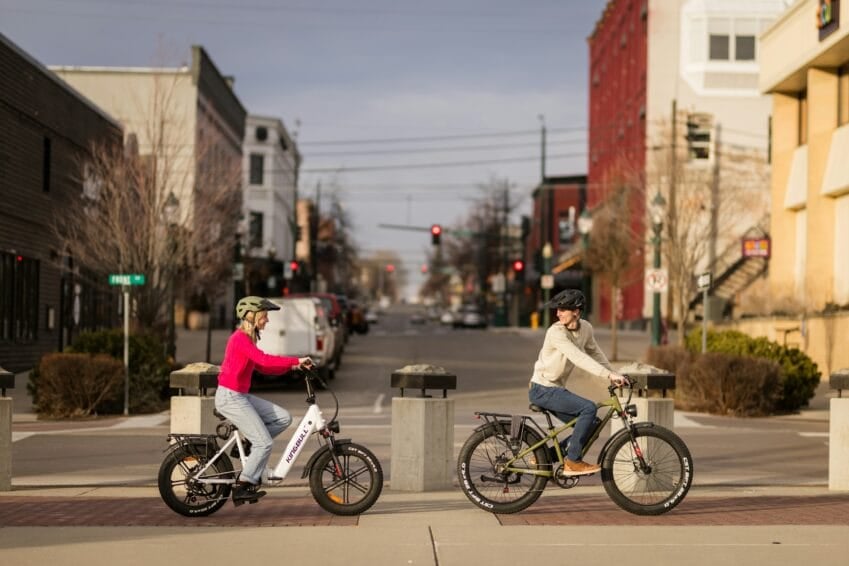
Rica lives in a subdivision in Cavite and rides her e-bike on subdivision roads and barangay streets to reach the jeepney terminal, then commutes the rest of the way by public transport. None of her regular route touches a restricted highway. For her, the math is simple: an entry-level e-bike pays for itself fairly quickly against daily tricycle or habal-habal fares, charging costs a small fraction of what fuel would cost, and she has nothing to worry about as long as she registers it and stays on the roads she already uses.
Jun lives in Quezon City and needs to cross Commonwealth Avenue every day to get to work. For him, the same e-bike purchase now comes with a real decision: reroute through side streets and risk a longer commute, register the unit and accept the small chance of still getting flagged during this pilot enforcement period, or hold off and stick with his current option until the rules settle. Same vehicle, same price tag, very different answer — because the road he actually rides on is the variable that matters most right now.
Before you buy, trace your actual daily route against the banned-roads table above. If it’s clear, buy with confidence. If it isn’t, that’s not necessarily a dealbreaker, but it’s the detail that should drive your decision, not the sticker price.
Also Worth Checking
If you’re weighing an e-bike against other ways to get around or finance a vehicle, our guide on whether 0% or low-down motorcycle financing is worth it covers the traditional alternative side by side. If you’ll be buying online, our breakdown of which marketplace actually protects buyers best is worth reading before you check out, and our guide to verifying FDA, PS/ICC, and DTI registration on an online listing covers exactly the kind of paperwork check that keeps you from ending up with an unregisterable unit. For more of this kind of value-first breakdown, head back to more sulit finds.
Verified Sources Used
LawPhil – Republic Act No. 4136: Confirmed the exact text of Section 5(a), the legal basis requiring registration of any motor vehicle used on a public highway.
GMA News Online: Confirmed the original announced start date, the barangay/subdivision-road exemption, and that no technical size or speed threshold was specified in the initial announcement.
Philstar.com: Confirmed the delay of enforcement from December 1, 2025 to January 2, 2026.
Philstar.com: Confirmed the expanded list of restricted roads (Commonwealth Avenue, Quezon Avenue, Marcos Highway, Sumulong Highway), the fine amounts, and the dedicated-bike-lane exception for lighter e-bikes.
Philippine Information Agency (PIA): Official government source confirming the pilot-program framing, the Sumulong Highway detail for Calabarzon, and that other Calabarzon roads remained unaffected as of this report.
Philstar.com: Confirmed LTO’s May 2026 clarification that there is no blanket ban on city and municipal roads, and the reasoning behind the restriction on national roads specifically.
Top Gear Philippines: Confirmed the LTO registration process, required documents, and the published fee schedule by vehicle classification.
VISOR.ph: Confirmed the permitted-roads list and the example of a local government (Valenzuela City) layering its own permit requirement on top of the national rule.
Zigwheels Philippines: Source for the current retail price range of electric bikes, mopeds, and scooters sold in the Philippine market, observed September 2026.