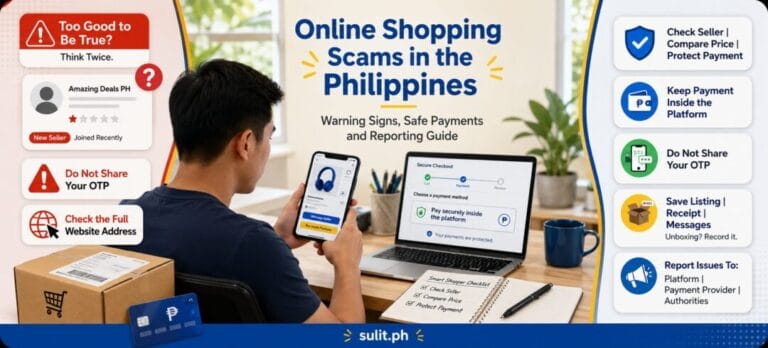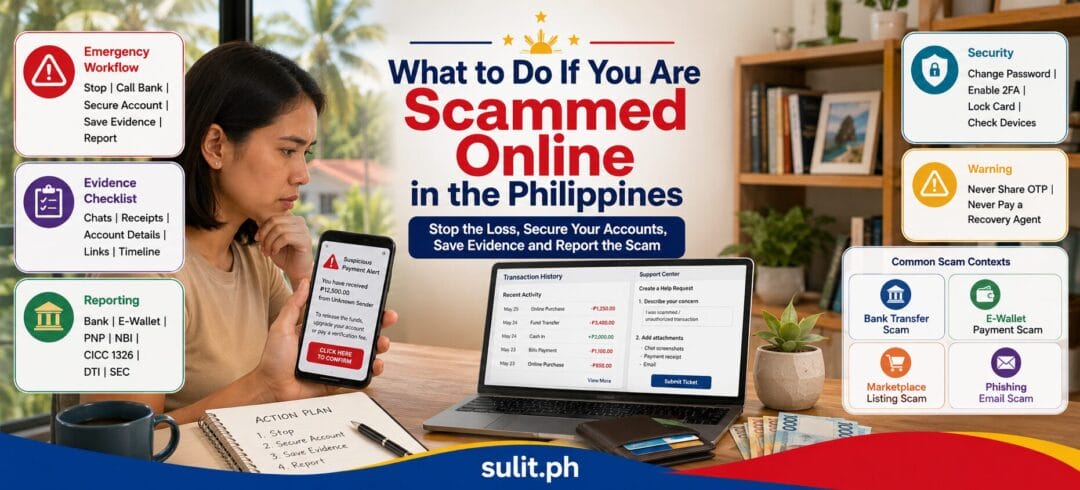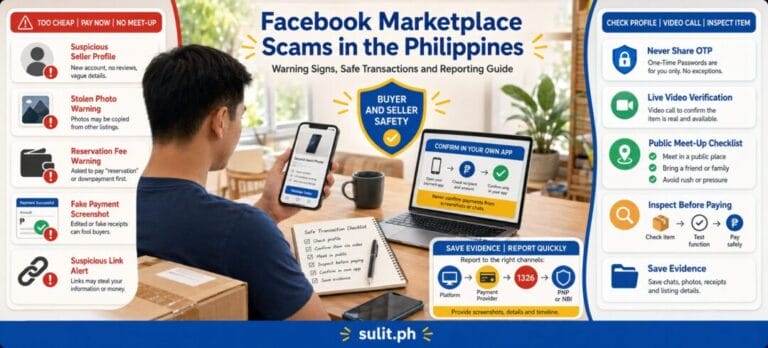

How to Spot Fake Reviews on Shopee, Lazada & TikTok Shop in the Philippines (2026 Guide)
Sulit verdict: A 4.9-star rating with 50,000 “sold” doesn’t mean the product is good — it means the seller is good at generating reviews, and those aren’t always the same thing. You don’t need a special tool to catch most fake or incentivized reviews; you need to know the five or six patterns sellers actually use, and you need to know that Philippine law now treats a fake “testimonial” the same way it treats a fake product description. Read the reviews like a skeptic for two minutes before you buy, and you’ll dodge most of the bad ones.
Here’s what makes this tricky: a seller doesn’t need to write fake reviews from scratch anymore. The easier move is “review gating” — offering a small freebie, a discount code, or a refund-if-you-rate-5-stars deal, openly or in a note tucked inside the package. That’s not a forged review in the legal sense; it’s a real buyer leaving a real opinion they were paid to have. Both tactics inflate the number you see at the top of the listing, and both are things you can learn to spot without downloading anything.
As of October 6, 2026, here’s how to read a review section like someone who’s seen the tricks before, and what the law actually says if a seller crosses the line from “incentivized” into “fake.”
The Patterns That Give a Fake or Bought Review Away
Start with timing. Open the reviews, sort by newest, and look for a cluster — a dozen 5-star reviews posted within the same day or two, especially right after a seller runs a flash sale or a livestream. Real reviews trickle in over weeks as orders actually arrive; a pile-up usually means a review-incentive push just happened.
Next, read the actual words, not just the star count. Bought and incentivized reviews tend to repeat the same two or three phrases across different buyers — “fast shipping, good quality, highly recommend” with almost no detail about the specific product. A real review usually says something only an actual user would know: how it fit, how it smelled, whether the size ran small, whether it worked after a week of use.
Sulit Tip: Check whether the review photos match the seller’s own listing photos almost exactly, just cropped differently, versus photos that look like they were actually taken in someone’s bedroom or kitchen with bad lighting. Real buyer photos are usually worse-looking than the product shots — that’s actually a good sign.
Also look at the rating distribution itself, not just the average. A product with mostly 5-star and 1-star reviews, almost nothing in between, often means the 5-stars are incentivized and the 1-stars are the buyers who didn’t get (or didn’t bother collecting) the freebie and just reviewed honestly. A healthy spread across 3, 4, and 5 stars, with specific complaints mixed in, tends to be more trustworthy than a wall of perfect scores.
The “Free Gift for 5 Stars” Trick, Specifically
If a card or note inside your package offers a refund, voucher, or small freebie in exchange for a 5-star rating or for sending a screenshot of your review, that’s review gating — and it’s a sign the listing’s star rating is partly bought, not that the product itself is necessarily bad. You’re still allowed to leave an honest review and claim the freebie separately if the seller’s offer doesn’t explicitly require a specific star rating; if it does explicitly require 5 stars to qualify, that’s the seller telling you the rating isn’t meant to reflect your real experience.
Heads Up: This tactic is common enough on Shopee, Lazada, and TikTok Shop that seeing it once doesn’t mean the seller is a scammer — plenty of legitimate small sellers do this because platform algorithms reward higher ratings with more visibility. It just means you should weigh that listing’s star count a little less and read a few of the actual review bodies more.
What Philippine Law Actually Says About Fake Reviews
This isn’t just a shopping-savvy issue anymore — it’s a legal one. Under the Internet Transactions Act of 2023 (Republic Act No. 11967), an online merchant is required to ensure that goods match their stated description and that any claimed “qualities and performance capabilities” are ones the merchant can’t disclaim simply by pointing to a misleading public statement or testimonial it knew about, per the law’s full text on LawPhil. Separately, the Act defines “deceptive, unfair or unconscionable” sales practices done through the internet as a punishable offense, with fines starting at ₱20,000 and climbing to as much as ₱1,000,000 for repeat violations.
The platforms themselves aren’t automatically off the hook either. Under the same law, the online merchant carries primary liability for what it sells, but the marketplace (Shopee, Lazada, TikTok Shop, and similar platforms) can carry subsidiary liability if it fails to act with ordinary diligence, and can be held solidarily liable if it’s notified a listing is dangerous, prohibited, or unsafe and doesn’t remove it. A fabricated review campaign designed to push a defective or misrepresented product is exactly the kind of pattern this law was built to catch.
| Who | Liability Under RA 11967 |
|---|---|
| The seller/merchant | Primary liability for deceptive practices, false claims, and misleading testimonials it relies on |
| The marketplace platform | Subsidiary liability if it fails to exercise ordinary diligence in enforcement |
| The marketplace platform (dangerous goods) | Solidary liability if it’s notified and fails to remove a dangerous or prohibited listing |
| Penalty range | ₱20,000 to ₱1,000,000, escalating with repeat offenses |
How to Actually Report a Fake-Review Pattern
If you’ve bought something based on reviews that turned out to be clearly manufactured — not just “the product disappointed me,” but reviews that look coordinated, incentivized through an undisclosed scheme, or outright copy-pasted — you have more than one place to take it. The Department of Trade and Industry and the DICT launched the eReport system on November 5, 2024, letting verified users of the eGovPH App file e-commerce complaints directly from their phones, specifically to implement the Internet Transactions Act’s consumer-protection mandate, per DZRH’s coverage of the launch.
You can also go directly to DTI the traditional way: fill out a complaint form or write a complaint letter with your contact details, the seller’s details, what happened, and the resolution you’re seeking, attach your proof of purchase and a valid ID, and send it to consumercare@dti.gov.ph or file in person at the Fair Trade Enforcement Bureau in Makati (or your regional DTI office outside Metro Manila), per DTI’s own consumer complaints page.
Good to Know: You don’t need a lawyer or a case number to just flag a listing to the platform itself first — Shopee, Lazada, and TikTok Shop all have in-app “report this listing/review” options, and that’s usually faster than a government complaint for getting one bad listing pulled. Save the DTI route for patterns that cost you real money or that the platform ignored.
Worked Scenario: Two Listings, Same Blender, Very Different Reviews
Say you’re comparing two sellers for the same ₱1,500 blender. Seller A has 4.9 stars from 8,000 ratings, but scrolling through, almost every review from the last month says some version of “good quality fast delivery” with a stock product photo reused as the “buyer photo.” Seller B has 4.6 stars from 600 ratings, with a visible spread of 3, 4, and 5-star reviews, several mentioning a specific detail — one buyer says the lid seal leaked slightly, another says it’s noisier than expected but works fine, a few are simply glowing with real detail about smoothies they made.
Seller B’s lower, messier number is actually the more trustworthy one here. A blender with zero complaints from 8,000 buyers is statistically unusual for any mass-market appliance; a blender with a few specific, plausible gripes mixed into mostly positive reviews looks like real usage data. When the “worse” rating has more texture and detail than the “better” one, trust the texture.
Also Worth Checking
Reading reviews well is one layer of buying safely online — it’s not the only one. If you want the seller-verification habit for livestream shopping specifically, our live selling seller verification guide covers that angle. If a purchase already went wrong, our refund dispute guide walks through winning that process step by step. For the bigger picture on which platform tends to protect buyers best overall, see our Shopee vs. Lazada vs. TikTok Shop vs. Carousell vs. Facebook Marketplace comparison. For more of this kind of value-first breakdown, head back to more sulit finds.
Frequently Asked Questions
Is it illegal for a seller to offer a free gift in exchange for a 5-star review?
It sits in a gray area rather than a flat prohibition, but it becomes a legal problem once the resulting reviews function as misleading testimonials the seller relies on to misrepresent the product, which the Internet Transactions Act addresses through its rules against deceptive sales practices and false claims about a product’s qualities.
Can I get in trouble for leaving a review in exchange for a freebie?
No — the law is aimed at merchants and platforms engaging in deceptive practices, not at ordinary buyers accepting a seller’s offer. Just know that your 5-star rating, in that case, is doing marketing work for the seller rather than informing other buyers.
Where do I report a seller running a fake-review scheme?
Report the specific listing to the platform first using its in-app reporting tool, then escalate to DTI through the eGovPH App’s eReport feature or by emailing consumercare@dti.gov.ph with your proof of purchase if the platform doesn’t act.
Can the marketplace itself (Shopee, Lazada, TikTok Shop) be held liable for a seller’s fake reviews?
Under RA 11967, the seller carries primary liability, but the marketplace can carry subsidiary liability if it fails to exercise ordinary diligence in enforcing its own rules, and solidary liability specifically for dangerous or prohibited goods it was notified about and didn’t remove.
Verified Sources Used
Republic Act No. 11967 (Internet Transactions Act of 2023), via LawPhil: Confirmed the specific sections on misleading testimonials and product claims, merchant and platform liability tiers, and the ₱20,000–₱1,000,000 penalty range for deceptive internet sales practices.
DZRH: Confirmed the November 5, 2024 launch of the DTI-DICT eReport system for e-commerce complaints via the eGovPH App.
DTI’s official consumer complaints page: Confirmed the complaint filing requirements and the consumercare@dti.gov.ph channel for deceptive sales practice complaints.