Is an Air Purifier Worth It in the Philippines? (2026 Air Quality & Electricity Cost Guide)
Sulit verdict: Worth it if you can point to a real reason — you’re near a busy road or construction site, someone at home has allergies or asthma, your unit floods with cooking smoke, or you’re nursing a newborn through “ber” season haze. Skip it if you’re buying one because an ad convinced you Metro Manila air is “toxic” and you don’t actually have a problem to solve — a well-matched aircon filter and open windows on good-AQI days will do almost as much for free. And whatever you do, don’t buy an “ionic” or ozone-generating unit marketed as an air purifier — that’s a specific trap this guide will show you how to spot.
Here’s why this question even comes up: Metro Manila’s air isn’t “Beijing bad,” but it’s not clean either. As of this writing, IQAir’s live monitor for Manila puts PM2.5 at roughly 35 µg/m³ — categorized as “Moderate,” but still around seven times the World Health Organization’s annual guideline value, per IQAir’s Manila air quality page. That’s an ambient (outdoor) reading, and it swings a lot — spiking hard every New Year’s Eve from fireworks and creeping up during the dry months when construction dust and traffic exhaust build up with less rain to wash it out.
Why This Is a Real Question, Not Just Marketing
The Philippines actually has its own legal benchmark for this. Under DENR Administrative Order No. 2013-13, issued under the Philippine Clean Air Act, the national ambient air quality guideline value for PM2.5 has been capped at 25 µg/m³ (annual average) and 50 µg/m³ (any 24-hour period) since January 1, 2016. Manila’s current ~35 µg/m³ reading sits comfortably under that 24-hour cap most days — but it’s also well above what health authorities consider genuinely safe to breathe long-term, which is the gap that makes “is an air purifier worth it” a legitimate question instead of a scare tactic.
Indoors, the picture is more personal than national. A condo unit facing EDSA or a busy intersection pulls in more exhaust every time a window opens. A kitchen without a working range hood fills with PM2.5 from frying and grilling — often at levels far higher, briefly, than anything outside. A rainy-season apartment with poor ventilation breeds mold spores. None of that shows up on a citywide AQI reading, which is exactly why “do I personally need one” is a different question from “is Manila’s air bad.”
Good to Know: Running your split-type aircon doesn’t meaningfully filter your air — most units only have a coarse mesh that catches dust bunnies, not the fine particles (PM2.5) that actually matter for your lungs. An air purifier and an aircon are solving two different problems.
What an Air Purifier Actually Does (and Doesn’t Do)
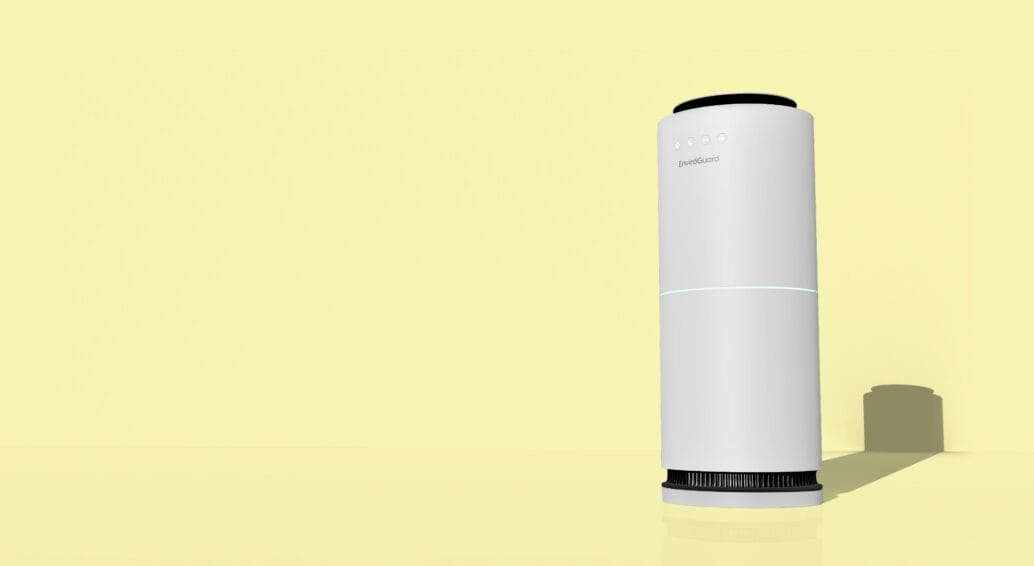
A genuine air purifier pulls room air through a fan and a filter — almost always a HEPA (High-Efficiency Particulate Air) filter, sometimes paired with an activated-carbon layer for odors and gases. True HEPA filters are rated to capture at least 99.97% of particles down to 0.3 microns, which covers dust, pollen, most mold spores, and a large share of PM2.5. That’s genuinely useful and backed by real filtration physics, not a marketing claim.
Two numbers matter more than the brand name on the box:
| What to check | Why it matters |
|---|---|
| CADR (Clean Air Delivery Rate) | How much filtered air it actually pushes out per hour. A higher number clears a room faster — a low-CADR unit in a big room just runs loudly and does little. |
| Rated coverage area (sqm) | Brands publish this based on their own CADR testing. Match it to your actual room size — don’t buy a unit rated for a 16–27 sqm bedroom and expect it to handle a 40 sqm sala on the same setting. |
What it won’t do: it won’t lower your home’s humidity (that’s a dehumidifier’s job — see our dehumidifier buying guide if mold and mugginess are your actual complaint), it won’t replace proper ventilation, and it won’t do much for a whole-house dust problem if you only run one small unit in one room with the door open to the rest of the unit.
Heads Up: Watch out for “ionic” or “ionizer” air purifiers and anything that advertises “activated oxygen” or ozone output as a selling point. The U.S. EPA’s own testing found that ozone-generating devices sold as air cleaners are frequently ineffective at removing real pollutants like carbon monoxide and formaldehyde, don’t meaningfully remove dust or pollen, and — worse — some units produce ozone concentrations several times higher than federal health exposure limits even when used exactly as instructed, which can irritate the lungs and worsen asthma, per the EPA’s ozone generator assessment. If a listing brags about “ions” instead of a HEPA or H-rated filter spec, that’s your cue to keep scrolling.
How Much Does One Actually Cost — To Buy and To Run?
Upfront price varies a lot by room size and filter stage count, and listings change often enough that we won’t pretend to know every brand’s current price. What we can verify directly: Xiaomi’s own Philippine store currently lists its Smart Air Purifier 4 Compact — a genuine H13 HEPA unit rated for 16–27 sqm with a 230 m³/h CADR — at ₱4,599, per the Xiaomi PH store listing. That’s a real, entry-level data point for a small-room unit, not an estimate. Larger-room units and multi-stage models (HEPA plus activated carbon, higher CADR for bigger salas) from brands like Levoit, Sharp, Philips, and Honeywell cost more than that — how much more shifts with sales and promos often enough that we’d rather send you to check the current listing than hand you a number that’s stale in a month.
Running cost is the part people forget to budget for. Using Meralco’s own published residential rate of ₱14.7424 per kWh for September 2026 (the latest rate Meralco has posted as of this writing, per its official rate announcement) and that same Xiaomi unit’s rated 27W draw:
| Usage pattern | Monthly energy use | Monthly cost (at ₱14.7424/kWh) |
|---|---|---|
| Running 24/7 | ~19.4 kWh | ~₱287 |
| Running ~10 hrs/day (sleep + a few hours home) | ~8.1 kWh | ~₱119 |
That’s genuinely cheap to run — on the order of one or two fast-food meals a month — which means the real cost decision isn’t the electricity, it’s the ₱4,000-and-up upfront price plus filter replacements every few months, which most brands don’t advertise loudly on the box.
Who Should Actually Buy One
It’s worth it if any of these describe your situation: someone in the household has asthma, allergies, or another breathing condition and you’ve noticed symptoms are worse at home; you live along a major road, near a construction site, or in a unit where outdoor haze visibly gets indoors; your kitchen ventilation is weak and frying/grilling fills the whole unit with smoke; you have pets and notice dander buildup; or you’re specifically trying to protect a newborn or an elderly family member during the dry, dusty months.
It’s skippable — at least for now — if none of that applies and you’re buying purely because a number on an app made you anxious. A better first move in that case: open windows on days when the outdoor AQI is actually good (check it instead of guessing), keep the house swept and vacuumed, and fix any obvious source first, like a leaky window letting in construction dust.
Worked Scenario: A Studio Near a Major Road
Say you’re renting a 20 sqm studio with one window facing a busy avenue, and you’ve noticed dust accumulating fast and a bit of a cough that clears up when you’re away for the weekend. A compact unit rated for 16–27 sqm — like the Xiaomi example above — is actually a reasonable match for a room that size, and running it while you sleep (the ~10-hour scenario, roughly ₱119/month) covers the hours you’re most exposed for the least cost. If the cough doesn’t improve after a few weeks of consistent use, that’s a signal to see a doctor rather than to buy a second, bigger unit — a purifier manages dust and particles, it doesn’t diagnose or treat a respiratory issue.
Sulit Tip: Run it on a timer or smart plug for the hours you’re actually home and the windows are closed, rather than 24/7 by default — you get most of the air-quality benefit for a fraction of the electricity, based on the math above.
Also Worth Checking
If dust and air quality are only part of what’s bothering you at home, a few related Sulit guides might be the better fit: our dehumidifier buying guide if mugginess and mold are the real complaint, our robot vacuum guide if dust on the floor (not in the air) is your bigger daily annoyance, and our breakdown of budget vs. established appliance brands in the Philippines if you’re trying to figure out whether a cheaper off-brand unit is a smart buy or a false economy across small appliances generally. For more of this kind of value-first breakdown, head back to more sulit finds.
Frequently Asked Questions
Does an air purifier remove viruses or bacteria?
A true HEPA filter can trap particles down to 0.3 microns, which includes many bacteria and virus-carrying droplets, but it’s not a substitute for ventilation, vaccination, or medical guidance — treat it as one layer of protection against airborne particles generally, not a dedicated health device.
Do I need one if I already have an aircon?
Usually yes, if air quality is your actual concern — most split-type aircons use a coarse filter that catches visible dust, not the fine PM2.5 particles an air purifier’s HEPA filter is built to capture. They solve different problems.
How do I know what room size a unit can actually handle?
Check the brand’s own published CADR and rated coverage area (in square meters), and match it to your actual room — not the whole unit if you plan to run it with doors open to other rooms.
Are ionizer or ozone air purifiers a scam?
Not necessarily a scam in the sense of being fake, but they’re a poor substitute for true HEPA filtration, and some produce ozone at levels the EPA has found exceed safe exposure limits. If a listing leads with “ionic” or “activated oxygen” instead of a HEPA/H-number spec, treat that as a red flag worth researching further before buying.
Verified Sources Used
IQAir: Confirmed Manila’s current live PM2.5 reading and its ratio to the WHO annual guideline value.
DENR Administrative Order No. 2013-13 (via the Supreme Court E-Library): Confirmed the Philippines’ official national ambient air quality guideline values for PM2.5 (25 µg/m³ annual, 50 µg/m³ 24-hour, effective 2016 onward).
Meralco: Confirmed the official residential electricity rate (₱14.7424/kWh) used for the running-cost calculation.
Xiaomi Philippines official store: Confirmed the specific product price, wattage, CADR, and rated coverage area used in the cost example.
U.S. Environmental Protection Agency: Confirmed the health-risk and effectiveness findings on ozone-generating devices sold as air purifiers.