
Vacation Club Membership in the Philippines: Red Flags Before You Sign (2026 Guide)
Sulit verdict: Proceed with real caution. A resort-brand vacation club that sells actual future hotel stays isn’t automatically a scam — home solicitation selling like this is a regulated, legal business model in the Philippines. But the pitch you’ll usually hear first (a call or text saying you “won” a free stay, a same-day signing push, vague talk of “profit sharing” or guaranteed returns) is the exact pattern the Securities and Exchange Commission has formally warned the public about before. The moment anyone tells you your membership will earn money, pay dividends, or grow in value, you’re no longer looking at a vacation product — you’re looking at an investment contract, and it needs to be registered as one. Verify before you sign anything, not after.
This pitch is everywhere right now — mall booths near the atrium, a text claiming you’ve won a “free 3D2N resort stay,” a call center voice congratulating you on being “selected” for a members-only rate. It’s not new, but it’s picked back up as resorts and travel-club operators chase post-pandemic leisure spending. The problem isn’t that vacation clubs exist. The problem is that two very different products get sold using nearly identical scripts, and only one of them is something an ordinary buyer can walk away from without much risk.
How You End Up in the Room
The recruitment pattern is consistent enough that you can recognize it before you ever sit down. It usually starts with an unsolicited call, text, or booth conversation announcing you’ve been selected for a free hotel stay, a discounted resort package, or a prize from a raffle you don’t remember entering. The catch is always the same: to claim it, you need to attend a “member orientation” or “presentation” — in person, usually same-day or within the week, usually 60 to 120 minutes, usually with both spouses or partners required to attend together “for the account.”
None of that alone is illegal. Under the Consumer Act of the Philippines (Republic Act No. 7394), this kind of direct solicitation is a recognized sales channel called a home solicitation sale, and it’s specifically regulated rather than banned. Article 54 requires the business to first secure a permit from the Department of Trade and Industry before conducting this kind of selling at all. Article 55 restricts the hours a home solicitation sale can happen — only between 9:00 a.m. and 7:00 p.m. on a working day, unless you’ve agreed otherwise in advance. Article 56 requires that whoever is pitching you carries proper identification and written authority from the company they represent. The DTI’s Fair Trade Enforcement Bureau lists “Home Solicitation Sale” as its own permit category, separate from ordinary sales promotions — confirming this is a distinct, licensed activity DTI actively tracks.
Sulit Tip: Ask to see the DTI home solicitation sale permit before you sit through the full presentation. A legitimate operator will have this on hand or posted at the venue. Hesitation or a change of subject is itself useful information.
Two Very Different Things Get Sold as “Membership”
This is the part that actually determines whether you’re looking at a normal (if pricey) leisure purchase or a legal problem waiting to happen. “Vacation club membership” gets used as an umbrella term for two structurally different products, and the sales presentation is rarely the place that draws the line clearly for you.
| Resort/Hotel Points-Based Membership | “Club Shares” or Investment-Style Membership | |
|---|---|---|
| What you’re actually buying | Prepaid access to future stays, usually as points or banked room-nights at a resort chain or its partners | A “share” or “certificate” in the club or resort corporation itself |
| How it’s pitched | Discounted future travel, locked-in rates, member perks | Travel perks plus promised profit-sharing, dividends, or resale/appreciation value |
| Governing framework | Consumer Act (RA 7394) home solicitation sale rules; ordinary contract law | Securities Regulation Code — if it promises a return on your money from the efforts of others, it legally functions as a security |
| What must exist before it can be sold to you | DTI home solicitation permit; business registration | Everything in the first column, plus SEC registration as a security or an SEC secondary license — most operators pitching “profit sharing” skip this step |
| The real red flag | None inherent — the product is what it says it is, evaluate it like any other prepaid travel purchase | Any promise that your money will grow, pay a percentage return, or that shares can be resold at a profit |
Heads Up: The presence of the word “shares,” “certificate of ownership,” “profit sharing,” or a promised annual percentage return is the single clearest signal you’ve moved from column one to column two — and column two is where Philippine regulators have actually taken enforcement action.
The Case That Shows What “Crossing the Line” Actually Looks Like
This isn’t a hypothetical risk. In July 2020, the SEC issued a public advisory against The Seashore Beach Club, Inc. and MAV Discovery Beach Resort Dev’t Corp., warning the public “NOT TO INVEST or to STOP INVESTING” in the club shares the companies were offering. According to the SEC’s own advisory, the companies sold club shares priced at roughly ₱834,900 for one property and ₱900,000 to ₱1,035,000 for another, marketed with flexible payment plans and a promised “profit sharing of 30% of its annual net income,” plus inheritance rights on the share. The SEC determined these were unregistered securities being sold to the public without the required license — the company had a Cease and Desist Order against it as far back as August 2017.
The company eventually settled with the SEC in late 2020, paying ₱3.67 million — roughly half the penalty it could have faced — in installments running into 2021, with the case closed “without determination of guilt,” per SEC records and reporting from BusinessWorld. Whatever you make of the settlement terms, the underlying advisory is the important part: a Philippine vacation/beach club operator sold “shares” with a promised annual return, without the securities registration the law requires, and the country’s securities regulator formally told the public to stop investing.
That’s the exact pitch structure — travel perks plus a promised percentage return — that shows up in ordinary vacation club presentations today, minus the word “shares” if the salesperson is being careful with language. The product category didn’t disappear because one operator got a CDO; it just means you’re the one who has to check before you commit.
What the Law Actually Gives You — and What It Doesn’t
The Consumer Act does give you real protections here, just not the one people usually assume exists. Article 50 prohibits deceptive sales representations — misstating what the product is, its price, its availability, or its terms. Article 52 goes further and prohibits sellers from exploiting a consumer’s “inability to understand the language of an agreement” or otherwise inducing someone into a transaction “grossly inimical to the interests of the consumer” — language that squarely covers high-pressure, rushed-signing tactics. Article 53 flatly bans pyramid or chain-distribution sales schemes for consumer products, which matters if the pitch ever shifts toward recruiting other buyers for a bonus or commission.
Good to Know: What the Consumer Act does not give you, unlike some other countries’ timeshare-specific laws, is an automatic statutory “cooling-off period” — a fixed number of days after signing during which you can cancel a home solicitation contract penalty-free just because you changed your mind. No such blanket right is spelled out in RA 7394 for this type of sale. Whatever cancellation rights you have will come from the specific contract you sign, not a default legal safety net — which is exactly why reading that contract before, not after, signing matters so much more here than it would with an ordinary retail purchase.
What to Verify Before You Say Yes
| Check this | How |
|---|---|
| DTI home solicitation sale permit | Ask the presenter directly, or check with DTI’s Fair Trade Enforcement Bureau |
| SEC registration status of the company | Search the company name through the SEC’s online Company Registration System, and separately check the SEC’s published advisories list for the exact company name |
| Whether “profit sharing,” dividends, or resale value are mentioned anywhere | If yes, that specific promise needs its own SEC securities registration — ask to see it in writing |
| The full written contract, not the verbal pitch | Ask to take a printed copy home and read it before signing — a legitimate operator has no reason to require a same-day signature |
| Total cost over the full term, including annual dues | Ask for the number covering the entire membership period, not just “today’s rate” or the monthly installment figure |
| What happens if you stop paying or want out | Get the exit and default terms explained before you commit, since there’s no guaranteed cooling-off right to fall back on |
Worked Scenario: The “You Won a Free Stay” Call
Say you get a text: you’ve been selected for a complimentary 3-day, 2-night stay at a resort, no cost, just attend a short “member orientation” first. You go. Ninety minutes in, the presenter has moved from the free stay to a ₱250,000 membership package, payable over 24 months, that includes “banked” room-nights at multiple properties plus, near the end of the pitch, a mention that members can “resell their slot” later for a profit once the resort’s newer phase opens.
Here’s how to work through it in the room instead of after you’ve signed. First, separate the two products in your head: is this points-based access to future stays (evaluate it like any prepaid travel purchase — is 24 months of ₱250,000 actually cheaper than booking the same stays through a sale-calendar strategy, a hotel’s own member program, or simply paying rack rate when you travel?) or is the resale/profit promise doing real work in the pitch? If anyone brings up resale value, appreciation, or a return on your money, that single sentence is the one to press on: ask them to show you the SEC registration that covers that specific promise. A legitimate points-based club has no reason to dodge that question, because it isn’t selling a security — it’s selling future hotel stays.
Second, decline to sign that day regardless of how the pricing “expires tonight.” Ask for the printed contract to review at home, and use that window to run the company name through SEC’s advisory list and registration search. If the numbers still make sense a week later with no artificial deadline attached, that’s a materially different decision than one made under a countdown clock in a conference room.
Also Worth Checking
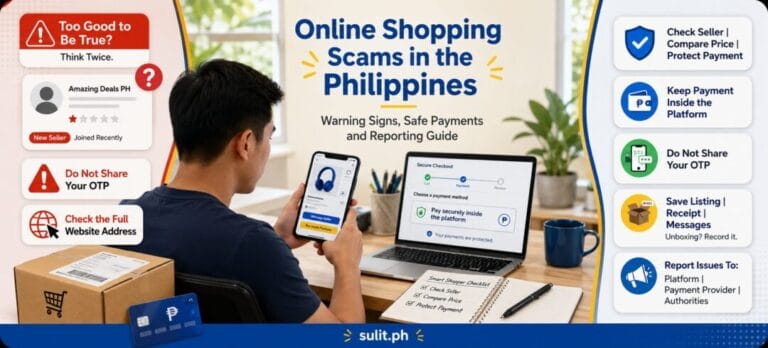
If big-ticket “worth it or not” decisions like this one are useful to you, our breakdown of whether a pre-need plan is worth it in the Philippines walks through a similarly structured, long-term financial commitment using the same verify-before-you-sign approach. If you’d rather just chase the actual travel savings without a membership contract at all, our Shopee, Lazada & TikTok Shop sale calendar and budget staycations near Manila guide both cover ways to get discounted trips and purchases without a multi-year contract attached. And for the broader pattern of high-pressure and deceptive selling in the Philippines, our online shopping scams guide covers the digital-side version of the same red flags.
Verified Sources Used
LawPhil — Republic Act No. 7394 (Consumer Act of the Philippines): Confirmed the home solicitation sale permit, hours, and ID requirements (Articles 54–56), the ban on deceptive sales practices (Article 50), the prohibition on unconscionable sales tactics (Article 52), and the ban on pyramid/chain-distribution schemes (Article 53).
DTI Fair Trade Enforcement Bureau: Confirmed “Home Solicitation Sale” is tracked as its own distinct DTI permit category, separate from general sales promotions.
Securities and Exchange Commission — official advisory on The Seashore Beach Club, Inc. and MAV Discovery Beach Resort Dev’t Corp.: Confirmed the specific club-share pricing, the promised 30% annual profit-sharing structure, and the SEC’s public warning against investing, issued July 2020.
BusinessWorld: Confirmed the outcome of the case — a ₱3.67 million settlement with the SEC, paid in installments through 2021.