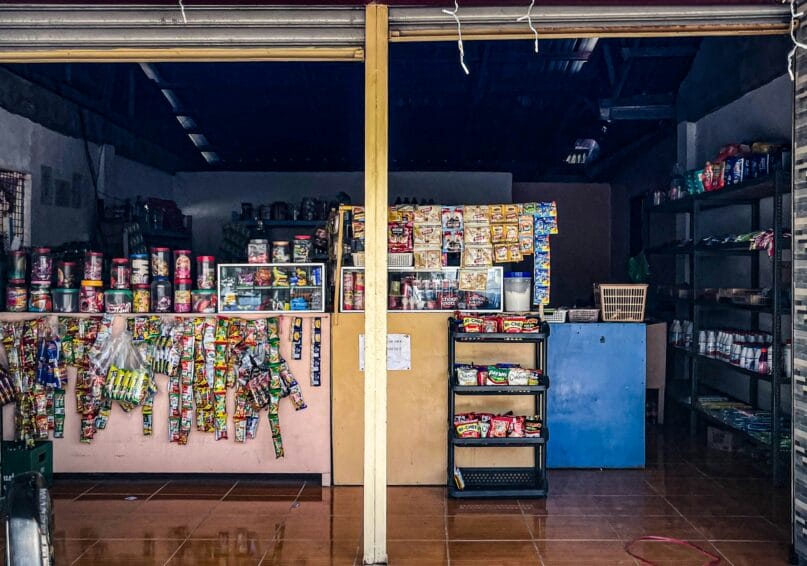
Is Starting a Sari-Sari Store Worth It in the Philippines? The Real Capital, Permits & Tax Rules (2026 Guide)
Sulit verdict: Yes — a sari-sari store is still one of the lowest-capital, lowest-risk ways to earn extra income in the Philippines, and you can genuinely start one for well under ₱50,000. But “sulit” only holds if you treat it like a real business from day one: separate your capital from your household budget, know which permits actually apply to you, and understand that the 8% tax option and the BMBE tax exemption are two different things that most first-time owners mix up. Skip the paperwork step and you’re not saving money — you’re just postponing the bill.
Every “Negosyo Tips” Facebook group has the same debate: some people say you can open with ₱5,000, others swear you need ₱100,000 to do it properly. Both are technically right, because they’re describing different stores. The real question isn’t “how much capital,” it’s “capital for what kind of store, and what happens to your profit once permits, restocking, and taxes are in the picture.”
As of October 26, 2026, here’s what the actual capital ranges, registration costs, and tax rules look like — sourced from the government agencies that set the rules and the consumer-finance sites that publish the numbers most first-time owners work from.
How Much Capital Do You Actually Need?
There’s no single official figure for this — it depends entirely on how wide a selection you want on day one. Two Philippine personal-finance sites that regularly publish sari-sari store guides give noticeably different ranges, which is worth seeing side by side instead of picking just one:
| Store Size | Moneymax.ph’s Range | Home Credit PH’s Range | What You Can Actually Stock |
|---|---|---|---|
| Very small / home-based | ₱20,000 (essentials only) | ₱5,000–₱10,000 | Rice, canned goods, instant noodles, cooking oil, a handful of snacks |
| Basic, well-stocked | ₱30,000–₱50,000 | ₱15,000–₱30,000 | Adds fast-moving items: toiletries, laundry products, soft drinks |
| Wider variety / bigger stock | ₱70,000–₱100,000 | ₱50,000 and up | Larger quantities, wider brand selection, possibly a small freezer |
The gap between the two isn’t a mistake — it reflects how differently “starting” is defined. Home Credit’s lower figures assume you’re testing the idea with a few shelves at home; Moneymax’s figures assume you’re stocking enough to look like an actual neighborhood store from week one. Neither includes the extras both sites flag separately: a secondhand freezer or chiller, shelving, a weighing scale if you plan to sell loose items, and store signage.
Sulit Tip: Financial consultant Chinkee Tan, cited in Moneymax’s guide, puts typical sari-sari store margins at 10% to 40%, depending on the product category — soft drinks and canned goods usually sit at the low end, while snacks and personal-care items run higher. A Packworks industry study cited in the same guide found Philippine sari-sari stores collectively earned over ₱8 billion in 2023, up more than 21% from ₱6.6 billion the year before — a sign the category is growing, not a guarantee any single store will hit that growth.
The Paperwork: What’s Actually Required vs. What’s Optional
This is where most first-timers either over-register (paying for things they don’t need yet) or under-register (skipping something that matters). Here’s what each layer actually is, straight from the agencies that run it:
| Step | Who Handles It | Official Cost | Validity |
|---|---|---|---|
| DTI Business Name Registration | DTI, via the Business Name Registration System (bnrs.dti.gov.ph) | ₱200 (barangay scope) to ₱2,000 (national scope), plus a ₱30 documentary stamp tax | 5 years, renewable |
| Barangay Clearance / Business Permit | Your barangay hall | Varies by LGU — not a fixed national rate | Usually 1 year |
| Mayor’s/Business Permit | City or municipal hall | Varies by LGU | Usually 1 year, renewed every January |
| BIR Registration (TIN, Certificate of Registration) | Bureau of Internal Revenue | Registration fee plus documentary stamp tax | Ongoing, with annual renewal fee |
For the DTI step specifically: a barangay-scope registration (₱200) is enough if you genuinely only plan to sell within your own barangay and never intend to expand or open a second branch elsewhere — most sari-sari stores never need anything bigger than this tier.
Heads Up: A lot of “how to register a sari-sari store” content online treats DTI registration and BIR registration as the same step. They’re not. DTI registers your business name so no one else in your chosen scope can use it. BIR registration is what actually makes you tax-compliant and lets you issue official receipts. You generally need both — DTI first, then BIR — not one instead of the other.
BMBE Status: The Tax Break Most Sari-Sari Stores Qualify For (and Don’t Claim)
If your total business assets — not counting the land your store sits on — stay under ₱3,000,000, you likely qualify as a Barangay Micro Business Enterprise under Republic Act No. 9178, the BMBE Act. For a typical sari-sari store with ₱20,000 to ₱100,000 in starting capital, that threshold isn’t close.
Under RA 9178, a registered BMBE gets two concrete benefits: it’s exempt from income tax on income from its own operations, and it’s exempt from the Minimum Wage Law for any employees it hires (those employees still have to receive the same SSS, PhilHealth, and other statutory benefits as any regular employee — the exemption is from the wage floor itself, not from benefits). Local governments are also encouraged, though not required, to reduce or waive local taxes and fees for registered BMBEs.
Here’s the part that trips people up: BMBE registration isn’t done at DTI. Under Section 4 of RA 9178, it’s processed by the Office of the Treasurer in your city or municipality, which is supposed to act within 15 working days of a complete application — if it doesn’t, the application is automatically deemed registered. The Certificate of Authority itself is issued free of charge and is valid for two years, renewable for two-year periods after that.
The Tax Question: Do You Need the 8% Rate, BMBE, or Both?
This is the single most confused part of running a small store, so here’s the actual rule. Under Section 24(A)(2)(b) of the National Internal Revenue Code, as amended by the TRAIN Law (Republic Act No. 10963), a self-employed individual whose gross sales or receipts for the year don’t exceed the VAT threshold of ₱3,000,000 can choose to pay a flat 8% tax on gross sales in excess of ₱250,000, instead of the regular graduated income tax rates. Choosing the 8% option also means you don’t separately pay the usual percentage tax on top of it.
Good to Know: BMBE income-tax exemption and the 8% TRAIN option aren’t the same thing, and you don’t necessarily need to choose — a BMBE-registered store is exempt from income tax under RA 9178 regardless, while the 8% option under the TRAIN Law is the simplified rate for self-employed individuals who aren’t claiming BMBE status, or whose LGU doesn’t recognize BMBE income tax exemption at the local level for certain other fees. If you’re not sure which applies to your specific situation, that’s exactly the kind of question your Revenue District Office or a local accountant should answer before you file anything.
Worked Scenario: A ₱30,000 Starter Store, Month One
Say you open with ₱30,000 — squarely in both sites’ “basic, well-stocked” range. Using the lower end of the cited margin range (10%) as a conservative planning number, and Moneymax’s suggested early target of around ₱5,000 in daily revenue for the first three months:
| Item | Estimate |
|---|---|
| Starting inventory capital | ₱30,000 |
| Target daily revenue (Moneymax’s early-stage benchmark) | ₱5,000 |
| Monthly revenue (26 selling days) | ₱130,000 |
| Gross profit at 10% margin (conservative end) | ₱13,000 |
| Gross profit at 40% margin (optimistic end, higher-margin items) | ₱52,000 |
That 10%–40% spread is the whole story of why two stores selling the same categories can report wildly different results: a store leaning on low-margin staples like rice, eggs, and soft drinks will sit near the bottom of that range; one that mixes in snacks, personal care, and prepaid load (where margins run higher) will land closer to the top. Neither number includes rent, electricity, a helper’s wage if you hire one, or restocking trips — those come out of gross profit before you see anything resembling take-home income.
When It’s Actually Worth It — and When It Isn’t
It’s worth it if you already have steady foot traffic (a busy street, near a school or jeepney stop, inside a compound with no store yet) and you can commit the time to actually mind the store — sari-sari stores live or die on being open when neighbors need something, not on having the widest selection.
It’s a harder sell if you’re the third or fourth sari-sari store on the same short street, since margin gets squeezed by direct competition before you’ve recovered your capital, or if your plan depends heavily on “utang” (store credit) without a clear system for tracking who owes what — unmanaged utang is the most commonly cited reason small sari-sari stores quietly run out of cash even while technically selling well.
Frequently Asked Questions
Do I need a BMBE certificate to open a sari-sari store?
No — BMBE registration is optional, not a requirement to operate. It’s a tax benefit you can apply for once your business exists, through your city or municipal treasurer’s office, not a prerequisite for opening.
Can I run a sari-sari store from home without registering anything?
Many stores do start this way, but it’s informal and unregistered, which means no official receipts, no BMBE tax exemption, and no legal business name protection. If you plan to grow beyond a few shelves or apply for supplier credit later, registering early is simpler than retrofitting it after the fact.
What happens if I never register with the BIR?
You can’t legally issue official receipts or invoices, which shuts you out of supplying to anyone who needs one (offices, resellers, some delivery platforms), and you remain liable for whatever tax obligations apply to your actual income whether or not you’ve registered — registration doesn’t create the tax obligation, it just formalizes how you pay it.
Also Worth Checking
If your starting capital is the real bottleneck, a few other guides on the site tackle the money side specifically: our breakdown of what to actually do with your 13th month pay covers using a year-end bonus as seed capital instead of spending it down, our guide to whether a paluwagan is worth joining looks at the informal group-savings route some first-time owners use to raise capital, and our look at whether “5-6” lending is worth it is essential reading before you consider borrowing short-term for restocking, since that cost eats into exactly the margins this guide walks through above.
Verified Sources Used
Republic Act No. 9178 (BMBE Act of 2002), via LawPhil: Confirmed the ₱3,000,000 asset threshold, income tax and minimum wage exemptions, the city/municipal treasurer as the registering agency, the 15-working-day processing rule, and the 2-year validity of the Certificate of Authority.
Republic Act No. 10963 (TRAIN Law), via LawPhil: Confirmed Section 24(A)(2)(b) of the NIRC as amended — the 8% tax option on gross sales/receipts above ₱250,000 for self-employed individuals under the ₱3,000,000 VAT threshold, in lieu of graduated income tax and the percentage tax.
DTI Business Name Registration System (BNRS) FAQ: Confirmed official registration fees by territorial scope (₱200 barangay to ₱2,000 national), the ₱30 documentary stamp tax, and the 5-year validity period.
Moneymax.ph: Source of the ₱20,000–₱100,000 capital-tier estimates, the 10%–40% margin range attributed to financial consultant Chinkee Tan, and the Packworks industry revenue figures for 2023. Observed October 26, 2026.
Home Credit Philippines: Source of the alternate, lower ₱5,000–₱50,000+ capital-tier estimates cited for comparison. Observed October 26, 2026.