Generic Medicine in the Philippines: Is It Really the Same as Branded? (2026 Guide)
Sulit verdict: Yes — by Philippine law, an FDA-registered generic medicine has to contain the same active ingredient, strength, and dosage form as its branded twin, and it has to prove it works the same way in the body before it’s ever allowed on a shelf. The real risk was never the word “generic.” It’s buying medicine — branded or generic — from a source that isn’t a licensed pharmacy, where nobody can guarantee what’s actually inside the box.
If you’ve ever stood in a drugstore aisle wondering whether the ₱15 generic paracetamol works as well as the ₱40 branded one, you’re not being paranoid — you were raised in a market where “matibay” and “mahal” got conflated for decades. But the more useful question in 2026 isn’t branded-versus-generic. It’s registered-versus-unregistered, because that’s where the Philippines actually has a documented problem.
Here’s what the law requires, what the government’s own enforcement data says about fake medicine in the country, and how to make sure whatever you’re swallowing is the real thing — generic or not.
What Philippine Law Actually Requires
The legal foundation here is Republic Act No. 6675, the Generics Act of 1988. It didn’t just legalize generic drugs — it restructured how medicine gets prescribed and sold in the country. Under the law:
- Doctors are required to write prescriptions using the generic name of the drug. A brand name may be added alongside it, but the generic name has to be there — and doctors who consistently skip this face escalating penalties, from a reprimand up to suspension of their license to practice.
- Drugstores are required to tell any buyer about other available drug products carrying the same generic name, along with their prices, and to post a visible list of generic drug prices in-store.
- Manufacturers must print the generic name more prominently than the brand name on labels, packaging, and ads — the generic name has to appear immediately above the brand name, not buried in fine print.
In plain terms: the law was built specifically so a cheaper, chemically identical option is always visible to you at the counter, whether or not the pharmacy wants to upsell you the branded version.
Generic vs. Branded: What’s Actually the Same, What Isn’t
| Factor | Branded medicine | FDA-registered generic |
|---|---|---|
| Active ingredient | Same molecule, original developer | Same molecule — legally required to match |
| Proof of effect | Original clinical trials | Must demonstrate bioequivalence to the branded version before FDA registration |
| FDA registration required | Yes | Yes — same requirement, no shortcut |
| Inactive ingredients (fillers, coating, dye) | Manufacturer-specific | May differ slightly — this is where some people report a different “feel” even when the drug works the same |
| Price | Typically higher — covers original R&D, marketing, and brand premium | Typically lower — no original R&D cost to recover |
| Where sold legitimately | Licensed pharmacies | Licensed pharmacies — the exact same requirement |
Sulit Tip: Every drugstore in the Philippines is legally required to post a visible price list showing generic alternatives for the drugs they carry. If you don’t see one, ask for it by name — it’s not a favor, it’s the law.
Generic Isn’t the Same Thing as Fake — Here’s the Distinction That Actually Matters
This is where a lot of the confusion comes from, and it’s worth being precise about it. Regulators draw a real line between two very different problems:
- Substandard products are legally manufactured and registered but fail to meet quality standards somewhere in production.
- Falsified (counterfeit) products are deliberately made to deceive — wrong ingredients, wrong dose, sometimes no active ingredient at all — and they were never legitimately registered with the FDA in the first place.
An FDA-registered generic medicine, bought from a licensed pharmacy, falls into neither of those categories — it’s a fully legal, fully regulated product. A cheap unbranded tablet bought from a stranger online or a street vendor, on the other hand, could be either of the above, and there’s no way to tell just by looking at it. Treating “generic” and “possibly fake” as the same thing is exactly the confusion that lets real counterfeiters hide in plain sight.
How Big Is the Fake Medicine Problem, Actually?
This part isn’t hypothetical. The Philippines has a documented counterfeit medicine problem that has nothing to do with legitimate generics:
- A United Nations Office on Drugs and Crime review found the Philippines recorded 193 documented pharmaceutical crime incidents between 2013 and 2017 — more than any other country in Southeast Asia during that period.
- In 2024, an FDA-led enforcement effort seized roughly ₱28 million worth of fake medicines and other illicit health products, of which about ₱21.9 million was counterfeit medicine specifically, according to reporting on the agency’s anti-counterfeiting campaign.
- FDA field officers in Mindanao have warned that an estimated 90 percent of medicines, cosmetics, and food supplements sold online in that region may be unregistered — meaning nobody has verified what’s actually in them.
- Commonly counterfeited products in past enforcement actions have included everyday over-the-counter names Filipinos reach for constantly — paracetamol, Kremil-S, Alaxan FR, and Biogesic among them — plus erectile dysfunction medication and antibiotics.
Heads Up: Fake medicine doesn’t always look obviously fake. Red flags to check on any box include misspelled text on the label, a batch number or expiration date that’s missing or looks tampered with, a seal that doesn’t sit flush, and packaging colors or fonts that look slightly “off” compared to a box you’ve bought before.
How to Verify You’re Buying the Real Thing
Whether you’re choosing generic or branded, the checks that actually protect you are the same:
- Buy from a licensed pharmacy, full stop. This includes chain drugstores as well as licensed independent botika and Botika ng Bayan outlets set up under the government’s affordable-medicines program — the license is what matters, not the size of the store.
- Check FDA registration. The FDA maintains an official verification portal (accessible through the eGovPH app or the FDA’s eServices site) where you can look up whether a specific drug product has a valid Certificate of Product Registration.
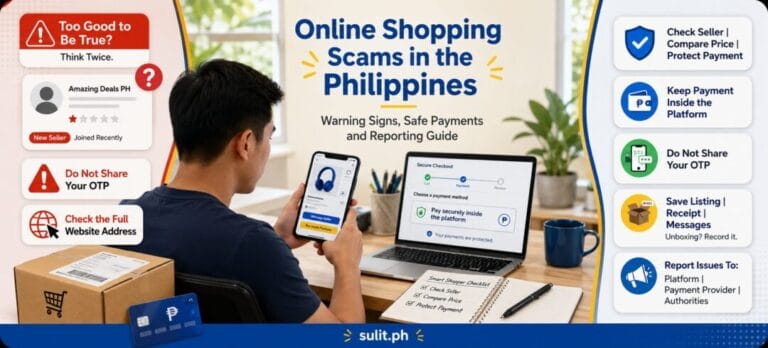
- Be extra cautious buying medicine online. Given how much unregistered product circulates through informal online sellers, treat a drugstore’s own verified app or website differently from a random social media seller or marketplace listing offering medicine at a steep discount.
- Inspect the box before you leave the counter. Batch number, expiration date, intact seal, and consistent print quality — all four, every time, especially for maintenance medication you’re buying in bulk.
- Report anything suspicious. The FDA accepts reports through its eReport facility, by email, and by phone through its Center for Drug Regulation and Research — flagging a bad batch protects the next buyer too.
Good to Know: The FDA runs a dedicated enforcement unit, Task Force D-PUNCH, working with the PNP specifically to investigate and shut down counterfeit drug operations. Reporting a suspicious product isn’t just paperwork — it feeds an active investigation pipeline.
Worked Scenario: Switching a Maintenance Medication to Generic
Say you’ve been taking a branded blood pressure medication for two years, and your slightly slower-moving budget this month has you eyeing the generic version sitting right next to it on the shelf, priced noticeably lower.
Here’s a reasonable way to walk through it. First, confirm with your doctor or pharmacist that the specific drug is one where generic substitution is considered routine — most common maintenance medications for blood pressure, cholesterol, and similar conditions fall into this category. Second, ask the pharmacist to confirm the generic version’s FDA registration and manufacturer, and check the box yourself using the verification checklist above. Third, if you notice any difference in how you feel after switching — not common, but not unheard of, since inactive ingredients can vary — mention it to your doctor rather than assuming it means the drug “isn’t working.” That’s a normal follow-up conversation, not a sign you made the wrong call.
What you shouldn’t do is make that switch based on a random online seller’s price instead of your regular pharmacy’s shelf — that’s where “cheaper” stops being about generic-versus-branded and starts being a real registration risk.
When It’s Worth Asking Your Doctor First
Generic substitution is routine for most medications, but there’s a smaller category of drugs — things like certain anti-seizure medications, blood thinners, and thyroid hormone replacements — where doctors sometimes prefer keeping a patient on one consistent manufacturer, generic or branded, because small variations in absorption can matter more for these “narrow therapeutic index” drugs. This isn’t an argument against generics in general — it’s a reason to have a two-minute conversation with your doctor or pharmacist before switching anything you take for a chronic condition, rather than making the call solely based on price at the counter.
None of this is a substitute for medical advice specific to your situation — your doctor and pharmacist know your treatment history, and this guide doesn’t.
Also Worth Checking
Managing healthcare costs doesn’t stop at the medicine cabinet — see our breakdown of whether getting your own HMO or health card is worth it in the Philippines if PhilHealth alone has you wondering about the gap. Fake and misrepresented products aren’t limited to medicine. If you want the broader picture on spotting fraud before you pay for anything online, see our online shopping scams guide and our roundup of online scam protection basics in the Philippines. And if you’ve already been burned by a bad purchase — medicine or otherwise — our step-by-step guide on what to do after getting scammed online walks through reporting it properly. For more of this kind of value-first breakdown, head back to more sulit finds.
Verified Sources Used
Republic Act No. 6675 (Generics Act of 1988), via LawPhil: Confirmed the legal requirements for generic-name prescriptions, mandatory in-store generic price lists, and drug labeling rules.
Food and Drug Administration Philippines: Confirmed the FDA’s Task Force D-PUNCH anti-counterfeiting campaign, consumer guidance to buy only from licensed pharmacies, and official reporting channels for suspected fake drugs.
BusinessWorld: Confirmed the 2024 FDA-led seizure figures (approximately ₱28 million in fake medicines and health products, ₱21.9 million of which was counterfeit medicine) and the regulatory distinction between substandard and falsified drug products.
Philippine News Agency: Confirmed FDA-Mindanao’s warning that an estimated 90 percent of medicines, cosmetics, and supplements sold online in the region may be unregistered, and its advice to buy only from licensed pharmacies.
Philippine Daily Inquirer: Confirmed the UN Office on Drugs and Crime’s 2013–2017 pharmaceutical crime data ranking the Philippines highest in Southeast Asia, commonly counterfeited OTC drug names, and practical tips for spotting fake packaging.
Inquirer Business: Confirmed Philippine Competition Commission findings that wider generic drug availability has reduced prices across prescription drug categories, and the market growth of generics-focused drugstore chains.