Is a Car Seat Worth Buying in the Philippines? RA 11229, Real Enforcement & 2026 Prices
Sulit verdict: Yes — buy a real one, whether or not anyone checks. RA 11229 requires a child restraint system for every passenger 12 or under who hasn’t reached 150 cm (4’11”), with fines up to ₱5,000 for repeat offenses. But enforcement is weak — a 2024 study found only 2% of Filipino kids were actually buckled into one.
That gap between “the law” and “what actually happens on EDSA” is the whole story here. RA 11229 (the Child Safety in Motor Vehicles Act) has been on the books since 2019, with mandatory compliance technically starting February 2, 2021. Years later, enforcement is still described by the Land Transportation Office as “soft” — warnings and education campaigns rather than tickets. So the honest question isn’t just “is this legal requirement real” (yes), it’s “is it worth spending ₱4,000 to ₱18,000 on a seat nobody’s currently fining you over.” We think it is, and this guide walks through why, what the law actually says, what a real certified seat costs right now, and how to avoid the fake ones flooding Shopee and Lazada.
What RA 11229 Actually Requires
Per the full text of Republic Act No. 11229, published on the Arellano Law Foundation’s LawPhil archive, here’s what the law covers:
| Requirement | What the law says (RA 11229) |
|---|---|
| Who’s covered | Every child aged 12 and below riding in a “covered” motor vehicle, until they reach 150 cm (about 4’11”) in height — whichever comes first (Sec. 3(b), Sec. 4) |
| Seat requirement | A child restraint system (CRS) suited to the child’s age, height, and weight must be used in the vehicle while the engine is running (Sec. 4) |
| Front-seat rule | Children 12 and under can’t ride in front unless they’ve reached 150 cm and are wearing the regular seatbelt there (Sec. 5) |
| What’s exempt | Tricycles and motorcycles are excluded from “motor vehicle” entirely (Sec. 3(d)); medical emergencies and certain medical/developmental conditions are also exempt (Sec. 4) |
| Public transport | Jeepneys, buses, and other public utility vehicles aren’t covered yet — the law only required a separate DOTr study on extending it to PUVs (Sec. 9) |
| Product certification | Every CRS sold in the Philippines must carry a DTI Bureau of Philippine Standards (BPS) “PS” mark or Import Clearance Certificate (ICC), tested against UN Regulations 44 and 129 (Sec. 6) |
Good to Know: The law doesn’t name ride-hailing cars (Grab, inDrive) or taxis as exempt — the only vehicles explicitly carved out are tricycles and motorcycles. Whether a Grab ride counts the same as your own car isn’t spelled out in the text we reviewed, so the safer assumption is to treat any for-hire car the same way you’d treat your own: if your child’s small enough to need a seat at home, bring one along.
What Happens If You Get Caught Without One
Section 10 of RA 11229 lays out a tiered penalty schedule, and it’s steeper than most Filipino drivers realize:
| Violation | 1st offense | 2nd offense | 3rd & succeeding |
|---|---|---|---|
| Driver: no CRS, or breaking the front-seat rule (Secs. 4–5) | ₱1,000 | ₱2,000 | ₱5,000 + 1-year license suspension |
| Driver: using a substandard, expired, or uncertified CRS | ₱1,000 | ₱3,000 | ₱5,000 + 1-year license suspension |
| Manufacturer/seller: selling an uncertified or substandard CRS | ₱50,000–₱100,000 per unit sold | ||
| Anyone forging or tampering with a PS/ICC mark | ₱50,000–₱100,000 per unit | ||
Heads Up: That seller penalty is why the sub-₱500 “car seats” you’ll find on Shopee and Lazada are worth being suspicious of — if it’s genuinely certified, a seller moving real volume at that price is taking on a lot of legal exposure for very little margin. More on spotting the fakes below.
Is It Actually Being Enforced in 2026?
Here’s where we have to be straight with you: we could not confirm, from an official DOTr or LTO announcement, an exact date when fully ticketed enforcement (as opposed to warnings) began nationwide. Public reporting from LTO officials in the years after the 2021 compliance deadline consistently described the rollout as “soft enforcement” — education and reminders rather than apprehension — and we found no primary government statement confirming that’s changed. If you want certainty on where things stand this month, LTO’s own channels are the place to check before assuming either way.
What we do have is harder data on actual usage. A Johns Hopkins Bloomberg School of Public Health compliance study, based on 18,273 observed children across 63 sites in Manila, Pasay, and Quezon City between August and October 2022, found:
- 62% of children were not restrained at all
- 30% were riding on a passenger’s lap
- 6% were using just the adult seatbelt
- Only 2% were actually in a child restraint system
Among children under 5 specifically, 62% were riding on someone’s lap. The same study’s market check found something just as important for buyers: of the child restraint systems it tracked for sale, 90% of online listings came from unofficial, unverified vendors, at highly inconsistent prices.
Why Buy One Anyway, Even If Nobody’s Checking
Weak enforcement doesn’t change the physics. A child restraint system exists to stop a small body from being thrown forward or out of a seatbelt built for an adult frame during a sudden stop or crash — the kind of ordinary Metro Manila braking event that happens on every commute, not just dramatic collisions. The 2% usage rate the Johns Hopkins study found isn’t evidence that seats are unnecessary; if anything, it’s a measure of how much risk Filipino families are currently carrying without realizing it, largely because of cost and awareness rather than disagreement that it matters.
Framed as a purchase decision rather than a legal one: you’re not buying a seat to avoid a ₱1,000 fine you may never actually get. You’re buying it because your toddler sliding off your lap into the dashboard is the actual bad outcome the law was trying to prevent in the first place.
Which Type of Seat You Actually Need
RA 11229 ties the legal requirement to your child’s height (the 150 cm/4’11” cutoff), not a fixed age — so the seat that’s “worth it” depends on where your child actually is in that range, not a one-size answer. Car seats are generally sold in these stages; always check the specific weight and height limits printed on the seat itself rather than assuming, since these vary by model:
| Stage | Orientation | Roughly covers | What to check before buying |
|---|---|---|---|
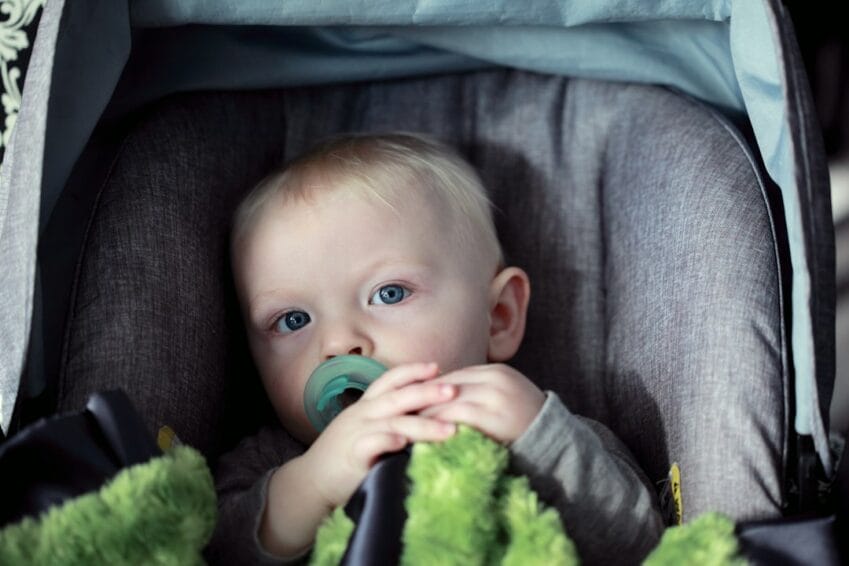
| Infant seat | Rear-facing only | Newborn through early toddlerhood | Usually detaches onto a stroller base — useful if you’re also comparing stroller costs, but it’s the stage you’ll outgrow fastest |
| Convertible seat | Rear-facing, then forward-facing | Infant through preschool age | Longest useful life per peso if you only want to buy once; heavier and non-portable |
| Forward-facing / combination | Forward-facing, harnessed | Preschool through early grade school | Confirm the harness weight limit matches your child, not just their age |
| Booster seat | Uses the car’s own seatbelt | Grade-school age, until they hit 150 cm | The seatbelt must sit across the shoulder and hip properly — a booster that doesn’t position the belt correctly isn’t doing its job |
What a Real Car Seat Costs Right Now
As listed on Lazada’s own infant car seat trending page (checked November 25, 2026), prices for named, recognizable brands ranged widely:
| Product | Price (PHP) |
|---|---|
| Joie Gemm Infant Car Seat (Group 0+) | ₱5,999 |
| Akeeva Rota 360 Rotate Isofix Car Seat | ₱8,999 (was ₱12,999) |
| bebelock Portable Infant Car Seat | ₱3,509 (was ₱7,090) |
| Chicco Fit3x ClearTex Ultra-Slim All-in-One | ₱17,999 |
Source: Lazada Philippines, Infant Car Seat Best Price listing, as listed November 25, 2026.
Sulit Tip: That same listing page also showed several items labeled “car seat” priced at ₱394 to ₱1,450 — soft cushion inserts and mosquito-net basket carriers, not crash-tested restraint systems. They may be fine as a lap-time comfort accessory, but don’t mistake one for something that satisfies RA 11229 or protects your child in an actual collision. A real CRS is a rigid, harnessed, crash-tested shell — if the listing photo shows mostly fabric and no hard shell or five-point harness, it’s not the same product category.
Before You Buy: Check the PS or ICC Mark
Since 2020, child restraint systems have been on the DTI Bureau of Philippine Standards’ list of products under mandatory certification, tested against PNS UN R44:2018 and PNS UN R129:2018 — the Philippine-adopted versions of the UN child-restraint safety regulations. Legally, a CRS can’t be manufactured, imported, or sold here without a PS mark or ICC license, and forging that mark carries the same ₱50,000–₱100,000 penalty as selling an uncertified seat.
In practice, verifying this yourself is harder than it should be — BPS’s own published list of currently certified models was last updated years ago, so we’re not going to hand you a brand list that may already be stale. What you can still do: check the seat itself for a printed “PS” or “ICC” sticker (not just a box illustration), buy from the brand’s official store or an authorized local distributor rather than an anonymous reseller, and be extra cautious with marketplace listings that show no brand name, no model number, and a price far below everything else on the page — the Johns Hopkins study’s finding that 90% of online CRS sellers were unofficial vendors lines up with what a quick scroll through any “trending” car seat page shows today.
If you’ve already run into fake safety stickers on another product category, our guide to spotting fake ICC/PS stickers on motorcycle helmets covers the same certification scheme and the same red flags.
Worked Scenario: One Seat or Two as Your Baby Grows?
Say you’ve got a newborn and you’re deciding between two paths: buy a cheaper infant seat now (roughly ₱3,500–₱6,000) and a separate convertible or forward-facing seat later when they outgrow it (another ₱6,000–₱9,000 down the road), or buy one higher-end convertible/all-in-one seat upfront that’s rated to grow with them (₱15,000–₱18,000, like the Chicco Fit3x example above).
If this is your only child and you don’t plan to keep the seat for a sibling, the two-stage path is usually more sulit — you’re not paying a premium for years of future flexibility you might not use, and the infant-stage seat matters most for the newborn months when a detachable, stroller-compatible seat is genuinely more convenient day to day. If you’re planning more kids, or you know you’ll keep using car seats for 4+ years straight, the single all-in-one seat’s higher upfront cost spreads out, and you skip the hassle (and the resale-or-storage question) of swapping seats mid-way. Either path beats skipping a real seat entirely — the price gap between “cheapest real CRS” and “no restraint at all” is a few thousand pesos; the difference in outcome if something goes wrong is not comparable at all.
What to Do Next
If you’re buying for the first time: measure your child’s current height, not just their age, since that’s the number the law and most seats actually use. Decide which stage above fits now. Shop the official brand store (Lazada/Shopee Mall-verified) or an authorized distributor rather than the cheapest unbranded listing. Look for the PS or ICC mark on the actual product before checkout, and keep the receipt — it’s your proof of purchase if a certification dispute ever comes up. Install it per the seat’s own manual, in the rear seat, and have someone who’s done it before check your first install if you’re unsure.
Also Worth Checking
If you’re buying a car seat, you’re probably weighing other car-related costs too. Our comprehensive car insurance guide covers what CTPL doesn’t protect you against, our dashcam guide walks through the other “worth it even if unenforced” car purchase, and our guide to verifying a Carousell seller with the DTI Trustmark applies directly if you’re shopping secondhand car seats online. For more value-first breakdowns like this one, head back to more sulit finds.
Frequently Asked Questions
Is a car seat really required by law in the Philippines?
Yes. Republic Act 11229 requires a child restraint system for any passenger 12 years old or younger who hasn’t yet reached 150 cm (about 4’11”) in height, in private motor vehicles.
What’s the fine if I don’t have one?
₱1,000 for a first offense, ₱2,000 for a second, and ₱5,000 plus a one-year license suspension for a third or later offense, per Section 10 of the law. In practice, LTO has described enforcement as “soft” (education-focused) in the years since the 2021 compliance date, and we couldn’t confirm an official date when that changed — check with LTO directly if you need current certainty.
Can my baby just ride on my lap instead?
That’s not what the law allows, and it’s also the single most common unsafe pattern researchers actually observed — 30% of children in the Johns Hopkins study were riding on a passenger’s lap rather than in any restraint.
Are the ₱300–₱500 “car seats” on Shopee and Lazada legal and safe?
Be skeptical of these. Many are soft cushion inserts or basket-style carriers, not the rigid, harnessed, crash-tested restraint systems the law and basic physics require. Check for a printed PS or ICC mark on the actual product, not just the listing photo.
Does a Grab, taxi, or other ride-hailing car need a car seat too?
The law explicitly exempts only tricycles and motorcycles, so a for-hire car isn’t named as an exception. We’d treat any car ride the same way you’d treat your own vehicle until you’ve confirmed otherwise with LTO.
At what point can my child stop using a car seat?
Under RA 11229, once they reach 150 cm (about 4’11”) in height — not a specific age — they can use the vehicle’s regular seatbelt instead, including in the front seat.
Verified Sources Used
LawPhil (Arellano Law Foundation) — Republic Act No. 11229: Full statutory text confirming coverage, exemptions, penalties, and the DTI certification requirement.
Johns Hopkins Bloomberg School of Public Health — Philippines Compliance Report (February 2024): Confirmed observed restraint-use rates and the share of online CRS sellers that were unofficial vendors.
DTI Bureau of Philippine Standards: Confirmed child restraint systems are under mandatory PS/ICC certification and the applicable PNS standards.
Lazada Philippines: Confirmed current listed prices for named-brand infant car seats as of November 25, 2026.