Is LASIK Worth It in the Philippines? The Real Cost vs. Years of Glasses and Contacts (2026 Guide)
Sulit verdict: Worth serious thought if your eye prescription has been stable for at least a year or two, you’ve actually added up what you spend on glasses and contacts over time, and you can pay the upfront cost without going into high-interest debt for it. It’s not worth it if you’re reacting to a clinic promo countdown, you haven’t had a proper eye exam yet, or you can’t yet tell a DOH-licensed clinic from a weekend pop-up booth.
Here’s a pattern we noticed: Filipinos who wear glasses or contacts tend to treat that as a permanent fact of life, the way you’d treat your height. Few actually sit down and compute what a lifetime of frames, lenses, and monthly contact boxes adds up to — so LASIK gets filed under “expensive elective surgery for rich people” without anyone checking if that’s still true relative to what they’re already spending.
It isn’t always true. But it also isn’t automatically a good deal just because a clinic is running a “P1,111 off” promo this month. The real answer depends on your prescription, how stable it’s been, and math most people never actually do. Here’s how to do it properly.
What LASIK Actually Costs in the Philippines Right Now
LASIK pricing in the Philippines is usually quoted per eye, not per patient — a detail that trips a lot of first-time patients up when they compare quotes. The technique used (which flap method, which laser) is the single biggest price driver.
| Procedure Type | Typical Price Range (Per Eye) | What You’re Paying For |
|---|---|---|
| Conventional (blade-based) LASIK | ₱26,000–₱70,000 | The older, blade-created flap method. Cheapest option, still widely offered. |
| Bladeless / Femto-LASIK | ₱60,000–₱140,000 | A laser creates the corneal flap instead of a blade. More precise, priced higher. |
| Custom / Wavefront-Guided LASIK | ₱80,000–₱140,000 | Maps your eye’s higher-order aberrations for a more individualized correction. |
| SMILE | ₱68,000–₱77,000 | A flapless keyhole technique; different recovery profile from LASIK. |
| PRK | ₱14,000–₱60,000 | No flap at all — the corneal surface is removed and regrows. Longer recovery, often cheaper. |
| TransPRK | ₱44,000–₱130,000 | A newer, fully laser-based variant of PRK. |
As a sense check on total cost: Asian Eye Institute, one of the larger LASIK providers in Metro Manila, publishes an all-in estimate of roughly ₱60,000 to ₱160,000 for both eyes depending on the technology chosen — which lines up with doubling the per-eye ranges above. Hospital-run promotional packages can undercut even that: both St. Luke’s and The Medical City have run promotional femto-LASIK pricing for both eyes well under the standard per-eye math, so it’s worth asking any hospital-affiliated eye center if a bundled promo rate is currently running before you price against the standalone per-eye figures.
Sulit Tip: Get a written quote that states clearly whether the number is per eye or for both eyes, and ask what’s excluded. Pre-op screening fees (roughly ₱500–₱2,000), any enhancement procedure if your first result under-corrects, extra follow-up visits, and medications are commonly billed separately from the headline surgery price.
Who LASIK Actually Makes Sense For
This isn’t a procedure you should qualify yourself for based on a quiz you found online. But the general candidacy criteria that most Philippine eye centers screen against are:
- At least 18 years old, though most clinics prefer candidates to be 21 and older
- A refractive prescription that’s been stable for roughly 1–2 years (if your grade keeps changing, you’re not a candidate yet — not never, just not yet)
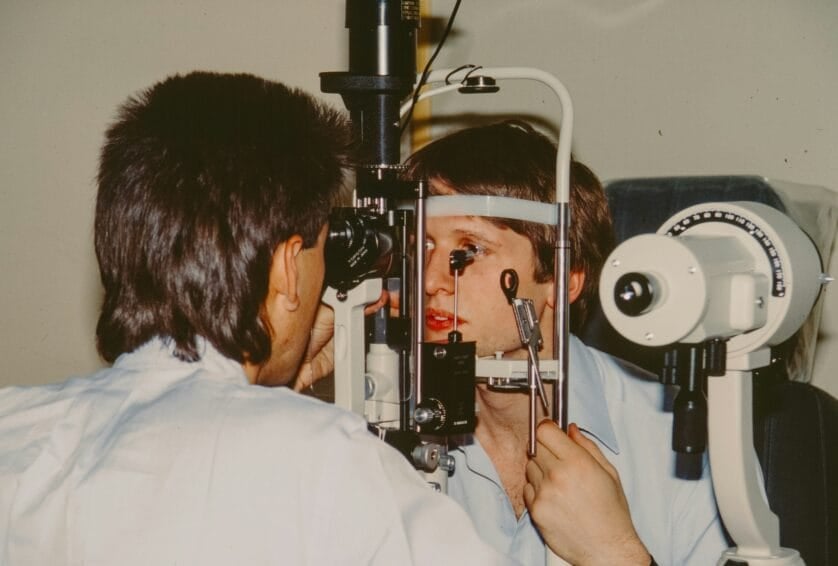
- Sufficient corneal thickness, measured during screening with a test called pachymetry
- No keratoconus, cataracts, uncontrolled glaucoma, or severe dry eye
- No uncontrolled autoimmune conditions or uncontrolled diabetes
- Not pregnant or breastfeeding at the time of surgery
Most LASIK techniques also have prescription ceilings — roughly up to -10 to -12 D for myopia (nearsightedness), +4 to +6 D for hyperopia (farsightedness), and about 6 D of astigmatism. If your grade is higher than that, a clinic may steer you toward an implantable lens procedure instead of LASIK.
Heads Up: LASIK has real risks, even if they’re uncommon. Dry eye is the most frequent side effect (usually temporary). Glare, halos, or starbursts at night can happen, especially if you have large pupils. Under- or over-correction can require a separate enhancement surgery. Flap complications, vision regression, and infection are all possible but rare with an experienced surgeon and proper aftercare. Across reported outcomes, the vast majority of patients land at 20/40 vision or better, and most reach 20/20 — but “most” isn’t “all,” and you should go in accepting that a small number of patients need a touch-up or don’t get a perfect result.
The Real Math: LASIK vs. Years of Glasses and Contacts
This is the comparison most people skip, and it’s the one that actually answers “is it worth it” for your specific situation.
We looked for a single reliable, current peso figure for average eyeglass packages and monthly contact lens spending across Philippine optical shops, and couldn’t verify one we’d stand behind this run — pricing varies enormously by brand, lens material, coating, and which mall optical chain you walk into, and list prices change often. So instead of making up a number, here’s the shape of the math you should actually run with your own receipts:
- Glasses are a recurring one-time cost, repeated. Every time your prescription changes, or your frame breaks, scratches, or just wears out, you’re back at the optical counter paying for a new frame-and-lens combo. For most people, that’s roughly every 1–3 years.
- Contact lenses are a recurring cost with no end date. Whether you’re on dailies, monthlies, or something in between, you’re paying for a fresh supply on a schedule for as long as you wear them — plus solution and cases if they’re not daily disposables, and you’ll likely still own a backup pair of glasses anyway.
- LASIK is one large cost, ideally paid once. Based on the ranges above, that’s roughly ₱60,000 to ₱160,000-plus for both eyes, assuming no enhancement surgery is needed later.
The way to actually answer the “worth it” question: pull up your own spending on glasses and contacts for the last 3–5 years — frames, lenses, replacement pairs, contact lens boxes, solution, everything. If that total is already closing in on what a LASIK quote would cost for both eyes, waiting longer doesn’t save you money. It just delays a cost you’re going to carry one way or another, for as long as you need correction.
Good to Know: LASIK only fixes your current refractive error — nearsightedness, farsightedness, or astigmatism. It does not prevent presbyopia, the age-related loss of near focus that most people start to notice sometime after their early-to-mid 40s. If you’re getting LASIK later in adulthood, don’t expect it to mean “I’ll never need reading glasses again” — it isn’t that kind of fix.
Worked Scenario: Deciding Whether to Book It
Say you’re 28, your prescription has read the same -3.50 for the past three annual exams, and you currently replace your glasses roughly every two years while also buying contact lenses for the gym and beach trips. Add up what that’s actually cost you over the last five years — glasses, contacts, solution, the works. If that number is already brushing up against a conventional LASIK quote for both eyes, the math favors booking it: you’re not really “saving” by waiting, you’re just continuing to pay the recurring version of the same cost.
Now flip it: say your prescription changed twice in the last two years, or you’re not sure it’s stabilized yet. In that case, don’t book surgery — book a follow-up eye exam in six to twelve months instead. A clinic that tries to schedule you for LASIK without confirming prescription stability first is a clinic to be skeptical of, not one to trust with a deposit.
Before You Book: Checking the Clinic and Surgeon Are Legit
LASIK is performed as an elective outpatient procedure, which in the Philippines means the facility doing it generally needs to operate as a licensed ambulatory surgical clinic under Department of Health rules — the same category covering outpatient surgery centers more broadly. Under DOH Administrative Order No. 183, s. 2004, an ambulatory surgical clinic must hold a License to Operate issued by the DOH’s Bureau of Health Facilities and Services after an on-site inspection, that license must be posted somewhere the public can see it, and operating without one triggers an immediate closure order and a fine. Ask to see it, or at minimum ask the clinic to confirm their license status before you commit a deposit.
Separately, verify that the ophthalmologist who will actually perform your procedure is a real, currently registered professional. The Professional Regulation Commission’s online verification portal lets you confirm a licensed professional’s registration before you commit to surgery — do this yourself rather than taking a sales coordinator’s word for it.
Heads Up: Most HMOs and PhilHealth treat LASIK as an elective procedure and generally don’t cover it, since it isn’t medically necessary the way cataract surgery is. Don’t assume your HMO card covers it just because it covers other eye care — confirm directly with your HMO or insurer before you count on that money.
Quick Answers
How much does LASIK cost in the Philippines?
Conventional LASIK typically runs ₱26,000–₱70,000 per eye, while bladeless and custom wavefront-guided LASIK run ₱60,000–₱140,000 per eye. For both eyes combined, a full LASIK package commonly lands between ₱60,000 and ₱160,000 depending on the technology used, though hospital promotional packages have been priced lower.
Is LASIK covered by PhilHealth or my HMO?
Generally, no. PhilHealth and most HMOs classify LASIK as an elective procedure rather than a medical necessity, so it’s typically excluded from standard coverage. Confirm directly with your own HMO or insurer rather than assuming.
Am I a good candidate for LASIK?
You’re more likely to qualify if you’re at least 18 (most clinics prefer 21+), your prescription has been stable for 1–2 years, you have adequate corneal thickness, and you don’t have conditions like keratoconus, uncontrolled glaucoma, severe dry eye, or uncontrolled diabetes. Only an actual eye exam with pachymetry and corneal mapping can confirm candidacy.
How do I check that a LASIK clinic and surgeon are legitimate?
Ask to see the clinic’s Department of Health License to Operate as an ambulatory surgical clinic, and verify the performing ophthalmologist’s registration directly through the Professional Regulation Commission’s online verification portal before paying any deposit.
Also Worth Checking
If LASIK is part of a bigger decision about where your savings or year-end bonus should go, our guide on what to actually do with your 13th month pay covers how to weigh a big one-time expense like this against debt and savings. If you’re deciding whether a big health expense like this is worth doing on your own versus through insurance, check our breakdown of whether getting your own HMO card is worth it. And if you’re trying to figure out where else you can trim healthcare costs responsibly, our guide to whether generic medicine is really the same as branded is a related read. For more of this kind of value-first breakdown, head back to more sulit finds.
Verified Sources Used
Asian Eye Institute: Confirmed its published all-in LASIK price range for both eyes, what the price typically includes, and that PhilHealth and most HMOs generally treat LASIK as a non-covered elective procedure.
ClinicFinderPH: Confirmed per-eye price ranges broken down by LASIK technique (conventional, femto, wavefront-guided, SMILE, PRK, TransPRK), named clinic-specific figures, general candidacy criteria, documented risks, and reported success-rate outcomes.
DOH Administrative Order No. 183, s. 2004 (via the Supreme Court E-Library): Confirmed that ambulatory surgical clinics performing elective outpatient procedures must hold a Bureau of Health Facilities and Services License to Operate, issued after on-site inspection and required to be posted publicly.
Professional Regulation Commission: Confirmed the official government channel for verifying a licensed professional’s registration status in the Philippines.