Do You Need Both Autosweep and Easytrip? The One RFID Toll Guide for Philippine Drivers (2026)
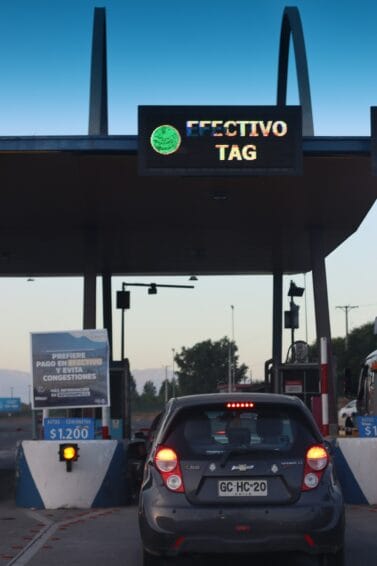
Sulit verdict: Getting an RFID sticker is worth it the moment you drive on any Philippine expressway more than a couple of times a year — the cash lanes are slower, shrinking, and the law has been trying (on and off) to phase them out since 2024. What you no longer need to stress about is collecting two separate stickers: since October 2025, “One RFID, All Tollways” lets you register a single Autosweep or Easytrip account to pay on both networks. You can keep both tags if you already have them, but a new driver starting from zero doesn’t need to install two.
If you’ve put this off because the rules kept changing — fines announced, then delayed, then suspended, then an entirely new “one tag” system launched — you’re not imagining it. Here’s where things actually stand, what each RFID costs to reload, and whether you personally need one tag or two.
Autosweep vs. Easytrip: Who Covers What
The two systems aren’t interchangeable out of the box, because two different operators built them for two different sets of roads.
| RFID | Operator | Covers |
|---|---|---|
| Easytrip | Metro Pacific Tollways Corp. (MPTC) | NLEX, SCTEX, NLEX Connector, CAVITEX (incl. C5 Link), Harbor Link |
| Autosweep | San Miguel Corp. (SMC) | SLEX, Skyway (Stages 1–3), STAR Tollway, TPLEX, NAIA Expressway, MCX, C5 SouthLink |
| Neither | — | CLLEX (Cabuyao–Calamba–Los Baños Expressway) is toll-free |
Notice the overlap problem: a Manila-based driver who takes NLEX to the north and SLEX or Skyway to the south used to need both an Easytrip tag (MPTC roads) and an Autosweep tag (SMC roads) installed on the same windshield, each loaded separately, each checked separately. That’s the exact pain point the government spent most of 2024–2025 trying to fix.
Sulit Tip: Getting the sticker installed is free on both networks — Easytrip explicitly waives the sticker and installation fee, and you only pay for your opening toll load in cash. Walk-in installation is available at designated sites; check expressway.ph’s installation-site map for the nearest one before planning a special trip.
What Changed: One RFID, All Tollways (Launched October 2025)
On October 21, 2025, President Ferdinand R. Marcos Jr. led the launch of “One RFID, All Tollways,” a system that lets a single account — either your existing Autosweep or Easytrip — work across both networks’ participating expressways, according to the Philippine Information Agency’s official coverage. The two rival operators, MPTC and SMC, had to modify their backend systems to talk to each other, and officials said the integration passed a stress test before the public launch.
A few specifics worth knowing before you decide what to do with your own stickers:
- Enrollment is optional. If you’re happy with your current two-sticker setup, you don’t have to change anything — the Toll Regulatory Board’s executive director said so directly at the launch.
- It currently covers individual accounts only. The Department of Transportation (DOTr) targeted the first quarter of 2026 to extend the system to corporate and fleet accounts — worth confirming with your provider if you manage a company vehicle or a small delivery fleet.
- Consolidating is free. Registering online to merge your two existing accounts into one carries no fee, per the PIA report.
- Don’t remove your old tag until enrollment is confirmed working. Several driver guides note that a sticker from “the other” network won’t deduct toll on its own unless your enrollment has actually gone through — keep both physical tags on your windshield through at least one full round trip on the previously unlinked network before you trust it.
Good to Know: This single-account setup is different from carrying one physical sticker that works on all roads. Depending on your enrollment path, you may still have two tags stuck to your windshield — what’s unified is the account and balance behind them, not necessarily the hardware. Confirm directly with Autosweep or Easytrip support which outcome your specific enrollment gives you.
Who Actually Needs This
This is most worth sorting out if you regularly cross from one network to the other — commuting between, say, Bulacan (NLEX, Easytrip territory) and Laguna or Cavite (SLEX/Skyway/CAVITEX, a split between the two), or if you’re a provincial driver who takes a mixed NLEX-to-SLEX route for out-of-town trips a few times a year.
It’s less urgent if you only ever drive on roads from a single operator. A driver who only ever uses NLEX and SCTEX, for instance, has no real reason to also install Autosweep — a second RFID account is just a second thing to remember to reload.
Reload Fees: What You’ll Actually Pay
The sticker is free; keeping money on it isn’t always. Easytrip publishes its own convenience-fee table, and the amounts depend heavily on which channel you use to reload:
| Reload Channel | Fee (Easytrip, per Easytrip’s own published rates) | Minimum Load |
|---|---|---|
| BDO (online or over the counter) | Free | — |
| Robinsons Malls / Robinsons Bank kiosks | ₱12 per transaction | ₱500 |
| GCash | ₱15 per transaction | — |
| Maya | ₱15 per transaction | — |
| Easytrip’s own kiosks | ₱10, deducted from the load | — |
| SM Store | ₱10 per transaction | ₱500 |
| 7-Eleven (CLIQQ) | 1.5% of the load amount | — |
Heads Up: Autosweep doesn’t publish as detailed a public fee breakdown, and we weren’t able to independently confirm its current per-channel reload fees from an official source this round — expect similarly small per-transaction convenience fees (commonly in the same ₱10–15 range elsewhere in the market) rather than a flat percentage, but check the exact figure in the Autosweep app or at the counter before you load, since it can vary by partner and change without much notice. Don’t take a third-party blog’s number as gospel for either network — reload fee tables get out of date fast.
Either way, the lesson is the same: a free bank channel (BDO, for either network, as of this writing) costs you nothing extra, while an e-wallet reload quietly adds roughly ₱10–15 every single time. If you reload weekly, that’s an easy ₱500–780 a year in fees alone for no added convenience over a free channel you already have access to.
Worked Scenario: The NLEX-to-Skyway Commuter
Say you live near Valenzuela and work in Makati, driving NLEX to the Skyway extension most weekdays — one MPTC road, one SMC road, every single day. Before October 2025, that meant two stickers, two separate top-ups, and two apps to check if you were running low. Forget to load the second one and you’re the car holding up the lane while a guard waves you through on an IOU basis, or worse, stuck facing a violation notice later.
Now: check with your RFID provider whether your account qualifies for One RFID enrollment, register it (it’s free), and keep both physical tags installed until you’ve successfully passed through a tollgate on each road using the unified account. Set a calendar reminder to check your balance weekly if you commute daily — a ₱500 buffer reload once a week beats a ₱15-per-transaction habit of topping up ₱100 at a time through an e-wallet.
The Part the Rules Kept Changing: Fines for No RFID
If you’ve seen conflicting headlines about expressways going “fully cashless” and wondered if you’d missed a deadline, you haven’t missed anything — the policy itself has been the inconsistent part. A joint DOTr circular originally set penalties for motorists without RFID (or with insufficient balance) to start September 1, 2024, then pushed that to October 1, then to January 2025, each time citing the need for more public information campaigns and system reliability testing, per Philippine News Agency’s reporting at the time — PNA also reported that roughly 100,000 vehicles, about 4.8% of motorists, still had no RFID tag at that point.
Then, in February 2025, a new DOTr secretary suspended the planned March 15 shift to a fully cashless system altogether, arguing — in his own words — that “having a cashless system is not pro-poor; it is anti-poor,” because lower-income motorists might struggle to load larger amounts onto an RFID tag or simply forget to reload, per the Philippine Star’s coverage of that reversal. Cash lanes were kept rather than phased out on that timeline.
Heads Up: We found no confirmed, currently-in-force fine schedule for driving without RFID as of this writing — the mandate has been announced, delayed, and suspended multiple times over 2024–2025. Treat any “fines start on [date]” claim you see online as unverified until you check directly with the Toll Regulatory Board or your tollway operator’s official channels before you travel, especially before a long provincial drive where being wrong costs you real time at a gate.
The Senior Citizen / PWD Discount Question
Republic Act No. 9994 (the Expanded Senior Citizens Act) and Republic Act No. 9442 (the Magna Carta for Persons with Disabilities) both grant a 20% discount on transportation fares, among other benefits. Whether that 20% is supposed to apply to toll fees for a privately-owned vehicle registered to a senior or PWD has been argued, not settled: advocates have formally asked the DOTr to direct toll operators to apply it at RFID gantries, and at least one lawmaker has filed a House bill specifically to make a 20% senior/PWD toll discount explicit in law.
As of this writing, we found no confirmation that toll operators are uniformly applying a 20% senior/PWD discount at the gantry. If you qualify and want to pursue it, the practical move is to ask your toll operator’s customer service directly whether your specific account can be flagged for a discount, rather than assuming it already is.
Also Worth Checking
If you’re deciding what else is worth paying for as a driver in the Philippines, our comprehensive car insurance guide breaks down CTPL vs. comprehensive coverage, our motorcycle insurance guide covers the two-wheeled version of the same question, and our step-by-step guide to buying a used car in Metro Manila is useful background if the vehicle you’re putting an RFID sticker on is new to you. For more of this kind of value-first breakdown, head back to more sulit finds.
Frequently Asked Questions
Do I still need both Autosweep and Easytrip in 2026?
Only if you regularly drive on roads from both networks and haven’t enrolled in One RFID yet. If you do, enrolling your existing account (free, optional) lets you use it across both operators’ participating expressways instead of installing and loading a second physical tag.
Is the RFID sticker itself free?
Yes — on both networks, the sticker and installation are free. You only pay for your initial toll load and, depending on your reload channel, a small convenience fee each time you top up afterward.
Will I get fined for not having an RFID right now?
We found no confirmed, currently-enforced fine schedule as of this writing — the mandate has been delayed and then suspended multiple times since 2024. Check with the Toll Regulatory Board or your operator before assuming either way.
Do senior citizens or PWDs get a toll discount?
Not confirmed as uniformly applied. The underlying 20% transportation-fare discount laws (RA 9994 and RA 9442) exist, but whether it extends to toll fees has been the subject of advocacy and a filed House bill rather than settled, enforced policy. Ask your toll operator directly about your specific account.
Verified Sources Used
Philippine Information Agency: Confirmed the October 21, 2025 launch date, mechanics, and official quotes for the “One RFID, All Tollways” program.
Philippine News Agency: Confirmed the original September 2024 fine timeline, its deferral to January 2025, and the 100,000-vehicle (4.8%) non-compliance figure at that time.
The Philippine Star: Confirmed the February 2025 suspension of the fully cashless mandate and the DOTr secretary’s “anti-poor” rationale.
Easytrip’s own official reload-fee page: Source for the per-channel Easytrip reload fees and minimum load amounts listed above.
expressway.ph: Confirmed which expressways fall under each operator’s RFID network, cross-checked against each operator’s own road lists.
Republic Act No. 9994, the Expanded Senior Citizens Act of 2010 (via lawphil.net), and Republic Act No. 9442, the Magna Carta for Persons with Disabilities amendment (via lawphil.net): Source for the 20% transportation-fare discount provisions for senior citizens and PWDs discussed above.