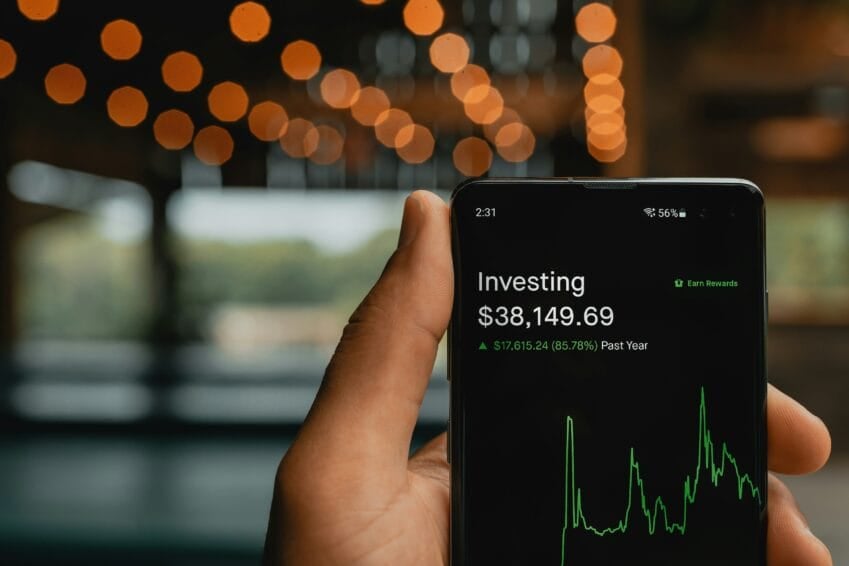
Is a Stock Market Investing App Worth It for Beginners in the Philippines? GInvest, GStocks PH, Maya Funds & COL Financial Compared (2026 Fees Guide)
Sulit verdict: Yes, with the right starting point. Skip the traditional stockbroker route until you actually have the capital it demands — start instead with GCash’s GFunds or Maya Funds for as little as ₱50, and only graduate to GStocks PH or a full broker like COL Financial once you want to pick individual stocks yourself.
A stock market investing app is worth it for most beginners in the Philippines if you start with a low-minimum fund platform — GCash’s GFunds or Maya Funds, both from ₱50 with no transaction fees — rather than a traditional broker like COL Financial, which requires a ₱25,000 deposit just to open an account before you can buy a single share.
Here’s what nobody tells you when a GCash or Maya ad flashes “start investing today”: there isn’t one app, there are at least four different products wearing the word “investing,” and they have wildly different minimums, fees, and what you’re actually buying. GFunds and GStocks PH both live inside GCash’s GInvest tab but are not the same thing. Maya Funds is a separate competitor doing something structurally similar. And the traditional stockbroker route — COL Financial, Philstocks, and similar PSE-accredited brokers — locks most beginners out entirely until they’ve saved up a meaningful amount.
As of November 26, 2026, here’s what each option actually costs, what you own when you use it, and which one makes sense for someone starting with a few hundred or a few thousand pesos.
The Real Options at a Glance
| Platform | Minimum to Start | What You’re Buying | Key Fees |
|---|---|---|---|
| GFunds (GCash GInvest) | ₱50 initial/succeeding for local funds (ATRAM, BPI); ₱1,000 initial for global/feeder funds | Mutual funds (UITFs) managed by ATRAM, Manulife and others | No transaction fee; annual trust fee of 0.50%–1.75% built into the fund’s daily price |
| Maya Funds | ₱50 | Mutual funds (UITFs) managed by ATRAM Trust Corp and BPI Investment Management | No transaction fee; annual trust fee of 0.50%–1.75% built into the fund’s daily price |
| GStocks PH (GCash) | No official minimum beyond one share’s price plus fees | Individual PSE-listed stocks, via broker partner AB Capital Securities | 0.25% online commission + 12% VAT on commission + 0.005% PSE fee + 0.01% SCCP fee (buy); same plus 0.60% stock transaction tax (sell) |
| COL Financial (traditional broker) | ₱25,000 to activate the account | Individual PSE-listed stocks and mutual funds, direct brokerage account | No account-opening fee; the ₱25,000 itself is fully usable for trades, not a separate charge |
Heads Up: GFunds’ ₱50 minimum only applies to its local funds (money market, Philippine equity index, peso bond) from providers like ATRAM and BPI. Its global and feeder funds — the ones investing overseas, like global equity or global tech — need ₱1,000 to start. Don’t assume every GFunds option matches Maya’s flat ₱50 across the board.
Who This Is For (and Who Should Wait)
This is for you if you’ve got anywhere from ₱50 to a few thousand pesos you don’t need for the next few years, and you keep seeing “invest na” prompts in your e-wallet without understanding what you’d actually be buying. It’s also for the slightly more adventurous reader who wants to own actual shares of, say, a bank or a conglomerate listed on the Philippine Stock Exchange (PSE), rather than a pooled fund someone else manages.
It’s not for you yet if you don’t have an emergency fund, or if the ₱25,000 a traditional broker wants is money you can’t afford to see go unused for months while you learn the ropes. Pag-IBIG MP2 or a time deposit is the more appropriate “I want my money to grow safely” option if market risk makes you uneasy — investing apps put your principal at risk in a way a government savings program doesn’t.
GFunds and GStocks PH: Two Different Things Inside One App
GCash bundles two very different products under its “GInvest” umbrella, and the naming makes them easy to confuse.
GFunds lets you buy into mutual funds (technically Unit Investment Trust Funds, or UITFs) run by professional fund managers like ATRAM and Manulife. According to GCash’s own fee page, GCash itself “charges no transaction fee when you Buy or Sell in GFunds,” and you “can place orders anytime for free.” Instead, each fund manager charges an annual trust fee that’s already folded into the fund’s daily NAVPU (net asset value per unit) — you never see it as a line-item deduction. As of this writing, GCash’s published trust fee table lists 15 available funds ranging from 0.50% per year (ATRAM Peso Money Market Fund) up to 1.75% per year (several global feeder funds and the ATRAM Philippine Sustainable Development and Growth Fund). If you want the deeper dive on how UITFs, mutual funds, and GInvest differ by regulator and structure, see our dedicated GInvest and UITF beginner’s guide — this guide instead focuses on the decision between buying a fund versus buying individual PSE stocks, and what a traditional broker costs by comparison.
GStocks PH, in contrast, is a direct stock-trading feature powered by GCash’s licensed brokerage partner, AB Capital Securities, Inc. Here you’re buying actual shares of specific PSE-listed companies, not a pooled fund. The feature went through the Securities and Exchange Commission’s regulatory sandbox before receiving SEC clearance for a full public rollout, according to Philippine business press at the time.
Sulit Tip: If you’re not sure which one to pick, GFunds is the lower-effort, lower-knowledge-required option — you’re trusting a professional manager’s basket of investments. GStocks PH requires you to actually research which company you’re buying and accept that a single stock can swing harder than a diversified fund.
Maya Funds: The Direct Competitor
Maya Funds is Maya’s answer to GFunds, and it’s structured almost identically. Per Maya’s own product page, you can “start your investment journey with only ₱50,” choosing from 13 fund products managed by ATRAM Trust Corporation and BPI Investment Management Inc. (BIMI), distributed through a partnership involving Seedbox and InvestaFunds. Maya states plainly that it “will not charge you any transaction or hidden fees for using Maya Funds” — the cost you’re actually paying is the same kind of embedded trust fee as GFunds, which Maya’s own FAQ puts in the same 0.50% to 1.75% per year range, already reflected in the fund’s NAVPU.
Good to Know: Because GFunds and Maya Funds both route through fund managers like ATRAM, you may notice overlapping or similarly named fund options between the two apps. The platform you use is just the distribution channel; the fund manager and its trust fee are what actually drives your return.
COL Financial and Traditional Brokers: The ₱25,000 Wall
Before e-wallet investing existed, the standard way to buy PSE stocks was through an accredited online broker like COL Financial or Philstocks. These platforms still exist and still work, but they come with a real barrier for a beginner: per COL Financial’s own support page, “there is no membership fee or a fee to open an account,” but “the minimum amount to activate your account is ₱25,000,” a threshold the company raised starting August 2025. That ₱25,000 isn’t a fee — it becomes your trading capital, fully usable to buy stocks or mutual funds — but you still need to have it before you can place a single order.
This is the main reason GStocks PH and the mutual-fund apps have taken off with younger, first-time investors: they remove the five-figure entry barrier entirely.
Worked Scenario: What ₱5,000 Actually Costs You on Each Path
Say you have ₱5,000 you want to put into the market this month. Here’s what each route looks like:
GFunds or Maya Funds: You invest the full ₱5,000 into a fund. If it carries a 1.00% annual trust fee, that’s roughly ₱50 a year quietly taken out of your returns via the NAVPU — no separate charge, no fee notification, it just shows up as slightly lower growth than the fund’s gross performance. Pick a fund with a 1.75% fee instead, and that annual drag roughly doubles to about ₱87.50.
GStocks PH: You buy ₱5,000 worth of a single stock. Based on GCash’s published fee schedule, the buy order costs roughly: ₱12.50 commission (0.25%) + ₱1.50 VAT on that commission (12%) + ₱0.25 PSE fee (0.005%) + ₱0.50 SCCP fee (0.01%) — about ₱14.75 just to get in. When you eventually sell at the same ₱5,000 value, you pay those same four charges again, plus a 0.60% stock transaction tax (₱30), for roughly ₱44.75 on the way out. Round trip: close to ₱59.50, or about 1.2% of your ₱5,000 — a one-time cost, not an annual one, but you pay it whether the stock goes up or down.
COL Financial: You can’t do this scenario at all. ₱5,000 doesn’t clear the ₱25,000 minimum needed to even open the account.
Heads Up: The GStocks PH round-trip cost is a flat hit regardless of performance — if your stock drops 5% while you’re holding it, you’ve lost the price decline and the ~1.2% in fees on both ends. A fund’s trust fee, by contrast, scales down automatically in bad years because it’s a percentage of a smaller balance.
Before You Fund Any App: Confirm It’s Actually Who It Says It Is
The SEC has spent the past two years issuing public advisories and cease-and-desist orders against unregistered platforms soliciting Philippine investors — foreign brokers and crypto platforms among them — a pattern that shows no sign of slowing in 2026. GCash’s GStocks PH and GInvest products are built on named, licensed partners (AB Capital Securities for stocks; ATRAM, Manulife and others for funds) and went through formal SEC clearance, which is a meaningfully different footing than a random “investing app” ad that lands in your social media feed.
Sulit Tip: Before you hand any platform your money, you can verify a company’s registered name through the SEC’s own iRegister system (accessible via sec.gov.ph), and check the SEC’s published advisories page for warnings against the specific platform or broker before funding it. A legitimate platform will name its actual licensed broker or fund manager — if an app can’t tell you who’s holding your money, that’s the red flag, not the smallest print in the fee schedule.
What to Do Next
- Decide fund vs. stock first. If you don’t want to pick individual companies, start with GFunds or Maya Funds. If you specifically want to own shares of a named PSE company, GStocks PH is the lower-barrier route.
- Check which GFunds tier you’re buying into. Maya Funds is a flat ₱50 across its fund lineup; GFunds is ₱50 for local funds but ₱1,000 for global/feeder funds — confirm which type your chosen fund falls under before transferring money.
- Pick a fund by its trust fee, not just its name. A money-market fund around 0.50% a year and an equity or global feeder fund around 1.50%–1.75% a year serve very different goals — match the fee and risk level to your actual timeline.
- If you’re going the GStocks PH or broker route, budget for the round-trip cost. Treat the roughly 1%–1.2% in combined fees and tax as the price of entry, not a surprise.
- Only consider COL Financial or a similar broker once you have ₱25,000+ you’re genuinely ready to commit, and compare its research tools and trading interface against what you’d get for free in GStocks PH before switching.
Frequently Asked Questions
What’s the minimum amount I need to start investing in stocks or funds in the Philippines?
It depends on the platform. GCash’s GFunds and Maya Funds let you start with a low minimum — Maya confirms ₱50 on its own product page — since you’re buying into a pooled mutual fund (UITF) rather than individual shares. GCash’s GStocks PH, which lets you buy actual Philippine Stock Exchange (PSE) shares, has no official minimum beyond the price of one share plus fees. A traditional broker like COL Financial requires ₱25,000 just to activate the account, per its own support page.
Is GStocks PH safe and SEC-regulated?
GStocks PH runs on GCash through its licensed brokerage partner, AB Capital Securities, Inc., and the feature went through the Securities and Exchange Commission’s regulatory sandbox before its public rollout was cleared by the SEC. That’s a different question from whether any specific stock you buy will go up — SEC approval covers the platform’s legitimacy to offer trading, not investment performance.
What’s the difference between GFunds and GStocks PH?
GFunds (under GCash’s GInvest) puts your money into professionally managed mutual funds (UITFs) — you own a slice of a diversified portfolio and pay an annual trust fee built into the fund’s price. GStocks PH lets you buy individual PSE-listed stocks directly — you own actual shares and pay a commission plus small regulatory fees and a transaction tax each time you buy or sell.
Are Maya Funds and GCash’s GFunds the same thing?
No, they’re separate products from competing e-wallets, though they work similarly: both let you invest from a low minimum into mutual funds managed by licensed trust companies, and both build the fund manager’s trust fee into the fund’s daily price instead of charging a separate transaction fee.
Do I need ₱25,000 to invest in the Philippine stock market?
Only if you go through a traditional online broker like COL Financial, which requires that amount to activate an account. If you use GCash’s GStocks PH instead, you can start with whatever you can afford to buy at least one share, since there’s no broker-mandated minimum deposit on that platform.
What fees should I actually watch out for before I start?
For direct stock trading (GStocks PH), watch the combined commission, VAT, PSE fee, SCCP fee, and the 0.60% stock transaction tax charged when you sell — they add up to roughly 1% to 1.2% round-trip on a typical trade. For mutual funds (GFunds, Maya Funds), there’s no transaction fee, but check each fund’s annual trust fee, which ranges from about 0.50% to 1.75% per year and is already baked into the price you see.
Also Worth Checking
For the fuller comparison of UITFs, mutual funds, and GInvest’s fund lineup, see our GInvest and UITF beginner’s guide. If market-risk products aren’t for you yet, our Pag-IBIG MP2 vs. Time Deposit breakdown compares two lower-risk ways to grow savings. If retirement rather than general investing is the goal, see whether a PERA account fits your plan — it’s a different tax treatment and lock-in than GFunds or GStocks PH. And if an insurance agent has pitched you a product that bundles “investing” with life coverage, our VUL insurance guide breaks down why that combination usually costs more than buying the two separately. For more of this kind of value-first breakdown, head back to more sulit finds.
Verified Sources Used
GCash Help Center — GStocks PH fees: Confirmed the online commission rate (0.25%), VAT on commission (12%), PSE fee (0.005%), SCCP fee (0.01%), and stock transaction sales tax (0.60%) used in this guide’s fee breakdown and worked scenario.
GCash Help Center — What is GStocks PH: Confirmed GStocks PH is powered by licensed broker partner AB Capital Securities, Inc.
GCash Help Center — GFunds fees: Confirmed GFunds charges no transaction fee and provided the per-fund annual trust fee table (0.50%–1.75%) cited in this guide.
Maya — Maya Funds: Confirmed the ₱50 minimum investment, the “no transaction or hidden fees” policy, the ATRAM/BIMI fund managers, the 13 available funds, and the 0.50%–1.75% trust fee range.
COL Financial Support — Is there a fee to open a COL account?: Confirmed there is no account-opening fee but a ₱25,000 minimum activation deposit, in effect since August 2025.
GCash Help Center — GFunds minimum top-up and maintaining amounts: Confirmed the ₱50 initial/succeeding minimum for local GFunds options and the ₱1,000 initial minimum for global/feeder funds.
Securities and Exchange Commission (Philippines): Source for verifying company registration via the SEC’s iRegister system and for checking public investor advisories before funding any platform.