Is a Balikbayan Box Still Worth It in 2026? (Costs, Rules & the Forwarder Scam You Need to Know About)
Sulit verdict: Still worth it — but only if you book with a forwarder you can actually verify, and only for the kind of items that are genuinely cheaper or unavailable locally. After a 2026 scandal that stranded more than 42,000 balikbayan boxes and cost OFWs an estimated ₱330 million, “whoever quotes the lowest price” is no longer a safe way to pick who carries a year’s worth of pasalubong. Verify the forwarder first, then decide box vs. cash.
Every September, OFWs start doing the same math: is it time to pack a balikbayan box for Christmas, or just send money home and let the family shop locally? It’s a bigger question in 2026 than it used to be. On top of the usual customs rules, this year the Bureau of Customs is actively prosecuting cargo forwarders that took OFWs’ money and let their boxes sit abandoned at Philippine ports for months. Here’s what’s actually true about the tax rules, what the scandal changes about how you should choose a forwarder, and how to work out whether shipping still beats simply wiring cash.
What Actually Makes a Balikbayan Box Duty- and Tax-Free
The tax-free treatment isn’t automatic just because the box says “balikbayan” on it. Under the Bureau of Customs’ guidelines on duty- and tax-free balikbayan boxes, the privilege has real limits attached to it, and it’s worth knowing them before you pack:
- The shipment’s declared (FCA) value must not exceed ₱150,000 per box.
- The privilege can be used up to three times a year per sender.
- Contents must be personal and household effects — not goods in commercial quantities, and not anything meant for resale, barter, or hire.
- It’s meant for Filipinos working or residing abroad sending goods to family members or relatives in the Philippines.
- Anything over the ₱150,000 threshold becomes subject to the usual duties and taxes on the excess.
These specific figures come from the Bureau of Customs’ own published guidance (see Verified Sources below) reiterating Customs Administrative Order No. 01-2018. If you’re shipping mostly clothes, toiletries, canned goods, and the odd gadget for family use, you’re almost certainly well inside these limits. Where people get tripped up is sending large quantities of one item — several of the same phone model, multiple identical appliances — which customs can flag as commercial rather than personal.
Sulit Tip: Keep a complete, honest packing list. Every major forwarder requires one, and it’s also your best evidence if a shipment gets delayed or disputed — it’s much easier to prove what you sent, and its value, when you declared it upfront instead of trying to reconstruct it later.
Balikbayan Box vs. Sending Cash vs. Buying Locally
There’s no single right answer — it depends on what you’re sending and how much time you have. Here’s how the three main options actually compare.
| Option | Best for | Typical timeline | Biggest risk |
|---|---|---|---|
| Sea cargo balikbayan box | Bulky or heavy items, US-brand goods that cost noticeably more in the Philippines, sentimental items family specifically asked for | Around 40–60 days door-to-door from the US, per LBC’s own published sea freight timeline | Forwarder insolvency or delay — this is exactly what stranded tens of thousands of boxes in 2026 |
| Air freight or courier | Smaller, time-sensitive, or higher-value items where speed matters more than cost | Days rather than months, but priced well above sea cargo | Cost usually erases most of the “it’s cheaper abroad” savings |
| Remittance + buying locally | Anything readily available in the Philippines at a similar or better price — appliances, groceries, most electronics, gift cash itself | Instant to same-day for the money; shopping happens whenever family is ready | You lose access to items that are genuinely US-only or US-cheaper (certain vitamins, specific brands, off-season clearance finds) |
The honest comparison isn’t “box vs. cash” in the abstract — it’s item by item. A box stuffed with canned goods, toiletries, and clothing that costs about the same in a Philippine supermarket is rarely worth the shipping cost and the months of transit risk. A box built around items that are meaningfully cheaper abroad, or simply not sold locally, can still make sense — as long as the forwarder carrying it is one you can actually verify.
The 2026 Wake-Up Call: Inside the Forwarder Scandal
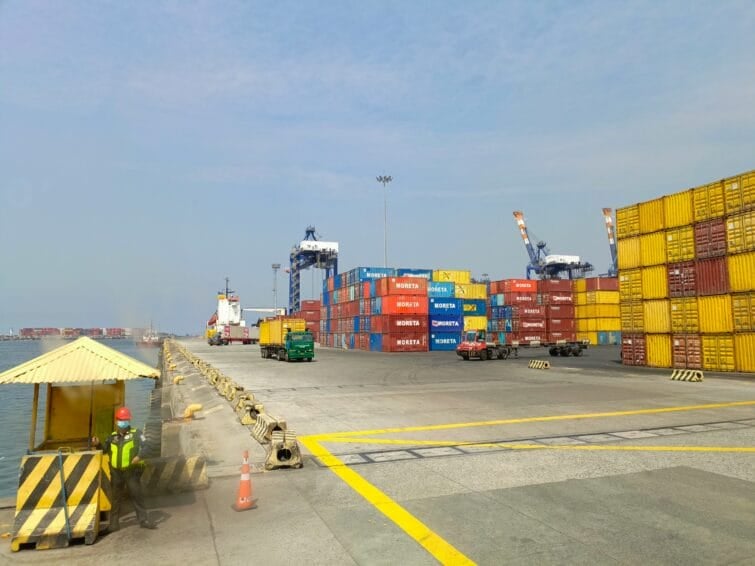
This isn’t a hypothetical risk. Earlier in 2026, the Bureau of Customs pursued criminal and administrative complaints against 11 cargo forwarding companies — including Makati Express Cargo Inc. (MECI), which alone accounted for roughly 50–60% of the delayed shipments — after foreign-based consolidators collected payment from OFWs but failed to settle the shipping line, port, storage, and handling charges once the boxes reached the Philippines. Local deconsolidators then withheld the shipments until those charges were paid, leaving the boxes in limbo, per Manila Bulletin’s coverage.
The scale: roughly 42,063 balikbayan boxes were abandoned at Philippine ports, with about 85% (35,549) eventually delivered as of early April 2026 after government intervention. OFWs are estimated to have paid around ₱330 million total for those stranded shipments, and the government itself spent roughly ₱139 million releasing and delivering the backlog. BOC Commissioner Ariel Nepomuceno has since proposed a ₱2-million bond requirement for forwarders going forward, specifically to prevent a repeat.
MECI’s case went further: the Bureau of Customs separately sued the company and its officers over 36,826 boxes across 117 shipping containers that arrived at Manila, Cebu, and Davao ports between 2024 and 2025, alleging the company misrepresented its registration information, failed to disclose the foreign consolidators it was working with, and kept accepting shipments even after its registration was revoked in January 2026. BOC estimates around ₱30 million in uncollected taxes from that case alone and has floated additional large-scale estafa and cybercrime charges, per Philstar’s reporting.
Heads Up: The red flags in the MECI case are worth memorizing: a forwarder still accepting bookings after a public registration revocation, unusually cheap rates relative to established players, and a business structure that routes your payment through an overseas consolidator you have no way of verifying yourself. None of that is visible from a Facebook page with a lot of likes.
How to Actually Verify a Forwarder Before You Pay
A few checks take five minutes and meaningfully cut your risk:
Ask for proof of current BOC accreditation — not just a claim, an actual document or reference you can cross-check. A legitimate forwarder won’t hesitate to provide this.
Confirm they have a real, physical local branch in the Philippines with a landline or verifiable business address — not just a mobile number and a Facebook Messenger inbox. Established players like LBC publish full box specifications, prohibited-items lists, and packing requirements directly on their own site, which is the kind of transparency a fly-by-night operator won’t match.
Get a signed packing list and an actual receipt for every shipment, not just a screenshot of a chat confirmation.
Be wary of payment routed to a personal bank or e-wallet account instead of an official company channel — this was part of how the 2026 scandal’s foreign consolidators operated.
Check whether the forwarder provides real tracking, not just a promised delivery window. LBC, for comparison, offers automatic insurance coverage up to $3,000 in declared value on sea cargo shipments (with additional coverage purchasable for $5), plus set liability caps by US region if a shipment is uninsured — the kind of concrete, published commitment a struggling or disappearing forwarder generally won’t offer.
Good to Know: Prohibited items aren’t just a formality — cash, jewelry, firearms, perishables, and pornographic or pirated material are barred by every major forwarder and can get an entire shipment held at customs, not just the offending item. Stick to the packing list you declared.
Worked Scenario: Deciding in September Whether to Ship for Christmas
Say you’re in the US in mid-September, and you’re weighing whether to pack a balikbayan box for a December arrival. Sea freight from the US typically runs 40–60 days door-to-door. Booking now, in September, puts you comfortably within that window for a Christmas arrival — even with some cushion for peak-season port congestion, which tends to worsen every Ber season as forwarders handle a surge of holiday shipments.
If you wait until late October or November to book, you’re now racing the calendar: a 60-day worst case pushes you past Christmas entirely, and that’s before accounting for any delay if your chosen forwarder turns out to be under-resourced for the seasonal surge. In that scenario, the sulit move is either to book immediately with a forwarder you’ve verified, or to shift to remittance plus local buying for anything time-sensitive, and save the box for items that aren’t Christmas-dependent — arriving in January is a real letdown for gifts, and no letdown at all for out-of-season clothes or household goods.
Either way, this is exactly the kind of decision where checking the forwarder’s accreditation before paying anything is worth the ten extra minutes — a delayed box is disappointing, but a box tied up in a company under BOC investigation may not arrive at all without months of government intervention.
Frequently Asked Questions
Is a balikbayan box really tax-free?
Yes, up to a declared value of ₱150,000 per box, provided the contents are personal and household effects and not commercial quantities meant for resale. Anything over that threshold is subject to the usual duties and taxes on the excess.
How many balikbayan boxes can I send tax-free per year?
Up to three per year, per the Bureau of Customs’ guidelines on duty- and tax-free balikbayan boxes.
What happens if my forwarder disappears or “abandons” my box?
In the 2026 scandal, the Bureau of Customs and other government agencies stepped in to release and deliver a large share of the abandoned shipments, but the process took months and OFWs had already paid for services that weren’t delivered as promised. Verifying a forwarder’s accreditation and reputation before you pay is far more reliable than hoping for a government rescue afterward.
Is it more sulit to just send money instead of shipping a box?
For anything readily available in the Philippines at a similar price, yes — remittance is instant, has no forwarder risk, and lets your family shop for exactly what they need. A box only pulls ahead when it’s carrying items that are genuinely cheaper or unavailable locally, shipped through a forwarder you can actually verify.
Also Worth Checking
If part of your Ber-months plan involves deciding what to do with year-end cash on top of what you’re shipping home, our 13th month pay guide covers the sulit order for spending, saving, and paying off debt first. If you’d rather skip shipping altogether and shop for pasalubong once you’re actually in the Philippines, our guide to Manila’s best pasalubong centers covers where to go. And if you’re verifying a seller or forwarder online in general, the same red-flag checklist in our guide to verifying live-selling sellers applies just as well outside of livestream shopping. For more of this kind of value-first breakdown, head back to more sulit finds.
Verified Sources Used
Bureau of Customs (customs.gov.ph): Confirmed the ₱150,000 FCA value ceiling, the three-times-a-year limit, and the personal/household-effects requirement for duty- and tax-free balikbayan boxes.
Manila Bulletin: Confirmed the scale of the 2026 forwarder scandal — 11 companies pursued, roughly 42,063 boxes abandoned, an estimated ₱330 million paid by OFWs, and the government’s ₱139 million response.
Philstar: Confirmed the specific lawsuit against Makati Express Cargo Inc., covering 36,826 boxes across 117 containers and the allegations behind BOC’s complaint.
LBC Express (official U.S. site, as observed September 2026): Confirmed sea cargo transit time (40–60 days door-to-door), balikbayan box size options, prohibited items, and insurance/liability terms.