Is Starlink Worth It in the Philippines? (2026 Price, Coverage & Fiber Comparison)
Sulit verdict: Starlink is worth it if you genuinely have no fiber, DSL, or reliable cable option where you live — think far-flung islands, mountain barangays, or a resort PLDT and Converge keep “coming soon”-ing for years. If a fiber line can actually reach your address, skip it: after three straight years of price increases, Starlink’s Residential plan now costs roughly three times what an entry-level PLDT or Converge fiber plan does, for slower and less consistent speeds.
Here’s why this question is suddenly worth asking again. Starlink just raised its Philippine prices for what local tech outlets are tracking as the third time since its 2023 commercial launch here — while, confusingly, the hardware you need to get started has actually gotten cheaper. That combination (pricier subscription, cheaper dish) changes the math enough that it’s worth running the numbers properly instead of going off what Starlink cost when you first heard about it.
What Starlink Actually Costs in the Philippines Right Now
| Plan | Monthly Price | Best For |
|---|---|---|
| Residential | ₱4,099 | A fixed home address with no fiber/cable option |
| Roam Unlimited | ₱5,999 | Boats, RVs, construction sites, moving between locations |
| Roam 100GB | ₱3,299 | Occasional or seasonal use (a beach house, a province trip) |
Those are the current rates after Starlink’s most recently reported increase, which tech news site Unbox.ph tracked in May 2026: the Residential plan moved up by ₱299 a month, and Roam Unlimited by the same amount, while a new Roam 100GB tier replaced the old 50GB option at a slightly better per-gigabyte rate.
Heads Up: Starlink doesn’t publish a fixed price list for the Philippines the way a telco does — increases are announced by email to existing subscribers, and the exact peso figure can shift slightly between reports. Treat the numbers above as accurate as of this article’s publish date, and double-check the current rate in your Starlink account app before you commit, since it can change again without much warning.
The Hike Pattern: From ₱2,700 to ₱4,099 in Three Years
This isn’t a one-time jump. Starlink’s Residential plan launched in the Philippines at ₱2,700 a month. A May 2025 increase pushed it to roughly ₱3,800. The most recent reported increase, in May 2026, took it to ₱4,099. Unbox.ph calculated that as a cumulative increase of about 34% since launch — all without a corresponding jump in speed for most users. Starlink’s own explanation to subscribers, per that report, pointed to “rapidly increasing network capacity, expanding coverage, and improving reliability” rather than any single cost driver.
The flip side: hardware has gone the other way. The Standard Kit (dish, mount, and router) was priced at ₱28,000 as of mid-2025, and the Mini Kit — a smaller, lower-power version meant for the same fixed-home use case — was listed at ₱33,500 around the same time. As of this writing, a Philippine retailer has the Mini Kit listed at ₱23,990, a meaningful drop that tracks with SpaceX’s broader pattern of cutting Starlink hardware prices globally to push adoption. The subscription is where the cost has been climbing; the entry ticket has gotten cheaper.
Sulit Tip: Run the 12-month total, not just the sticker price. At ₱4,099/month, a year of Residential service alone is about ₱49,188 — before you’ve even added the kit. Add a ₱23,990 to ₱28,000 hardware cost and you’re looking at roughly ₱73,000 to ₱77,000 for your first year. That’s the number to compare against what a year of fiber would cost you, not the monthly fee alone.
Who This Is Actually Worth It For
Starlink makes real sense for a specific type of household or business: one where fiber, cable, or even decent 4G/5G coverage genuinely isn’t available and isn’t coming soon. That’s most relevant in far-flung provinces, small islands, mountainous barangays, and agricultural or construction sites where running a fiber line would cost the telco more than they’ll ever recoup. It’s also a legitimate fit for businesses that need guaranteed backup connectivity — banks, resorts, and enterprises in remote areas are exactly who Converge ICT is targeting through its own Starlink resale partnership, which it uses to keep enterprise clients online when primary links go down, rather than to compete with fiber in the city.
It is not a good fit if you’re in a city or a subdivision where PLDT, Converge, Globe, or a smaller local ISP can actually reach your address. In that case you’re paying a premium for a technology built to solve a coverage problem you don’t have. Our Pocket WiFi vs. Postpaid Home Fiber breakdown has the actual current peso-per-Mbps numbers for PLDT, Converge, and Globe’s entry-level fiber tiers — in every case, fiber beats Starlink on both price and speed where it’s available. If you’re still deciding which provider to call first, our guide to choosing an internet provider in Manila walks through that first.
Is It Legit, and Who Should You Buy From?
Yes — Starlink operates in the Philippines as a registered value-added service (VAS) provider, cleared by the National Telecommunications Commission to offer broadband here, with speeds reported at the time of approval in the 100–200 Mbps range. That’s a real regulatory green light, not a gray-market workaround.
Where buyers get burned is on the hardware side, not the service itself: secondhand or imported kits sold through casual online listings may not come with a valid warranty path in the Philippines, and a kit bought for a different country’s frequency allocation can behave inconsistently here. Buy your kit from Starlink’s own ordering flow or an authorized local retailer, and treat a suspiciously cheap “brand-new sealed” kit from an unverified seller the same way you’d treat any other too-good-to-be-true online listing. Our guide to checking if an online listing is legit covers the verification habits worth applying here too.
Worked Scenario: Weighing Starlink for a Remote Work-From-Home Setup
Say you’ve moved to a small island or a mountain town for a slower pace of life, but you still need to log into work calls on time. You’ve asked PLDT and Converge about fiber timelines twice now and gotten the same answer both times: no committed date. Your options are prepaid LTE/5G pocket WiFi, which drops to a crawl whenever the local tower gets congested in the evening, or Starlink.
Here’s the honest math: a decent unlimited pocket WiFi or home prepaid broadband plan runs you somewhere in the ₱1,300 to ₱1,700 monthly range if it’s reliably available in your area — but “reliably” is the catch, since rural tower congestion is exactly the problem you’re trying to solve. Starlink costs roughly ₱4,099 a month plus a one-time hardware cost of ₱24,000 to ₱28,000, but it isn’t sharing bandwidth with everyone else on your barangay’s single cell tower, and its uptime isn’t dependent on your distance from the nearest PLDT exchange. If your income depends on not missing a video call, the gap in reliability can be worth more than the roughly ₱2,700 monthly premium over pocket WiFi. If you’re mainly browsing and streaming and can tolerate the occasional slow evening, the cheaper option is still the more sulit one.
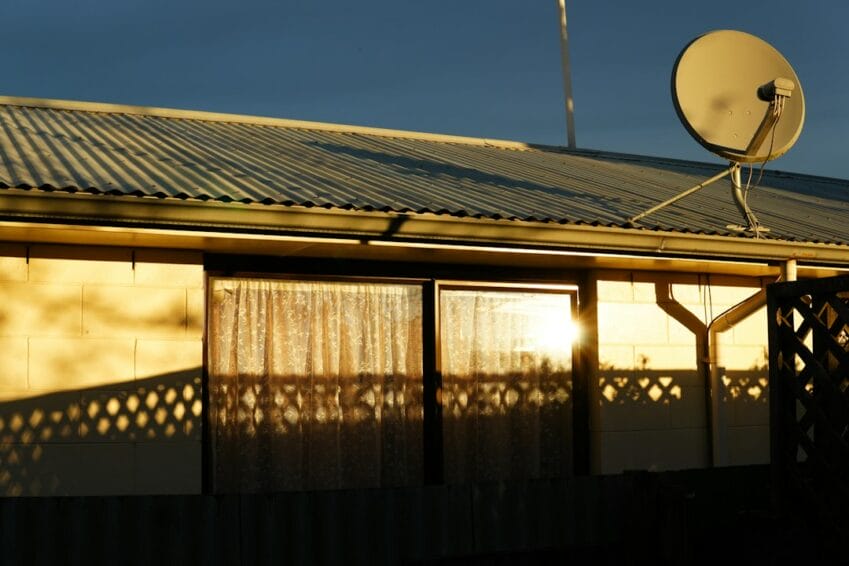
Good to Know: Starlink needs a clear, mostly unobstructed view of the sky to work well — thick cloud cover during a storm can degrade it, but tree cover, overhangs, and tall neighboring buildings are the bigger everyday problem. If your roof or yard doesn’t have a clean sightline, get that checked (Starlink’s own app has a built-in obstruction check) before you commit to the hardware cost.
Frequently Asked Questions
Is Starlink available everywhere in the Philippines?
It’s registered to operate nationwide as an NTC-approved VAS provider, but actual usability still depends on having a clear view of the sky and being within its satellite coverage — it isn’t a guarantee of service at every single address, especially in areas with heavy obstruction.
How much is Starlink’s monthly plan in the Philippines right now?
As of this article’s publish date, the Residential plan is ₱4,099 a month, Roam Unlimited is ₱5,999 a month, and the Roam 100GB tier is ₱3,299 a month, based on the most recent price change reported by Philippine tech news outlets.
Is Starlink worth it just for streaming and gaming?
Generally no, if fiber is available to you. At current pricing, Starlink costs several times more per month than an entry-level fiber plan that already offers faster, more consistent speeds for Netflix, Vivamax, or online gaming in urban and suburban areas.
Does Starlink need a lot of electricity to run?
It runs continuously like a router, so it adds a modest but real amount to your monthly electric bill — not a dealbreaker, but worth factoring in if you’re already watching your Meralco bill closely alongside the subscription cost.
Also Worth Checking
If spotty connectivity is a recurring headache rather than a one-time decision, our typhoon season guide covers what’s actually worth stocking up on when fiber and power both go down at once — Starlink’s battery-backed setup is one of the few home internet options that can survive a brownout if you’ve already got a power bank or UPS in the mix. For the fiber-vs-satellite cost comparison in full, head back to our Pocket WiFi vs. Postpaid Home Fiber guide, and if you’re choosing your first wired provider instead, start with how to choose an internet provider in Manila. For more of this kind of value-first breakdown, head back to more sulit finds.
Verified Sources Used
Unbox.ph: Confirmed the May 2026 Starlink Philippines price increase — Residential to ₱4,099/month, Roam Unlimited to ₱5,999/month, new Roam 100GB tier at ₱3,299/month — and the cumulative ~34% increase since 2023 launch.
Manila Shaker: Confirmed the May 2025 Starlink Philippines price increase (Residential to ₱3,800/month, Roam Unlimited to ₱5,700/month) and its effective date.
NoypiGeeks: Confirmed Starlink’s 2022 Philippine hardware and subscription launch pricing and its target use case of underserved, non-urban areas.
GameXtreme PH: Confirmed the current retail price of the Starlink Mini Kit (₱23,990) from a Philippine retailer, observed October 2026.
Philippine Daily Inquirer: Confirmed the NTC’s approval of Starlink’s value-added service provider registration in the Philippines and the approved speed range of 100–200 Mbps.
Malaya Business Insight: Confirmed Converge ICT’s authorized Starlink resale partnership targeting enterprise clients in remote and underserved areas as a backup/primary connectivity option.