Is Fire Insurance Worth It in the Philippines? (2026 Homeowner’s Guide)
Sulit verdict: Yes, if you have a mortgage, your bank already made this decision for you. If you own your home outright, it’s still one of the cheapest real financial protections you can buy — basic coverage starts around ₱950 a year for up to ₱1 million in protection, according to BPI. The only real question is whether you need the optional add-ons (earthquake, typhoon and flood), and for condo owners, whether the building’s master policy actually covers what you think it covers. Spoiler: it usually doesn’t cover your stuff.
Here’s what nobody tells first-time homeowners: getting a housing loan in the Philippines means you’re getting fire insurance whether you ask for it or not. Banks require it before they release the loan, because if your house burns down, they still want their collateral protected — per BPI’s own guidance to borrowers. What catches people off guard is everyone else: the family who paid cash for their house, the condo unit owner who assumed the building’s insurance had them covered, and the renter who’s never thought about it at all.
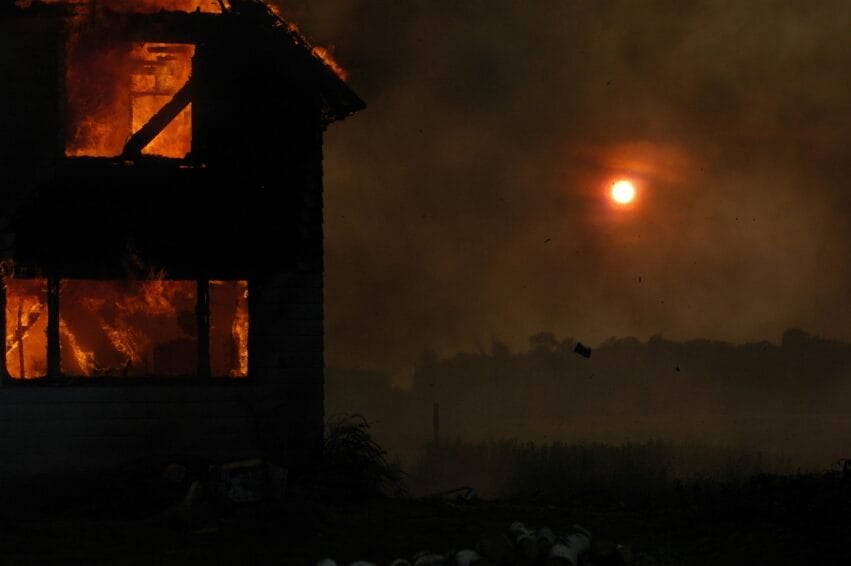
As of September 2026, fire incidents have been trending in the wrong direction. The Bureau of Fire Protection recorded a 28% year-on-year rise in fire incidents in Q1 2026 alone, per Tribune’s reporting on BFP data. That’s the backdrop against which this decision should actually get made — not “will my house burn down” (unlikely for any one household), but “if a fire happens anywhere near me, what’s my actual exposure.”
What Fire Insurance Actually Covers
A standard fire insurance policy in the Philippines is narrower than most people assume. The base policy covers damage from fire and lightning to the structure itself, plus (depending on the policy) household contents, furniture, and fixed equipment inside. It does not automatically cover typhoon, flood, or earthquake damage — those are separate “extended coverage” add-ons you choose (and pay extra for) on top of the base fire policy, per Moneymax’s breakdown of house insurance coverage.
| Coverage Type | What It Protects | Included by Default? |
|---|---|---|
| Basic Fire & Lightning | Structure damage from fire, lightning strikes | Yes — this is the base policy |
| Extended Coverage (smoke, explosion, falling aircraft, vehicular impact) | Secondary damage from fire-adjacent events | Usually an add-on |
| Typhoon & Flood | Wind and water damage from storms | No — optional add-on |
| Earthquake | Structural damage from seismic activity | No — optional add-on |
| Contents/Personal Belongings | Furniture, appliances, electronics, jewelry | Depends on policy — often needs its own rider |
| Personal Liability | If your fire or flood damages a neighbor’s property | Comprehensive policies only |
Sulit Tip: If a bank arranged your fire insurance as part of your housing loan, ask to see exactly what’s on the policy. Many bank-bundled policies are the bare minimum — fire and lightning only, on the structure, at the loan amount (not necessarily the full replacement cost of the house). That gap is worth knowing about before, not after, a typhoon takes your roof off.
Who Actually Needs This, and Why the Rules Differ
Your situation determines whether this is a real decision or one that’s already been made for you:
If you have a mortgage: This isn’t optional. Banks require fire insurance before releasing a housing loan, because the property is their collateral too — confirmed by BPI’s own borrower guidance. Some loan packages already bundle it into your monthly amortization, so check your loan documents before assuming you need to buy a separate policy.
If you own your home outright (no mortgage): Nobody is making you get this, which is exactly why so many fully-paid-off homes in the Philippines are uninsured. This is the actual “is it worth it” decision — and given that basic coverage runs as low as ₱950 a year for ₱1 million in protection per BPI, the math tends to favor buying it, especially if rebuilding your home from scratch would meaningfully dent your savings.
If you’re a condo owner: This is the case people get most wrong. See the next section — it deserves its own explanation.
If you’re renting: Your landlord’s fire insurance (if they have one) covers the structure, not your belongings. A separate renters’ contents policy is genuinely optional and mostly comes down to how much your electronics, furniture, and personal items are worth to replace.
Condo Owners: The Coverage Gap Nobody Explains Clearly
This is the part that trips up the most people, and it’s a real gap in how condo insurance gets explained in the Philippines. Condo corporations typically carry a master insurance policy covering the building’s shared structure — walls, common areas, the building envelope. But that master policy is usually a “bare walls” type of coverage: it protects the building shell, not what’s inside your specific unit, per Crown Asia’s explainer on condo insurance coverage.
What that means in practice: if a fire starts in your unit and damages your interior finishes, appliances, furniture, and personal belongings, the building’s master policy generally will not reimburse you for any of it. You need your own policy covering:
- Interior finishes (walls, flooring, ceiling improvements you paid for beyond the bare unit)
- Personal property (furniture, electronics, appliances)
- Personal liability (if a fire or water leak from your unit damages a neighbor’s unit)
Heads Up: Some condo associations and mortgage lenders explicitly require unit owners to carry their own condo insurance on top of the building’s master policy — it’s not always presented as optional, so check your condo’s house rules and your loan terms rather than assuming the building’s coverage has you handled.
What It Actually Costs
The Insurance Commission — the government agency that regulates non-life insurance in the Philippines — sets minimum tariff rates for fire-related perils to keep insurers from underpricing risk. Per the Commission’s published Fire Tariff schedule, the regulated minimum rates for the optional add-on perils are:
| Peril | Minimum Regulated Rate | On a ₱3,000,000 Property |
|---|---|---|
| Earthquake | 0.10% of insured value | ₱3,000/year minimum |
| Typhoon & Flood | 0.05% of insured value | ₱1,500/year minimum |
| Extended Coverage (smoke, explosion, etc.) | 0.010% of insured value | ₱300/year minimum |
These are regulated minimums, not fixed prices — insurers can charge more depending on your property’s location, construction materials, and occupancy type, and the base fire premium itself isn’t tariffed at a single flat number the way these add-ons are. What this table does give you is a reliable floor: if a quote for typhoon/flood coverage on a ₱3M property comes in noticeably below ₱1,500/year, that’s worth double-checking rather than celebrating.
Good to Know: BPI’s own guidance notes that basic fire coverage can start “as low as ₱950” for policies covering up to ₱1 million — which, per the table above, is roughly in line with what the add-on minimums would suggest for a policy of that size once you scale down from the ₱3M example.
Worked Scenario: Deciding on Add-Ons for a Paid-Off House
Say you own your home outright, it’s valued at roughly ₱3,000,000 to rebuild, and you’re deciding whether the typhoon/flood and earthquake add-ons are worth it on top of the base fire policy.
Start with exposure, not price. If your house sits in a flood-prone barangay, or you’ve had ankle-to-knee-deep water in past typhoon seasons, the ₱1,500/year minimum for typhoon & flood coverage is cheap relative to what a single flooded ground floor costs to repair — new flooring, repainting, replacing water-damaged appliances and furniture easily runs into six figures. That math favors buying the add-on.
Earthquake coverage is a harder call because it’s genuinely a lower-probability, higher-severity risk for most areas — ₱3,000/year minimum on our example property. If your home is an older structure, non-reinforced concrete, or in a recognized fault-line area, this leans toward “worth it.” If it’s a newer build with modern structural standards in a lower-risk zone, it’s a more personal risk-tolerance call rather than an obvious yes.
Either way, the base fire-and-lightning policy is the one with the clearest case: cheap relative to the loss it prevents, and fire risk doesn’t care whether your barangay floods or not.
Quick Answers
Does fire insurance cover flood or typhoon damage? No, not by default. Standard fire insurance in the Philippines covers fire and lightning damage only. Typhoon, flood, and earthquake protection are separate optional add-ons priced on top of the base policy.
Do I need fire insurance if my house has no mortgage? It’s not required by law, but it’s still one of the cheapest ways to protect a major asset — basic coverage can start around ₱950/year for up to ₱1 million in protection, per BPI.
Does my condo building’s insurance already cover my unit? Usually not fully. Most condo master policies are “bare walls” coverage for the building shell and common areas only — your interior finishes, furniture, appliances, and personal belongings typically need your own separate policy.
Who regulates fire insurance rates in the Philippines? The Insurance Commission sets minimum tariff rates for fire-related perils (earthquake, typhoon & flood, extended coverage) to keep insurers from underpricing risk on these policies.
Also Worth Checking
If you’re weighing this alongside other big property or protection decisions, our pre-selling condo vs. RFO guide covers what else to budget for when buying a unit, our comprehensive car insurance breakdown walks through a similar worth-it calculation for your vehicle, and our power station vs. generator vs. UPS guide covers the other side of disaster preparedness — keeping the lights on once the bigger risks are already insured against. For more of this kind of value-first breakdown, head back to more sulit finds.
Verified Sources Used
Insurance Commission of the Philippines: Confirmed the regulated minimum tariff rates for earthquake (0.10%), typhoon & flood (0.05%), and extended coverage (0.010%) perils, and that the Commission is the government body regulating fire insurance rates.
BPI: Confirmed that banks require fire insurance before releasing a housing loan, and that basic coverage can start as low as ₱950/year for up to ₱1 million in protection.
Moneymax: Confirmed what standard vs. comprehensive house insurance policies cover, and that typhoon, flood, and earthquake are typically optional add-ons rather than default inclusions.
Crown Asia: Confirmed that condo building master policies are typically “bare walls” coverage that doesn’t extend to a unit owner’s interior finishes or personal belongings.
Tribune: Confirmed the Bureau of Fire Protection’s reported 28% year-on-year rise in fire incidents for Q1 2026.