
Is “5-6” Lending Still Worth It in the Philippines? The Real Cost vs. Legal Alternatives (2026 Guide)
Sulit verdict: Only as a true, same-day bridge — and even then, pay it off the moment formal cash lands. “5-6” lending runs on a roughly 20% cost per cycle, which is already multiples of what any SEC-registered lender or government program is now allowed to charge, and it sits almost entirely outside the laws meant to protect borrowers. If you have even two or three days of runway, a DTI P3 loan, an SSS or Pag-IBIG loan, or a properly SEC-registered small loan will almost always cost you less — sometimes a tenth of the price.
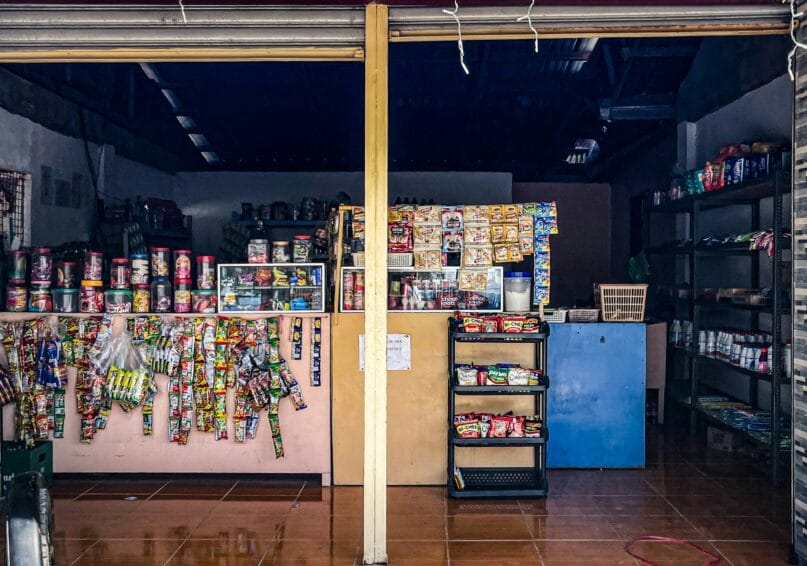
Walk through any palengke, talipapa, or row of sari-sari stores in the Philippines and there’s a decent chance the vendor restocking today’s inventory borrowed the capital from a “5-6” lender — an informal moneylender, often doing daily or weekly rounds, who hands over cash with no paperwork and collects with interest built in from the start. It’s one of the oldest informal credit systems in the country, and it has survived decades of government crackdowns, financial literacy campaigns, and now a wave of app-based alternatives, for one simple reason: it’s fast, and formal credit often isn’t.
That speed has a price, though, and in 2026 — with the SEC now capping what a registered small loan can cost and government programs specifically built to compete with “5-6” — it’s worth actually running the numbers before your next restocking trip.
What “5-6” Actually Means
The name is literal: borrow ₱5, pay back ₱6. That’s a 20% cost on the loan, and critically, that 20% is usually charged per cycle, not per year — and the cycle is often a single month, sometimes even a week, with collection happening in person, in cash, on a schedule the lender sets, according to background on the practice and Rappler’s reporting on informal lending. There’s no credit check, no collateral, and often no written contract — just an existing relationship between lender and borrower, which is exactly why it works for people formal banks consider too risky or too small to bother with.
The typical borrower is a market vendor, a sari-sari store owner, a tricycle driver, or another micro-entrepreneur who needs cash today to buy stock, cover a short gap, or handle an emergency, and who either lacks the paperwork formal lenders require or simply can’t wait the days it takes to process a loan application. Per Rappler’s reporting, among borrowers who struggled to get formal credit, roughly 28% cited collateral requirements and 20% cited the sheer number of documents demanded — friction that an informal lender simply skips.
Heads Up: The rate isn’t fixed nationwide. Rappler’s reporting notes some areas, like parts of Nueva Ecija, have seen informal rates run as high as 60% per cycle — three times the standard “5-6” structure. Always ask the exact peso amount you’ll owe and on what date before you take the cash, not after.
The Real Math: What 20% a Cycle Actually Costs You
Here’s the number that matters: if you kept rolling that 20%-per-month cost over for a full year — which is exactly what happens when a borrower can’t clear the balance and re-borrows each cycle — the simple, non-compounded math works out to roughly 240% a year. Compare that to what regulated options are legally allowed to charge right now:
| Source | Rate | Typical Speed | Who Qualifies |
|---|---|---|---|
| “5-6” informal lender | ~20% per cycle (commonly monthly; some areas report up to 60%) — no legal ceiling | Same day, in cash | Anyone the lender personally trusts |
| DTI P3 Program (via SB Corp) | Capped at 2.5% per month | Days, through a Negosyo Center | Microenterprises and entrepreneurs, especially those already paying high informal rates |
| SEC-registered small online loan (≤₱10,000, ≤4 months) | Effective rate capped at 12% per month under SEC Memorandum Circular No. 14, Series of 2025 | Minutes to hours, via app | Anyone who passes the lender’s own approval, with the lender SEC-verified |
| SSS salary loan | 8% per annum (10% for penalty-condoned renewals), diminishing balance | Several days to process | SSS members with enough posted contributions |
| Pag-IBIG Multi-Purpose Loan | A fixed annual rate on diminishing balance, set by HDMF circular — check the current figure on pagibigfund.gov.ph before applying | Days to weeks | Pag-IBIG members with enough contributions |
The gap between the top row and everything below it is the entire story. A 12%-a-month cap sounds high until you put it next to a 20%-a-month informal rate with no ceiling at all — and DTI’s program, built specifically to compete with “5-6,” charges roughly an eighth of it.
Sulit Tip: Whatever source you’re comparing, ask for the cost in pesos for your exact amount and term, not just the headline rate. “2.5% a month” and “12% a month” mean very different peso amounts depending on how long you actually carry the balance — see the worked scenario below.
Is “5-6” Even Legal?
This is genuinely murky, and worth understanding before you assume a 5-6 arrangement is simply enforceable as written. The Lending Company Regulation Act of 2007 (RA 9474) requires anyone operating as a lending company to incorporate with the SEC, hold at least ₱1 million in paid-in capital, and comply with the Truth in Lending Act’s disclosure rules. An individual street-level “5-6” lender almost never meets any of that — they’re typically an individual, not an SEC-registered corporation, which means the entire transaction sits outside the law built to regulate lending companies, for better and worse: no disclosure requirements bind them, but also no SEC certificate exists for the government to revoke if things go wrong.
It gets more interesting if a dispute ever reaches a Philippine court. Central Bank Circular No. 905, Series of 1982, lifted the old statutory interest-rate ceiling, letting borrowers and lenders agree to whatever rate they want — but the Supreme Court has repeatedly ruled that doesn’t mean any rate goes. In Cuaton v. Salud, G.R. No. 158382 (2004), the Court struck down a loan’s 8%–10% monthly interest (96%–120% a year) as “iniquitous and unconscionable,” reducing it all the way down to the legal rate of 12% per annum — a pattern the Court has applied in multiple similar cases. In practice, few “5-6” borrowers ever sue to get this protection; it mostly matters as a reminder that a scary-sounding verbal arrangement isn’t automatically bulletproof if it ever escalates.
Good to Know: The government’s long-term answer to “5-6” isn’t to prosecute every informal lender — it’s to make formal credit fast and accessible enough that borrowers don’t need to turn to it. The Microfinance NGOs Act of 2015 (RA 10693) exists specifically to strengthen NGO-run microfinance as that alternative, recognizing that most “5-6” borrowers are underserved by banks, not uncreditworthy.
Worked Scenario: ₱5,000 to Restock for One Month
Say you run a small sari-sari store and need ₱5,000 today to restock shelves, with a plan to repay in full in about a month once this week’s sales come in. Here’s how the realistic options actually compare:
| Option | Rate Applied | Approx. Cost on ₱5,000 for 1 Month |
|---|---|---|
| “5-6” informal lender | 20% flat for the cycle | ₱1,000 — you hand back ₱6,000 total |
| SEC-registered small loan (effective rate cap) | Up to 12% a month | Up to roughly ₱600, worst case |
| DTI P3 Program | Up to 2.5% a month | Up to roughly ₱125 |
That’s an ₱875 difference between the informal lender and DTI’s own program for the exact same ₱5,000, one-month loan — money that, for a small vendor, is real margin. The catch, and it’s a real one, is access: the “5-6” lender hands over cash in minutes with zero paperwork, while P3 enrollment runs through SB Corp and your nearest DTI Negosyo Center and isn’t an instant, walk-in-and-get-cash process the first time. That lead time is the entire reason “5-6” still exists despite being the most expensive option on the table.
When “5-6” Might Still Make Sense — and How to Limit the Damage If You Use It
If you’re already enrolled in a Negosyo Center program, have an SSS or Pag-IBIG account with enough contributions, or can get approved on an SEC-registered app, there’s very little reason to pay 20% a cycle instead. “5-6” earns its place in one narrow situation: a genuine same-hour emergency where none of the formal options can move fast enough, and you have no existing access to any of them yet.
If that’s where you are, the goal is to treat it strictly as a bridge, not a habit:
Pay the full amount the moment you have it — don’t let a cycle roll into a second one, since that’s exactly how a 20% cost becomes a 240%-a-year debt trap. Confirm the exact peso total you’ll owe and the exact due date before you accept the cash, out loud, so there’s no ambiguity later. And start the paperwork for a cheaper source — a Negosyo Center visit, an SSS or Pag-IBIG loan application, or verifying an SEC-registered lending app — on the same day, so next time you’re not stuck with only the expensive option.
Try pulling up your SSS or Pag-IBIG contribution record right now, before the next cash crunch hits — knowing today whether you already qualify for a formal loan is the difference between having an option and not having one when you actually need it.
Also Worth Checking
If it’s specifically an app-based loan you’re weighing instead of a street-level lender, our online lending apps guide walks through the SEC’s current rate caps and how to verify a platform is actually registered. If a community lending circle is the alternative on the table, see our paluwagan guide for where that tradition crosses into scam territory. And if you have something to put up as collateral, our pawnshop vs. personal loan breakdown compares Cebuana Lhuillier and Palawan Pawnshop’s real rates against a bank loan. For more of this kind of value-first breakdown, head back to more sulit finds.
Frequently Asked Questions
Is “5-6” lending illegal in the Philippines?
It’s legally murky rather than clearly criminal. An individual informal lender typically isn’t incorporated or SEC-registered the way the Lending Company Regulation Act (RA 9474) requires of an actual lending company, so the transaction falls outside that law’s licensing and disclosure rules entirely. Separately, Philippine courts have repeatedly struck down extremely high monthly interest rates as “unconscionable” when disputes reach them, even though the general interest-rate ceiling was lifted in 1982.
What’s a legal interest rate for a small loan in the Philippines right now?
For an SEC-registered small loan of ₱10,000 or less with a term of up to four months, the effective rate (interest plus fees) is capped at 12% per month under SEC Memorandum Circular No. 14, Series of 2025. The DTI’s P3 program caps its own loans at 2.5% per month. Neither cap applies to an unregistered individual lender.
What can I use instead of a “5-6” lender?
The main formal options are the DTI’s P3 program for microenterprises (apply through a Negosyo Center or SB Corp), an SSS salary loan or Pag-IBIG Multi-Purpose Loan if you’re already a member with enough contributions, a verified SEC-registered small lending app, or a microfinance NGO operating under the Microfinance NGOs Act (RA 10693).
Verified Sources Used
LawPhil — Republic Act No. 9474: Confirmed the Lending Company Regulation Act’s incorporation, capital, and disclosure requirements that an individual informal lender typically does not meet.
LawPhil — Republic Act No. 10693: Confirmed the Microfinance NGOs Act’s policy of strengthening NGO-run microfinance as a formal alternative to informal lending.
LawPhil — Cuaton v. Salud, G.R. No. 158382 (2004): Confirmed the Supreme Court’s reduction of an 8%–10% monthly interest rate to 12% per annum as unconscionable, and the continuing relevance of Central Bank Circular No. 905, s. 1982.
Department of Trade and Industry — P3 Program: Confirmed the 2.5%-per-month rate cap, the ₱5,000–₱100,000 loan range, and the program’s no-collateral terms for microenterprises.
Social Security System — Salary Loan: Confirmed the official 8% per annum (10% for penalty-condoned renewals) salary loan rate on a diminishing balance.
Background on 5-6 moneylending and Rappler: Confirmed the standard 20%-per-cycle structure, the daily/weekly collection pattern, regional rate variation up to 60% in some areas, and the collateral/documentation barriers that push borrowers toward informal lenders.