Is Travel Insurance Worth It for Filipino Travelers? (Domestic & International, 2026 Guide)
Sulit verdict: For most domestic trips, skip the standalone policy and just check what your credit card already gives you free — many Philippine cards already cover ₱10 million to ₱40 million in accidental death and injury the moment you charge the full fare. For international trips, buy it anyway: a basic policy runs as low as ₱263 to ₱463 for a short Asia trip, and the one country group where it isn’t optional — the Schengen area — legally requires it before your visa gets approved. The math only breaks down if you already have solid card coverage and you’re not flying anywhere near Europe.
Here’s the thing most Filipino travelers get backwards: they buy travel insurance reflexively for a weekend in Bohol and skip it entirely for a trip to Tokyo or Seoul — when it’s the international leg where an uninsured emergency can actually wreck your finances. A hospital stay abroad isn’t priced like a Philippine hospital, and neither is getting you home if things go wrong.
As of September 2026, here’s what actually covers you, what your bank already covers for free, what the EU legally requires before it lets you in, and when paying for a standalone policy is worth it versus a waste of ₱300.
What Travel Insurance Actually Covers
A standard Philippine travel insurance policy bundles several types of protection into one plan, and the mix matters more than the headline price. Coverage typically includes medical expenses, emergency evacuation, trip cancellation or delay, and baggage loss — but the limits vary a lot by provider and destination, per Moneymax’s comparison of Philippine travel insurance plans.
| Coverage Type | What It Protects | Typical Limit (Budget Plans) |
|---|---|---|
| Medical Expenses | Treatment for illness or injury abroad | ₱2.5M – ₱5M |
| Emergency Evacuation/Repatriation | Transport to better care, or home, in a serious emergency | Often bundled into the medical limit |
| Accidental Death | Lump sum to beneficiaries | Up to ₱5M |
| Trip Cancellation | Non-refundable costs if the trip is cancelled or cut short | Up to ₱200,000 |
| Baggage Loss/Delay | Lost, damaged, or delayed luggage | ₱10,000 – ₱50,000 |
For a 25-year-old traveling to a nearby Asian destination for a few days, real budget premiums from Philippine insurers run from roughly ₱263 (Cocogen Travel Excel Plus) to ₱463 (PGA SOMPO TravelJOY Plus), with OONA Travel Completo starting around ₱299 and PGAI Travel Shield around ₱361, per Moneymax’s published rate comparison. Longer or farther trips (Japan, Australia, the US) generally land in the same ₱299–₱475 range for a short individual policy, though pricing scales up with trip length and destination risk.
Sulit Tip: Don’t just compare the sticker price. A ₱263 policy with a ₱2.5M medical limit and a ₱463 policy with a ₱5M medical limit are not the same product — check the medical and evacuation limits first, then compare price among plans with similar coverage.
The One Case Where It’s Not Optional: Schengen Visa Applications
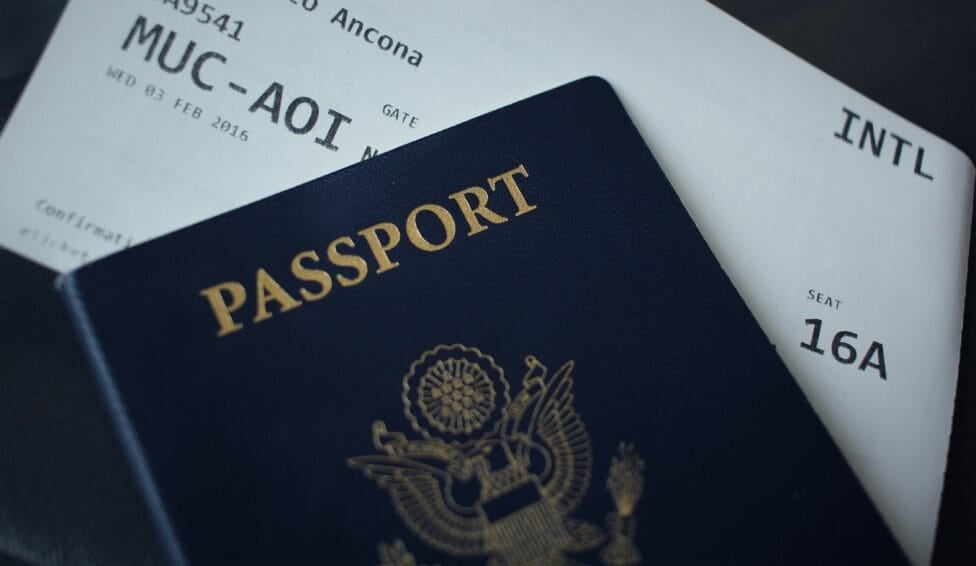
If you’re applying for a Schengen visa to visit any of the EU’s Schengen-area countries, travel insurance isn’t a nice-to-have — it’s a hard legal requirement for the visa itself. Under Regulation (EC) No. 810/2009 (the EU Visa Code), Article 15, applicants must show proof of “adequate and valid travel medical insurance” covering at least €30,000, valid across the entire Schengen territory, for the full length of the intended stay. The coverage has to address medical emergencies, hospital treatment, and repatriation for medical reasons or death — a basic accident-only policy that skips repatriation won’t satisfy the requirement.
| Requirement | What the Rule Says |
|---|---|
| Minimum Coverage | €30,000 (per EU Visa Code, Article 15) |
| Geographic Validity | Must cover all Schengen member states |
| Duration | Entire intended stay (some embassies require a buffer of extra days) |
| Must Include | Emergency medical treatment, hospitalization, repatriation for medical reasons or death |
In practice, Schengen-compliant policies from Philippine-accessible insurers are cheap relative to the requirement — a plan like PGA SOMPO’s Schengen-specific product runs around ₱717 for a 1–4 day trip. The catch is that not every general travel insurance policy is automatically Schengen-compliant, so if you’re applying for that visa, buy a plan explicitly marketed as meeting the visa requirement rather than assuming your regular travel policy qualifies.
Heads Up: Outside the Schengen area, the Philippines itself does not legally require travel insurance for domestic trips, and most other countries don’t require it for tourist visas either. Treat the Schengen rule as the exception, not the norm — but if Europe is on your itinerary, this isn’t a decision you get to skip.
Does Your Credit Card Already Cover You?
Before paying for a standalone policy, check what’s already bundled into your credit card — because for many Filipino travelers, it’s more coverage than they’d buy on their own. Several major Philippine banks include complimentary travel insurance automatically when you charge your full round-trip fare to an eligible card.
| Card Issuer | Accidental Death/Disability Coverage | Key Conditions |
|---|---|---|
| BPI (Signature Card) | Up to ₱40M per incident | Full fare charged to card; cardholder 69 or under; medical coverage excludes illness (injury only) |
| BPI (Rewards/Gold/Platinum/Corporate) | Up to ₱20M per incident | Same conditions as above |
| Security Bank (Platinum/World/Corporate) | Up to ₱10M | Full round-trip fare charged to card; 90 days at 100% benefits per trip; excludes pre-existing conditions and COVID-19 |
Per BPI’s own credit card travel insurance FAQ and Security Bank’s travel insurance page, both banks’ free coverage is genuinely substantial on the accidental death and disability side — often larger than what a ₱300 standalone policy offers. But the gaps matter: BPI’s medical coverage explicitly excludes illness (only accidental injury is covered), and Security Bank excludes pre-existing conditions and COVID-19-related claims entirely. Neither replaces a standalone medical/evacuation policy if you get sick (rather than injured) abroad.
Good to Know: The free coverage only activates if you charge the entire fare to the card — paying even partially in cash or points can void it. Check your specific card’s terms before assuming you’re covered, since the fine print varies even within the same bank’s card tiers.
What Happens If You Skip It
The reason travel insurance is worth the ₱300-ish premium isn’t the odds of something going wrong — it’s what things cost when they do, priced in a currency and a healthcare system that isn’t the Philippines’. Real hospital costs abroad, per day, run far higher than what a similar stay costs at home:
| Country | Approximate Hospital Cost per Day |
|---|---|
| Singapore | ₱14,000 – ₱200,000 |
| United States | ₱112,000 – ₱280,000 |
| Japan | ₱12,000 – ₱40,000 |
| Thailand | ₱15,000 – ₱75,000 |
Those are daily rates, not the total bill. A documented appendicitis case in Singapore — ER visit, surgery, and a three-day hospital stay — ran roughly ₱570,000, per Oona Insurance’s breakdown of real medical costs abroad. Emergency medical evacuation is worse: a medical evacuation from the Philippines region to Singapore has been priced around $30,000 (roughly ₱1.75 million), and evacuations from more remote locations can exceed ₱2 million, per the same source.
Set against that, a ₱300–₱1,500 policy for a week-long international trip isn’t really a bet on the odds of getting sick — it’s a bet on not wanting a single unlucky week to cost more than a year of rent.
Worked Scenario: A Week in Japan, With and Without a Card
Say you’re a BPI Gold Rewards cardholder planning a 7-day trip to Japan, and you’re deciding whether to also buy a standalone travel insurance policy on top of your card’s free coverage.
Your BPI card already gives you up to ₱20 million in accidental death/disability coverage the moment you charge the full airfare to it — genuinely strong protection if you’re in an accident. But it explicitly excludes illness. If you come down with food poisoning, the flu, or anything that isn’t an accident, that ₱20 million doesn’t help you, and a Japanese hospital stay can run ₱12,000–₱40,000 a day per the table above.
A standalone policy for a week in Japan typically runs somewhere in the ₱300–₱500 range for a healthy adult with no pre-existing conditions, and it covers exactly the gap your card leaves open: illness, not just accidents. Given the price difference between that premium and even a single day of Japanese hospital care, buying both — the free card coverage for the catastrophic accident scenario, and a cheap standalone policy for the everyday-illness scenario — covers more ground than either one alone, for less than the cost of a decent Japanese meal.
Quick Answers
Is travel insurance legally required to travel out of the Philippines? Only for Schengen visa applications, where it’s mandatory under EU law (minimum €30,000 medical coverage). Most other international destinations and all domestic Philippine trips don’t legally require it.
Does my credit card’s free travel insurance cover illness? Usually not. BPI’s complimentary coverage, for example, explicitly excludes illness and covers only accidental injury — check your specific card’s terms, since this gap is common across issuers.
How much does basic international travel insurance cost from the Philippines? Budget policies for short Asia trips run roughly ₱263 to ₱475 depending on the provider, destination, and coverage limits, based on real quotes from Cocogen, OONA, PGAI, and PGA SOMPO.
Is domestic travel insurance in the Philippines worth buying? It’s not required, and many travelers are already reasonably covered by their credit card’s free benefits for accidents. It becomes more worth it for solo travelers, families with young children or elderly parents, and frequent flyers, where a small premium buys real peace of mind.
Also Worth Checking
If you’re weighing this alongside other protection decisions before a trip, our credit card annual fee breakdown covers whether a travel-perks card is worth the yearly cost in the first place, our phone and gadget insurance guide walks through a similar worth-it calculation for the devices you’re bringing along, and our remittance fee comparison is useful if you’re an OFW weighing how money moves while you’re away. For more of this kind of value-first breakdown, head back to more sulit finds.
Verified Sources Used
EUR-Lex (Official Journal of the European Union): Confirmed Regulation (EC) No. 810/2009 (EU Visa Code), Article 15, which sets the €30,000 minimum travel medical insurance requirement for Schengen visa applicants.
Moneymax: Confirmed real 2026 premium examples from Cocogen, OONA, PGAI, and PGA SOMPO for short international trips, and typical coverage limits for medical expenses, trip cancellation, accidental death, and baggage.
BPI: Confirmed BPI credit cards’ complimentary travel insurance coverage amounts (up to ₱40M for Signature, ₱20M for Rewards/Gold/Platinum/Corporate), eligibility conditions, and that medical coverage excludes illness.
Security Bank: Confirmed Security Bank’s complimentary travel insurance coverage (up to ₱10M), the 90-day trip duration limit, and exclusions for pre-existing conditions and COVID-19.
Oona Insurance: Confirmed real hospital cost ranges per day in Singapore, the US, Japan, and Thailand, a documented ₱570,000 appendicitis case in Singapore, and medical evacuation cost examples (~$30,000/₱1.75M from the Philippines region to Singapore, exceeding ₱2M from remote locations).
Oona Insurance (domestic travel guide): Confirmed that domestic travel insurance is not legally mandatory in the Philippines and outlined the traveler profiles for whom it’s most worth buying.